Speaking in echoey rooms
If your main priority is a clear voice, try positioning the microphone at your recording spot. RØDE explains that the further the microphone is from the speaker, the more noticeable the room echo can become.


If you can hear an echo in the room, the first thing to do is position the microphone close to where you speak and keep it steady. A higher bit depth won’t remove echo. A handheld recorder with built-in microphones is a straightforward starting point if you can position it nearby. If you need to position the microphone separately from the recorder or move around, consider a compatible external microphone or a lavalier setup – both require a little more setting up. RØDE notes that greater distance from the microphone can make your voice quieter and the room echo more noticeable.
If your main priority is a clear voice, try positioning the microphone at your recording spot. RØDE explains that the further the microphone is from the speaker, the more noticeable the room echo can become.
If you want to start recording without a separate microphone, a handheld recorder with built-in microphones can make things easier. The key is whether you can position it nearby and keep it steady.
If you move around during your review or want to position the microphone separately from the recorder, check which lavalier or external microphone will work with your connections and setup.
First decide where you want the microphone to be during your review. Then check that your chosen recorder and any accessories you need will work with that setup.
| Buying criterion | What to look for | Who should pay particular attention? |
|---|---|---|
| Recording a clear voice | Check whether you can position the microphone close by and keep it steady. Listen back to a test sentence recorded in the room you’ll actually use. | If I want to keep the echo in my book review from becoming too prominent, I’ll first test the distance from the microphone to my voice. Around 42% of consumers prioritise clear speech recordings. |
| Starting without a separate microphone | Look for built-in microphones and a secure place to set the recorder down. Listen to a test recording before you begin. | If I speak from a fixed position and want to keep my setup simple, a handheld recorder with built-in microphones could be a good option. Around 25% of consumers prioritise a straightforward start. |
| Moving around while speaking | Check how the lavalier microphone attaches and what’s included. Test whether movement or clothing causes unwanted noise. | If I move around while speaking, I want to wear the microphone as close to me as possible. Around 17% of consumers prioritise being able to record speech on the move. |
| Planning connections and workflow | Check that the microphone is compatible with the connection, and consider your power, storage and accessory requirements. | If I want to plan ahead for recording, storage or changing microphones later, I’ll check the whole setup. Around 16% of consumers prioritise a predictable recording workflow or compatible connections. |
A recording format doesn’t change the distance between the microphone and your voice or the sound reflections in the room.
Start by deciding where to place the microphone and where to record. Choose a format that suits your recording and editing workflow.
In a test of the Zoom H1essential, Bonedo found noticeable handling noise. This finding applies to this model.
Check whether you can position the recorder steadily nearby, and try out the controls before you start recording.
Having an input doesn’t tell you whether your chosen microphone is compatible or what else you’ll need for your setup.
Check the microphone connection on the specific recorder and whether the microphone needs a power supply. Also check which accessories and storage media you’ll need for your recording.
The models mentioned here offer different recording options: the H1essential has built-in X/Y microphones, the H1 XLR has inputs for external microphones, and the F2 is a lavalier recorder.
The DR-05XP combines built-in microphones with an external mini-jack input. The DR-40XP has built-in microphones and additional XLR/TRS inputs.
The PCM-A10 combines stereo microphones and built-in storage in one recorder.
The Joybuy products below are lavalier microphones with a local TF card recording option, designed for speakers who move around. Before buying, check that the connection on your chosen model is compatible with your recording device.
 No image available
The lavalier design, with clip and magnetic attachments, is useful for recordings where you move around.
A local TF card recording option is described; the TF card is not included. The stated connection is Lightning.
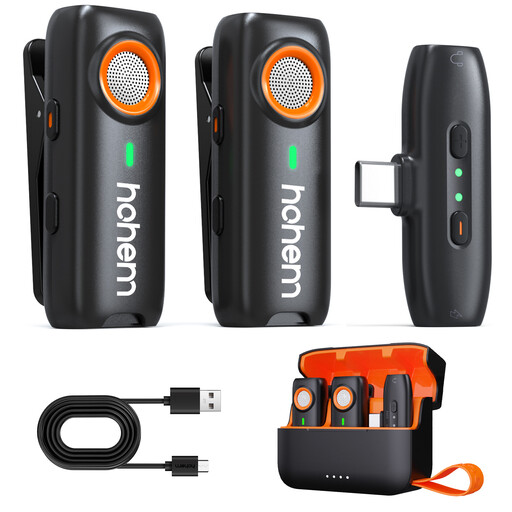 No image available
The lavalier design, with clip and magnetic attachments, is useful for recordings where you move around.
A local TF card recording option is described; the TF card is not included. The stated connection is Type-C.
No. The recording format doesn’t change the microphone’s distance from your voice or the sound reflections in the room. Position the microphone close by and keep it steady, then listen to a test recording made in the room you’ll actually use.
Check the storage medium, power supply and recording format for your specific recorder. For example, the Tascam DR-05XP user manual explains how to insert a microSD card and batteries. Sony’s stated maximum recording times for the PCM-A10 depend on the format.
If you buy as a consumer from a trader in the EU, you have a statutory guarantee claim against the seller for at least two years from receiving the goods. The European Union’s Your Europe website distinguishes this right from a voluntary manufacturer’s guarantee.
Section 51 of the UrhG allows quotations from a published work only to the extent justified by the specific purpose of the quotation; Section 63 of the UrhG sets out the rules for acknowledging the source. The Laws on the Internet website, provided by the Federal Ministry of Justice and the Federal Office of Justice, lists these provisions. They do not amount to blanket permission to reproduce passages of any length or an audiobook recording.
Under Section 201 of the StGB, recording another person’s privately spoken words on an audio medium without authorisation is not permitted. The provision is listed on the Laws on the Internet website provided by the Federal Ministry of Justice and the Federal Office of Justice. Make sure the person involved agrees to the recording before you begin.