What to look for when buying
If you’re recording your own documentary narration, a test recording at your intended speaking position should help you decide whether built-in microphones are right for you. For an external microphone, check the connection and the power it needs; Zoom lists two XLR/TRS inputs on the H4essential.
| What to consider |
What to check before buying |
Who it matters most to |
| Voice quality at your recording position |
Listen to a test recording made at your planned speaking position; check whether you can position the recorder or microphone suitably. |
If I’m recording at my intended position, I want to listen to a test recording before settling on built-in microphones. Around 36% of consumers put voice clarity at the recording position first. |
| External microphone |
Check that the microphone type, plug, required power and number of inputs you need to use at the same time are compatible. |
If I want to position my studio microphone separately from the recorder, the connection and required power need to be compatible. Around 29% of consumers prioritise connecting a separately positioned speaking microphone. |
| Recording and file workflow |
Check how recording starts, how to monitor audio, the storage format and how to transfer files to your editing software. |
If I’m speaking alone, I want to record without complicated routing and bring the file into my editing workflow. Around 21% of consumers place the greatest importance on a straightforward recording and file workflow. |
| Keeping long takes safe |
Before longer sessions, check your test file, available storage and power supply; distinguish between recording and making a later copy of the file. |
For longer scripts, I want to check power, storage and playback to minimise avoidable retakes. Around 14% of consumers prioritise checking and backing up longer takes. |
Joybuy products for voice recording
The Joybuy devices listed here are presented as voice recorders for recording speech directly. If your setup calls for an external studio microphone, check the input, connection and required power specifically before buying.
 No image available
Mobvoi TicNote Standard AI Voice Recorder, 64 GB
For recording speech followed by transcription or summarisation; check that the stated features suit the way you actually work.
64 GB storage, a 3-microphone array and up to 20 hours of recording time. The product name lists Wi-Fi and Bluetooth.
View at Joybuy
 No image available
Rexsun L15 Digital Voice Recorder, 16 GB
A portable option for recording speech directly; check that you can organise playback and storage to suit your takes.
The product description lists an LCD screen, one-touch recording, two omnidirectional microphones and up to 22 hours of recording time.
View at Joybuy
 No image available
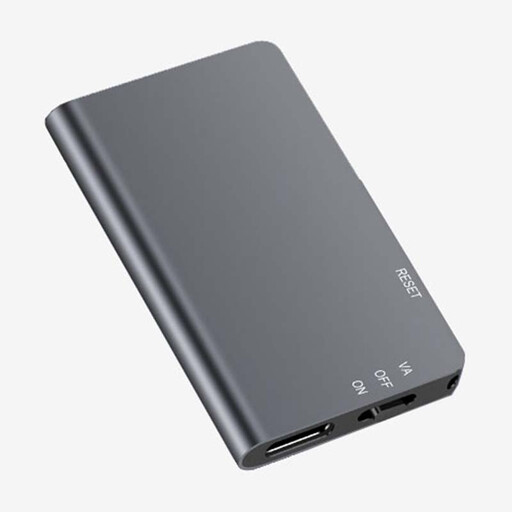
Rexsun L810 Digital Voice Recorder, 64 GB
For recording speech directly and transferring it to a computer; check that WAV suits your recording and editing workflow.
64 GB storage, WAV recording, headphone playback and one-touch recording. The product description lists up to 22 hours of recording time.
View at Joybuy
 No image available
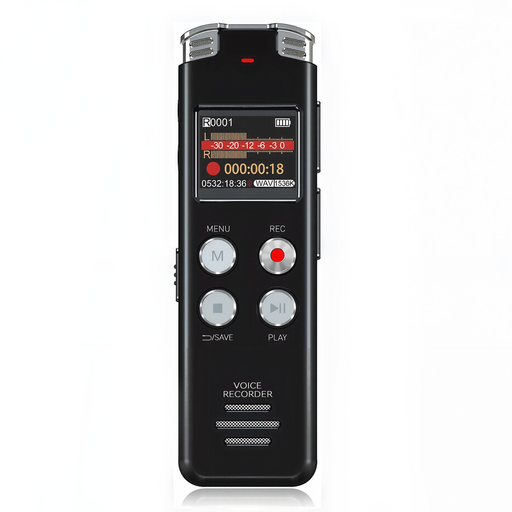
Rexsun L357 Digital Voice Recorder, 128 GB
For recording speech that you plan to transfer via USB-C; check that the formats suit your editing workflow.
128 GB storage, MP3 and WAV formats, and USB-C file transfer. The product description lists a dynamic microphone and voice activation.
View at Joybuy
 No image available
32 GB AI voice recorder with case
For recording speech for digital processing afterwards; before buying, check which of the listed features are available for your intended use.
32 GB storage and a stated battery life of up to 30 hours. The product name lists real-time transcription, translation into 58 languages and summaries.
View at Joybuy
Frequently asked questions
Is a handheld recorder with built-in microphones enough for my documentary narration?
It could be a good fit if you can position the recorder properly at your intended speaking position. Listen to a test recording there before treating extra inputs as a reason to buy.
What should I check before a longer recording session?
Check the power supply, available storage and settings, then play back a short test file. The Library of Congress recommends these checks for oral history interviews; they’re a practical guide you can apply more widely, not a German legal requirement.
Do I need to buy a memory card or accessories separately?
That depends on what’s included with the specific offer and how you plan to record. RØDE describes the RØDECaster Duo as recording to connected storage media or, alternatively, to a computer. So check what comes with the offer in question.
What are my rights if I buy a faulty recorder?
When you buy from a trader in the EU as a consumer, you have a statutory guarantee of at least two years from receiving the goods. The European Union distinguishes this right from any additional manufacturer’s warranty; the specific remedies depend on the fault and how it is resolved.
Can I record someone else’s private speech for a documentary?
Not without authorisation: under § 201 StGB, recording another person’s non-public speech without authorisation, as well as certain uses of such a recording, may be a criminal offence. Check you have permission before recording; this provision does not apply simply because you record your own narration. The relevant source is the statutory text published by the German Federal Ministry of Justice and the Federal Office of Justice.


