Speakers recording long takes
If you’re recording a monologue or several audition pieces, check the remaining battery life and free storage for your chosen format so you can plan your recording session accordingly.


For a long audition piece, the key considerations are a suitable power supply and enough free storage for the recording format you’ve chosen. A compact voice recorder can make recording and playback easier, while the handheld recorders mentioned here also offer inputs for external microphones and features for editing later. 32-bit float can make it easier to handle changing levels, but it’s no substitute for a suitable microphone distance or a room with little reverberation.
If you’re recording a monologue or several audition pieces, check the remaining battery life and free storage for your chosen format so you can plan your recording session accordingly.
If you move around while delivering your piece, look for a setup that keeps the microphone at a fairly consistent distance. A test take at your chosen location will help you assess how clear the recording is.
If you want to compare emphasis or edit your take later, playback, transfer and recording features that suit your workflow are important.
First, decide on the recording format and the planned length of your take. Then check that the power supply, storage and microphone setup are right for your rehearsal.
| Priority | What to check before buying | Who it matters most to |
|---|---|---|
| Long take without interruptions | Check the power supply and free storage for your intended format; check the available recording time on the device once it’s set up. | If I want to record several long pieces, I don’t want to have to stop halfway through a take because of the battery or lack of storage. Consumers whose main priority is recording a continuous take make up roughly 36 %. |
| Clear speech while moving or in a reverberant room | Check the placement or microphone mounting; record a section involving movement and listen back for distance and background noise. | When a piece involves movement, I don’t want to keep adjusting the recorder, and I want to assess how my voice sounds in the intended performance space. Roughly 29 % of consumers pay particular attention to clear speech while moving or in a reverberant room. |
| Quiet and loud passages | Listen back to a test of the quietest and loudest sections; if you’re using 32-bit float, check the specific recording mode on the model. | If my volume varies during a monologue, I want to be able to check both quiet sections and powerful passages. Roughly 21 % of consumers say changing speaking volume is their main priority. |
| Playback and editing | Check the file format, transfer method and specific features for repeating or marking sections. | If I want to compare sections of text or continue editing the recording on my computer, I need features that suit my workflow. Roughly 14 % of consumers say playback and editing are their main priorities. |
An advertised maximum duration doesn’t necessarily apply to every format. Philips lists MP3 and PCM for the DVT4115; the maximum recording time alone doesn’t tell you how long a single take will last in your chosen format.
Choose the format before recording and check the available recording time on the device once it’s set up.
The recording mode can make it easier to handle changes in level, but it won’t remove room reverberation. Shure explains that a microphone can’t reliably distinguish direct speech from reflected sound.
Record a test using the actual route you’ll take, then position the recorder or a suitable external microphone at a distance that works for your delivery.
In its 2024 review of the Zoom H1essential, Bonedo noted significant handling noise. This finding relates to the model tested.
Place the recorder on a stable surface and listen back to a test that includes the movements you’re planning to make.
The Zoom H1essential is a compact handheld recorder with built-in X/Y microphones. The manufacturer also lists a 3.5 mm microphone input and USB microphone operation.
According to Tascam, the DR-05XP combines built-in stereo microphones with an input for external microphones and a USB-C audio interface.
According to Sony, the ICD-UX570 is a compact voice recorder with internal storage, USB charging and features for repeated playback.
The WS-883 is a voice recorder with internal storage, a microSD slot, USB data transfer and playback features.
According to Philips, the DVT4115 combines internal storage with app-based remote control. It may be worth considering if you want to place the recorder in a suitable position.
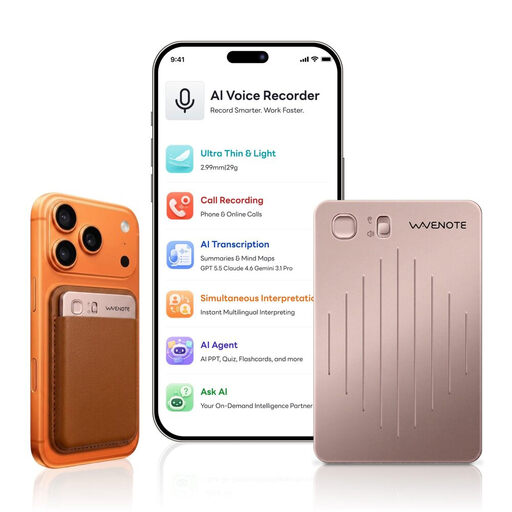
The following Joybuy products are digital voice recorders for long voice recordings. Recording formats, playback and additional features vary by model.
 No image available
Could be worth considering for long voice recordings if WAV recording and ample storage are important for your workflow.
The product description lists up to 36 hours of continuous recording, 64 GB of storage, WAV recording and Bluetooth.
 No image available
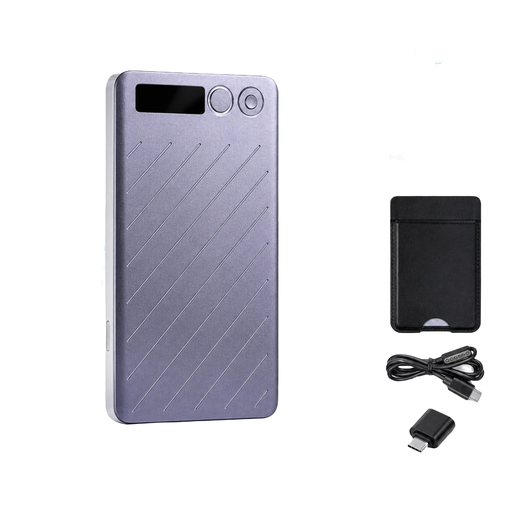
A possible option if you’re interested in working with transcripts and summaries after making long recordings.
The product description lists 36 hours of battery life, 64 GB of storage, and transcription and summarisation features.
 No image available
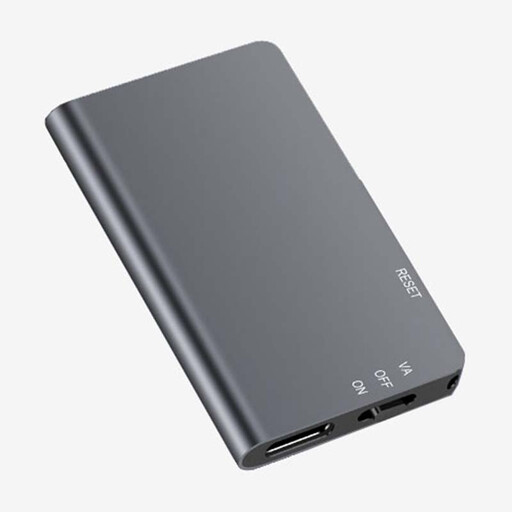
Could be a good fit if you’re looking for a recorder with one-button recording and headphones for immediate playback.
The product description lists up to 22 hours of continuous recording, 64 GB of built-in storage and WAV recording at 512 kbps/48 kHz. Headphones are listed as included.
 No image available
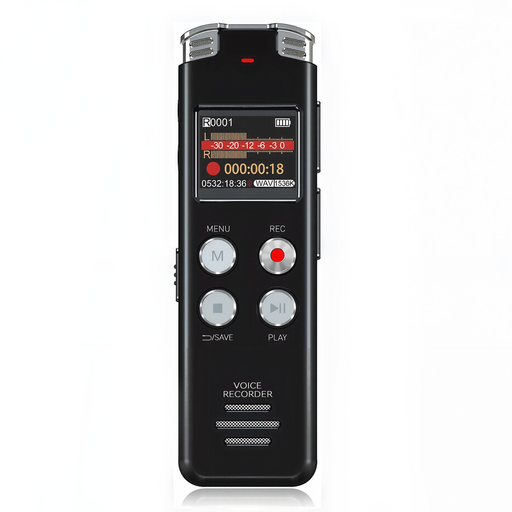
A-B repeat playback can be useful if you want to listen to individual sections of text again.
The product description lists up to 35 hours of continuous recording, 128 GB of storage, MP3 and WAV formats, and A-B repeat playback.
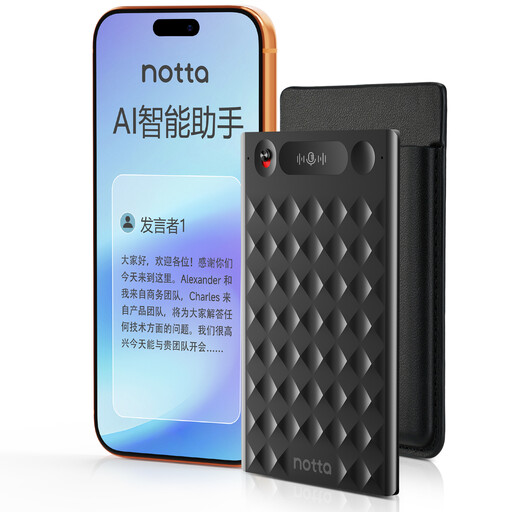 No image available
Could be worth considering for long voice recordings and follow-up text work, if the listed additional features suit your workflow.
The product name and description list 30 hours of recording and 32 GB of storage. The description also lists real-time transcription and Wi-Fi file transfer.
First, choose your recording format, then check the available storage and power supply. Record a full test at your intended location and listen to the beginning, quiet and loud sections, and the ending. If your device uses a memory card, preparing it is also part of the setup; Tascam describes this step in the DR-05XP manual.
No. Zoom and Tascam list 32-bit float as a recording mode for changing levels on their respective handheld models. Shure explains that a microphone can’t reliably distinguish direct speech from reflected sound, so the room and microphone position still matter.
In Germany, the retailer—not the manufacturer—is generally responsible for statutory warranty rights. The Verbraucherzentrale says that rights relating to defects generally apply for two years from the date of delivery, and explains additional rules for certain repairs that have applied since 31 July 2026. A voluntary guarantee is separate from these rights.
Don’t record another person’s non-public speech without first checking that you’re legally entitled to do so. Section 201 of the German Criminal Code makes recording non-public speech without authorisation a criminal offence. If you want to record direction or another person’s voice, get this agreed before you start.