Speaking in a reverberant home office
If you’re speaking in a room with a lot of echo, check the microphone position at your actual workstation. Shure explains that a microphone can’t separate direct sound from room reflections after recording.


If you want to record your commentary and screen at the same time, a recorder specifically described as supporting USB microphone or audio interface mode is an obvious choice. For separate takes, you can record your voice independently and combine the audio file with the video later. In either case, microphone placement and a test recording matter: 32-bit float won’t eliminate room echo.
If you’re speaking in a room with a lot of echo, check the microphone position at your actual workstation. Shure explains that a microphone can’t separate direct sound from room reflections after recording.
If your delivery includes quiet explanations and emphatic highlights, make a test recording of both and check the file for clipping. The Audacity guide recommends making a test recording and explains how clipping is shown.
If you want to record your voice and screen in one go, look for a model specifically described as supporting USB microphone or audio interface mode, and check that your software offers the recorder as an input source.
A good fit if: You want to speak directly into your computer software while recording your screen. Zoom lists the H1essential and Tascam lists the DR-07XP as models with USB recording functionality.
Things to consider: You’ll need to position the recorder suitably and test that it works as an input in your chosen software before recording.
A good fit if: You want to record and select multiple takes independently of your screencast.
Things to consider: You’ll need to combine the audio file and screen recording during editing. Make sure you have enough storage and power for your chosen recording format.
| What to consider | What to check before buying | Especially important if |
|---|---|---|
| Speech clarity | Position the recorder securely and listen to a test sentence recorded from where you plan to speak. | If I’m speaking at a reverberant desk, I want to position the microphone so that my voice remains clear. Around 36% of consumers say speech clarity is their top priority. |
| Headroom | Check the recording mode on the specific model and test your quietest and loudest planned delivery. | If my delivery includes quiet explanations and emphatic highlights, I want to check both rather than relying on an average level. This is the top requirement for around 29% of consumers who need to record at varying volumes. |
| Recording on a PC | Check for a specifically listed USB microphone or audio interface function, and make sure it works as an input in your software. | If I want to record my commentary alongside my screencast, I need a confirmed audio input and don’t want to have to transfer files afterwards. Direct recording on a computer is the priority for around 21% of consumers. |
| Separate or longer takes | Check that storage, power and recording format suit your planned workflow. | If I’m recording separate or longer takes, I want to make sure I have enough storage and power for the chosen format. This is the main requirement for around 14% of consumers. |
32-bit float affects how levels are handled in a file recorded in that format. It doesn’t change how much direct sound and room reflections reach the microphone. Shure highlights this limitation of microphone recording.
Record a short passage at your intended workstation and listen back before settling on a position.
Finding the right position may take extra time or require a different setup.
A USB connection to a computer doesn’t, by itself, mean you can use the recorder as a USB microphone while recording.
Check that the specific model explicitly lists USB audio functionality, and test the input in your recording software.
A 3.5 mm input isn’t the same as an XLR/TRS input with phantom power. This can matter if you want to use a particular external microphone.
Choose your microphone first, then compare its connection and power requirements with the recorder’s inputs.
For the Sony PCM-A10, the manufacturer’s stated maximum recording times depend on whether you use the LPCM or MP3 setting.
Check that storage and power suit the format you actually plan to use, and make a test recording before a long take.
The H1essential and H4essential cater to different connection needs when recording voice.
The DR-05XP and DR-07XP combine standalone recording with a USB audio function listed by the manufacturer.
The PCM-A10 is an option for separately recorded voice files, with built-in storage.
The LS-P5 combines built-in storage with a USB microphone function listed by the manufacturer.
The following Joybuy devices are intended for voice takes recorded separately and combined with your screen recording later.
 No image available
For voice commentary recorded separately and added to your video edit later.
64 GB storage, 30-hour battery life and four MEMS microphones.
 No image available
For voice takes recorded separately from your screen and added to your video later.
The product name lists 16 GB of storage and an LCD display.
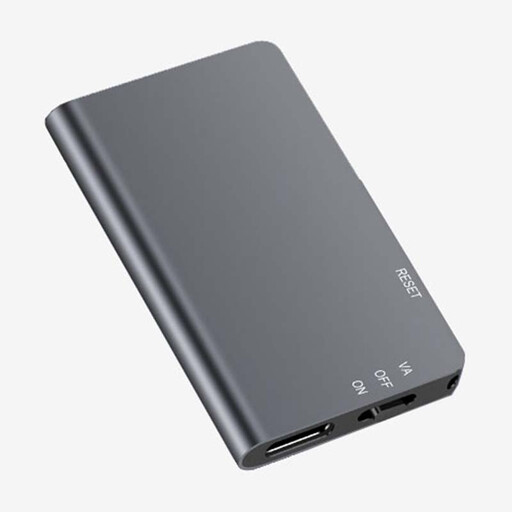 No image available
For voice files recorded separately that you want to listen back to before editing.
The product name lists 64 GB of storage and one-touch recording.
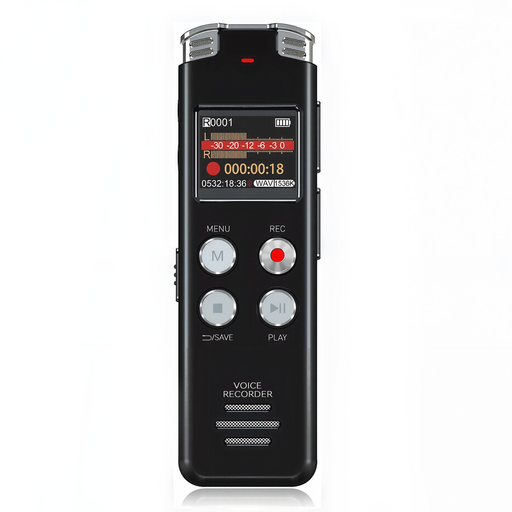 No image available
For commentary recorded separately and combined with your screen recording later.
The product name lists 128 GB of storage and an LCD display.
 No image available
For voice passages recorded separately and used in your video edit later.
The product name lists 32 GB of storage and a case.
Record a short passage from your intended position, including your quietest and loudest delivery. Listen back and check the file for clipping. For recordings in Audacity, its guide recommends making a test recording and explains how clipping is shown.
No. 32-bit float affects how levels are handled in a file recorded in that format, not the room reflections reaching the microphone. Shure explains that a microphone can’t separate direct sound from reflected sound after recording, so check the microphone position first.
Not necessarily. A USB connection for file transfer or to connect to a computer doesn’t, by itself, mean the recorder can operate as a USB microphone while recording. Check that the specific model explicitly lists USB audio functionality, and test the input in your recording software.
Check whether the required memory card, power supply, mount or external microphone is included. If a product is faulty, remember that your statutory consumer rights against the seller are separate from any voluntary guarantee. According to Verbraucherzentrale, online purchases generally come with a 14-day right to cancel, although exceptions may depend on the circumstances of the purchase and the product.