Which microphone is right for you?

Speakers recording in a room with noticeable echo

If you’re recording in an untreated space, consider room noise, reflections and your distance from the microphone together. ACX and Shure both identify room tone and background noise as important recording conditions.

USB beginners

If you want to record chapters straight to your computer and monitor your voice as you speak, check that the USB connection is suitable and that you have a headphone output. Audio-Technica and RØDE list these features for certain USB models.

Speakers working on a longer recording project

If you want to achieve a consistent sound across several sessions or may want to use an interface later, being able to repeat your microphone position and having a planned connection method are important considerations. ACX explains how to check completed files for submissions, while Shure outlines the connection options for certain models.

What should you look for when buying?

Dynamic USB microphone

A good fit if: you want to record straight to your computer and speak close to the microphone, keeping your position consistent.

The trade-off: A USB-only model has no XLR connection if you want to change your signal chain later. Directionality is no substitute for managing your recording environment.

Dynamic USB/XLR microphone

A good fit if: you want to start recording over USB and keep the option of switching to XLR later.

The trade-off: The second connection is only useful if you need it. Switching to a different recording setup means adjusting your settings again.

Dynamic XLR microphone

A good fit if: you already have a suitable interface or deliberately want to build a separate recording setup.

The trade-off: Your setup needs to include an interface, cable and monitoring option. For the Shure SM7B, Shure specifies at least 60 dB of preamp gain.

USB condenser microphone

A good fit if: a test recording at your chosen spot reveals little distracting echo or background noise, and you like the way it reproduces your voice.

The trade-off: A microphone won’t fix your room acoustics. Record the same passage in the spot you plan to use and compare the results.

Priority What to check before buying Who is this important for?
Room echo and background noise Record the same passage, including pauses, at your chosen spot. Listen for echo, fans, traffic and movement. If I can hear echo or distracting noise in my untreated space, I want to record my voice close to the microphone and keep its position consistent. Around 36% of consumers put control of room acoustics and distracting noise first.
Direct connection and monitoring Check the computer connection and headphone output. If you’re using XLR, allow for a suitable interface. If I want to record straight to my computer and monitor my voice without an existing interface, I need a straightforward recording setup. Around 29% of consumers prioritise a direct connection and monitoring.
Consistent sound across chapters Note down your microphone position and settings so you can repeat them across sessions, and check the requirements of your chosen publishing platform. If I record chapters on different days, I want to be able to repeat the same distance and settings. Around 21% of consumers put consistency across sessions first.
Room to expand your XLR setup Check the interface input, preamp gain, cable and monitoring options for the specific model. If I already use an interface or am planning an XLR setup, I want to make sure all the components work well together. Around 14% of consumers prioritise expanding their XLR setup.

Common misconceptions

  • Confusing directionality with noise removal

    A directional recording pattern doesn’t mean that background noise disappears digitally. Shure explicitly clarifies that, for the microphones in question, directionality does not guarantee digital background noise removal.

    Record a passage and a pause in the spot you’ll actually use, then listen back to both before choosing a model.

    A noisy recording space can mean extra time spent making adjustments or re-recording chapters affected by interruptions.

  • Forgetting the recording equipment when choosing XLR

    An XLR microphone doesn’t automatically connect straight to your computer. The Shure SM7B also has the preamp gain requirement specified by Shure.

    Plan the full signal chain for the exact model before choosing an XLR connection.

    Depending on what you already own, you may also need an interface, a cable and a suitable monitoring option.

  • Judging the sound by microphone type alone

    Your room, microphone position and voice all affect the recording. RØDE suggests that condenser microphones are better suited to quieter, more acoustically treated rooms.

    If possible, record the same passage in the spot you plan to use and assess echo, plosives and the sound of your voice together.

Microphone brands to consider

RØDE

The PodMic is a dynamic XLR microphone for speech. According to RØDE, the PodMic USB offers USB-C and XLR.

  • RØDE recommends speaking about 5–10 cm from the PodMic USB.
  • Manufacturer information about background noise doesn’t show how the microphone will perform in your room.

Shure

The MV7+ is a USB-C/XLR option for speech recording, while the SM7B is a separate XLR model.

  • Shure lists both connection options for the MV7+.
  • Shure points out that directionality doesn’t mean background noise is removed digitally. For the SM7B, the manufacturer specifies at least 60 dB of preamp gain.

Audio-Technica

The AT2040USB is a dynamic USB model, the AT2040 is an XLR option, and the AT2020USB-X is a condenser microphone.

  • Audio-Technica lists direct headphone monitoring for the AT2040USB and AT2020USB-X.
  • These connection and monitoring features aren’t an independent assessment of sound quality for audiobook recording.

Logitech G

According to Logitech G, the Yeti GX is a dynamic USB microphone designed with gaming and streaming in mind.

  • Logitech G lists a supercardioid polar pattern and software features for this streaming model.
  • This manufacturer information doesn’t show that the microphone is especially suitable for untreated audiobook recording.

Suitable microphones and kits

The Joybuy products below include dynamic USB/XLR and USB microphones, as well as lavalier and condenser options. If you’re recording in an untreated room, assess each model’s suitability by making a test recording in the spot you plan to use.

FIFINE AM8 dynamic USB/XLR microphone

FIFINE AM8 dynamic USB/XLR microphone

An option if you want to record to your computer over USB and have the option of using an XLR connection.

The product information lists a headphone output, desktop stand and recommended speaking distance of 2 to 6 inches. XLR operation requires a separate XLR cable, which the product information says is not included. A microphone arm is also not included.

Joybuy

SYNCO P1XT USB-C wireless lavalier microphone

SYNCO P1XT USB-C wireless lavalier microphone

A portable lavalier option if you’re planning to record speech for vlogging or streaming.

The product information describes a wireless lavalier system with a USB-C connection for mobile recording.

Joybuy

Razer SEIRÉN V3 MINI White USB condenser microphone

Razer SEIRÉN V3 MINI White USB condenser microphone

An option to consider if a test recording shows that your recording space is quiet and free enough from echo.

The product information lists USB-C, a supercardioid polar pattern, a tilting stand, built-in shock absorption and tap-to-mute.

Joybuy
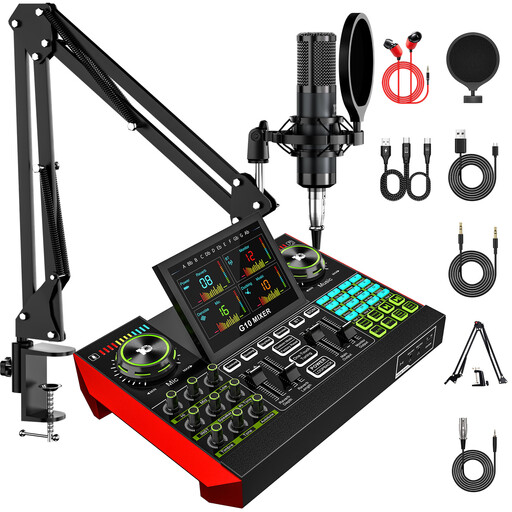
Yinkaer G10-P15-XB microphone kit with sound card

Yinkaer G10-P15-XB microphone kit with sound card

A kit for recording speech on a computer or mobile device, provided its connections suit your recording setup.

The product information lists a sound card, a 3.5 mm condenser microphone, effects and a noise reduction function. This feature description doesn’t prove that room noise will be removed. A microphone arm stand is also listed.

Joybuy

Stream 410 HD USB microphone

Stream 410 HD USB microphone

A USB option for recording speech if its omnidirectional pickup suits your room and recording setup.

The product information lists an omnidirectional polar pattern, pop filter, mute function and two mounting options: tripod or microphone spider shock mount. Its all-round pickup is less focused on directing the microphone towards your voice.

Joybuy

Frequently asked questions

Can a dynamic microphone remove echo from my room?

No, a dynamic microphone won’t remove room echo on its own. The right direction and a short speaking distance can affect the sound picked up, but Shure explicitly states that directionality doesn’t mean background noise is removed digitally. So, test it in the spot you’ll actually use.

How should I set up the PodMic USB for a first test recording?

RØDE recommends speaking about 5–10 cm from the PodMic USB. Speak into the intended side of the microphone, keeping your position and distance consistent during the test, and listen back to the pauses as well. This distance is a recommendation for this model, not a general rule for all microphones.

Does every audiobook chapter have to meet ACX requirements?

Only if you’re submitting your audiobook to ACX do its submission rules apply. ACX offers an analysis of completed files, including RMS, peak levels and bit rate. If you’re working to a different brief or using another distribution platform, check its requirements.

What rights apply when buying a microphone online from a business seller?

For a qualifying distance purchase from a business seller, EU consumer information generally provides a 14-day right to cancel from the date of delivery, subject to legal exceptions. Faulty goods are generally covered by a statutory guarantee of at least two years. Check the seller’s status and terms; purchases from private individuals are treated differently.

Can I publish someone else’s book text as soon as I’ve bought a microphone?

No, buying a microphone doesn’t give you any rights to the text. Under German copyright law, the author generally has the exclusive right to exploit protected works. Before publishing, check that you have the necessary rights or are otherwise legally allowed to use the work. The answer depends on the specific title.