
Lieferung heute & morgen

Qualitätsgarantie

Willkommens-Angebote freischalten: KOSTENLOSE Lieferung | Bis zu 80 % RABATT | Kostenlose 30-Tage-JoyPlus-Testphase
App herunterladen
The search for a suitable robot vacuum and mop with an auto-empty station can quickly become overwhelming. Manufacturers advertise ever-increasing suction power ratings and a multitude of features. However, not every advertised feature actually leads to a cleaner home in practice. Many devices turn out to be a poor investment because crucial details were overlooked. This guide will help you separate the wheat from the chaff and avoid the typical pitfalls.
As a Joybuy Product Recommendation Officer, I analyse market information to provide you with objective, practical advice. Below, we'll highlight the most common shortcomings and what you should look out for when making your choice.
To avoid post-purchase disappointment, you should carefully examine three core parameters. These are decisive in determining the efficiency, reliability, and convenience of your future household helper.
The type of navigation determines how systematically and completely a robot cleans your home.
A good robot vacuum and mop must perform both tasks convincingly. Pay attention to the combination of high suction power and a well-designed mopping module.
The auto-empty station transforms the robot into a largely autonomous system. After each cleaning cycle, the robot returns to the station, recharges, and its dustbin is automatically emptied.
Instead of making a one-size-fits-all recommendation, we have selected models tailored to specific needs and households.
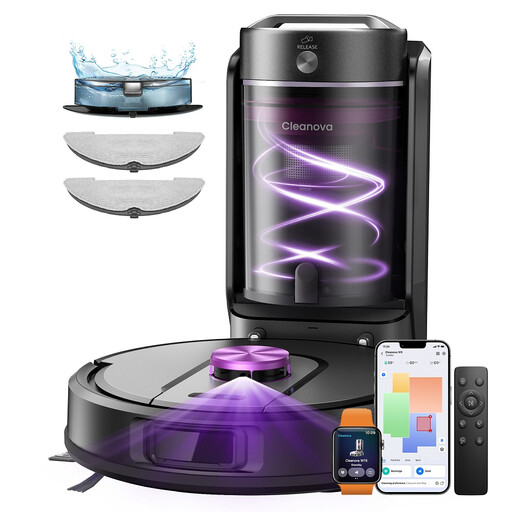
Why it's a good fit: The Vactidy W15 offers a combination of advanced features like LiDAR navigation and a high suction power of 10,000 Pa (according to the manufacturer), which are normally reserved for more expensive devices. It is suitable for users looking for a fully automated solution without high initial and running costs.
The innovative, bagless auto-empty station with multi-cyclone technology eliminates the hidden running costs of dust bags, making the device more economical and eco-friendly in the long run.
The combination of precise LiDAR navigation, high suction power, and a low-maintenance, bagless station offers a comprehensive automation package at an attractive price-performance ratio.
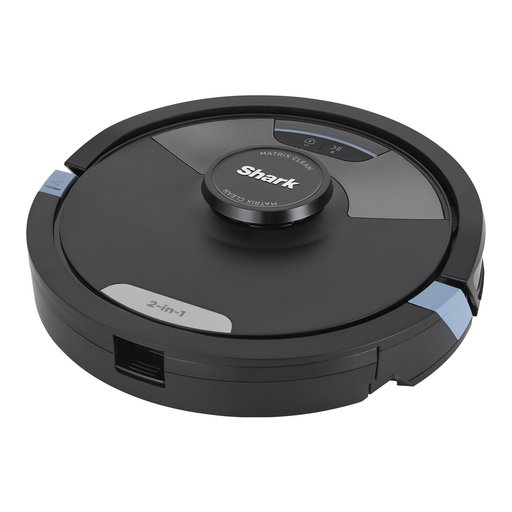
Why it's a good fit: This model is designed to tackle the challenges of households with pets. The Sonic Mopping function combats stains, while the Matrix Clean system ensures gap-free coverage. The anti-allergen system in the station is a bonus for allergy sufferers.
Instead of just wiping, the Sonic Mopping function scrubs the floor up to 100 times per minute (according to the manufacturer), removing tougher messes that are often left behind by simple mopping robots.
The combination of True HEPA filtration, a bagless station with an anti-allergen seal, and the effective mopping function makes it a great choice for clean floors and better air quality.
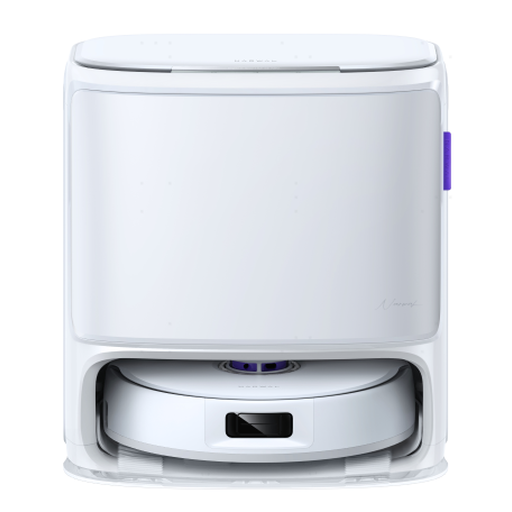
Why it's a good fit: The Freo Z10 is designed for users who want the highest level of convenience and automation. The station not only empties the dustbin but also handles the complete maintenance of the mopping pads, including washing with hot water and drying.
This system offers a true, fully automated mopping function. The station washes the mops with hot water and dries them, which minimises manual maintenance and maximises hygiene—a significant step up from simple combo devices.
The tangle-free brush system is specifically designed to prevent hair from wrapping around it. Combined with the fully automated station, the device offers a nearly maintenance-free cleaning experience.
We have compiled a complete, up-to-date list of products that fully meet these strict selection criteria and UK safety regulations.
1. Can a robot vacuum and mop detect and avoid carpets? Yes, most modern devices with LiDAR or camera navigation feature ultrasonic carpet detection. When the robot is in combined vacuum-and-mop mode and encounters a carpet, it will either automatically lift its mopping module (if technically possible) or stop the water supply and continue cleaning with only the vacuum function. You can also define carpets as "no-mop zones" in the app.
2. How often does the auto-empty station of a robot vacuum need to be emptied? The frequency depends on the station's capacity, the size of your home, the amount of dirt, and whether you have pets. For models with bags or bagless bins with a volume of 3-4 litres, the interval can be between 30 and 90 days. With heavy soiling, for example, from multiple pets during shedding season, it may need to be emptied sooner.
3. Is LiDAR navigation really necessary? For homes with simple layouts and minimal furniture, a model with gyroscope navigation may be sufficient. However, as soon as the floor plan becomes more complex, multiple rooms need to be cleaned, or you want to use features like room-specific cleaning, virtual walls, or multi-floor mapping, robot vacuum LiDAR navigation is far superior. It ensures a faster, more efficient, and more reliable clean.