
Lieferung heute & morgen

Qualitätsgarantie

Willkommens-Angebote freischalten: KOSTENLOSE Lieferung | Bis zu 80 % RABATT | Kostenlose 30-Tage-JoyPlus-Testphase
App herunterladen
Brush marks, uneven coverage, and hours of painting – traditional painting methods can be time-consuming and tedious. A paint sprayer offers an efficient alternative for a quick and exceptionally smooth finish. Whether you want to give furniture a new lease on life, paint a garden fence, or cover entire walls, the right tool is crucial for the final result.
As a Joybuy Product Recommendation Specialist, my job is to provide you with clear guidance in the paint sprayer market. This article explains the key technical features you should look for and presents a selection of models to make your buying decision easier.
Choosing the right device depends on your specific project. Three key criteria will help you make the right decision.
For DIY projects, HVLP (High Volume, Low Pressure) paint sprayers are a popular choice. These devices work with a high volume of air at low pressure. The advantage lies in reduced overspray and a high transfer efficiency of the paint onto the surface. The result is a fine, controlled paint application, which is particularly suitable for detailed work on furniture, doors, and fences. Unlike professional airless systems, HVLP units are often more compact and easier to handle.
A device's power, measured in watts (W), determines how efficiently the paint atomiser works. A higher wattage generally allows for the processing of thicker materials. Closely related is the maximum viscosity, measured in DIN-seconds (DIN-s). This value indicates how thick a paint can be for the device to process it. For example, a spray gun for wall paint should be able to handle a high viscosity of 100 DIN-s or more, as emulsion paints are often thicker than varnishes or lacquers. Always check the manufacturer's specifications for both the paint and the device.
A good electric paint spray gun comes with several nozzles in different sizes. Small nozzle diameters (e.g., 1.0 mm) are suitable for thin materials like lacquers and produce a fine spray pattern, ideal for a varnish gun. Larger nozzles (e.g., 2.5 mm or 3.0 mm) are required for thicker paints, such as wall paints. Additionally, adjustable spray patterns (usually horizontal, vertical, and round) allow you to adapt to the surface at hand. A vertical fan pattern is optimal for horizontal surfaces like tabletops, while a horizontal pattern is used for vertical surfaces like walls or doors.
Based on the criteria mentioned, we have compiled a selection of devices suitable for various DIY applications.
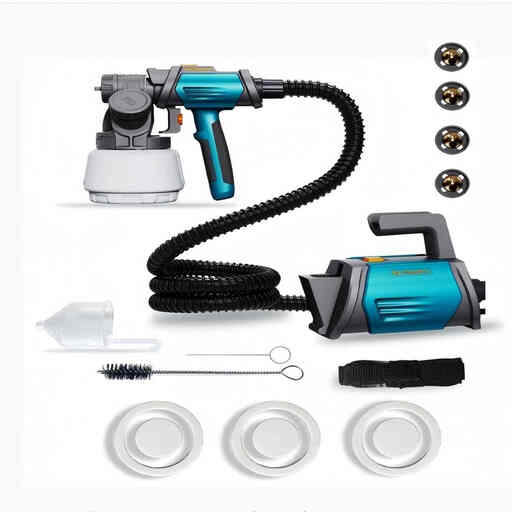
What Makes This Model Stand Out The Tilswall Shark 800 is a powerful 800-watt HVLP system designed to handle materials with a viscosity of up to 120 DIN-s. The split design, featuring a separate motor unit and a shoulder strap, reduces the weight of the handheld unit, making it easier to handle during longer jobs.
Advantages
Who Is It For? This model is a great choice for DIYers planning medium to large-scale projects like fences, decks, or interior walls, who need a powerful device with a long reach.
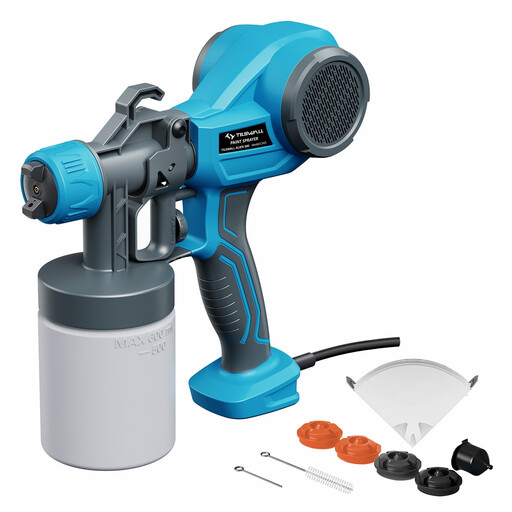
What Makes This Model Stand Out This paint spray system focuses on exceptional ease of use. With its lightweight and ergonomic design, it is built for one-handed operation and is specifically aimed at beginners or users who value comfort for smaller projects.
Advantages
Who Is It For? Ideal for beginners and DIY enthusiasts tackling small to medium-sized objects like furniture, cabinets, or single walls, who are looking for a straightforward, lightweight tool.
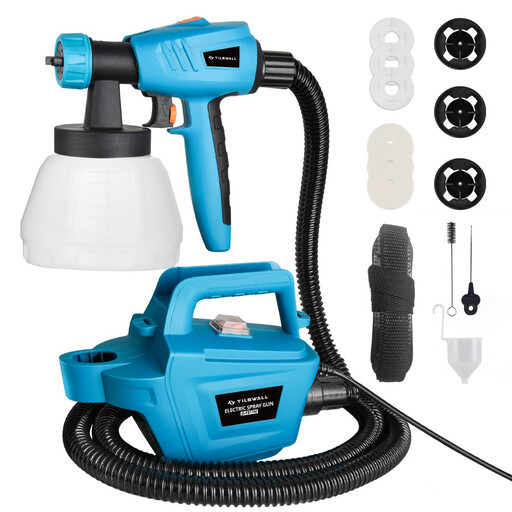
What Makes This Model Stand Out This model combines an 800-watt motor with a large 1300 ml paint container and a split design. The motor is carried separately, keeping the handheld unit light and preventing fatigue during extensive work. The high flow rate of up to 1100 ml/min ensures rapid work progress.
Advantages
Who Is It For? This system is aimed at users undertaking extensive indoor and outdoor projects who need a device that is both powerful and comfortable for prolonged use.
If our selection doesn't include the perfect model for your needs, you can find more alternatives and useful tools for your next project in our comprehensive Painting Accessories category.
1. Can you use regular wall paint in a paint sprayer? Yes, in most cases, this is possible. However, emulsion paint for walls usually needs to be thinned to achieve the right viscosity for the spray system. It is typically diluted with about 10% water. Always refer to the paint manufacturer's instructions and the maximum DIN-s rating of your device. An included viscosity cup helps in determining the correct consistency.
2. How do you properly clean an electric paint spray gun? Thorough and immediate cleaning after each use is crucial to prevent clogging. First, spray any remaining paint out of the device. Then, fill the container with the appropriate cleaning agent (water for water-based paints, white spirit for solvent-based lacquers) and spray the liquid through the system until it runs clear. Afterwards, dismantle the nozzle and air cap and clean all parts thoroughly with the included brushes and needles.
3. What does HVLP mean in a paint sprayer? HVLP stands for "High Volume, Low Pressure". This technology uses a large volume of air at low pressure (typically under 0.7 bar at the nozzle) to atomise the paint. This results in larger paint particles that hit the surface at a lower velocity. The outcome is less overspray, higher material transfer, and a very fine, controllable spray pattern, which makes HVLP systems particularly appealing for DIYers.