
Lieferung heute & morgen

Qualitätsgarantie

Willkommens-Angebote freischalten: KOSTENLOSE Lieferung | Bis zu 80 % RABATT | Kostenlose 30-Tage-JoyPlus-Testphase
App herunterladen
The electronics in modern vehicles are becoming increasingly complex. For professional automotive workshops, advanced DIY mechanics, and used car dealers, simply reading fault codes is often no longer enough. What's needed is a powerful tool that enables in-depth diagnostics, adjustments, and service procedures. This article serves as a guide to help you understand the essential functions of current automotive diagnostic tools and make an informed decision.
The decision to purchase a diagnostic tool should be based on objective technical parameters. Three criteria are of particular importance.
A professional diagnostic tool should not only access the engine (OBD2 standard) but ideally all systems installed in the vehicle. This includes the transmission, ABS, airbag (SRS), body control module (BCM), and many others. Pay close attention to the capability for bi-directional control. This function, also known as an active test, allows the tool to send commands to vehicle components to check their functionality (e.g., actuating a fan or testing injectors). Features like ECU coding are essential for advanced tasks, such as reconfiguring control units after a replacement or unlocking hidden vehicle functions.
Broad vehicle coverage is crucial. Check which makes and model years are supported. For working on newer vehicles, modern communication protocols like CAN FD (for many GM models from 2019 onwards) and DoIP (for newer BMW, Volvo, or Land Rover models) are relevant. These enable significantly faster data transmission. Another key point is access to secured vehicle networks. An official FCA AutoAuth license, for example, is necessary to perform a complete diagnosis on Fiat-Chrysler Group vehicles from the 2018 model year and newer.
The software of a diagnostic tool must be updated regularly to cover new vehicle models and functions. Different models exist here: some manufacturers charge annual subscription fees, while others offer lifetime free updates. For clear cost planning, especially in a commercial setting, a device with lifetime updates can be an economically advantageous choice.
Based on the criteria mentioned, we have compiled a selection of tools that are well-suited for professional and semi-professional use due to their technical specifications and range of functions.
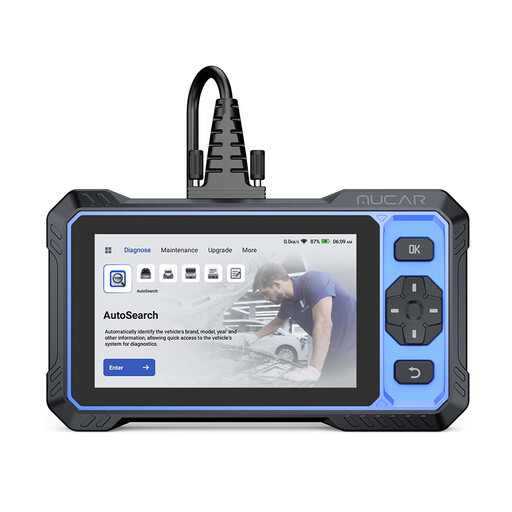
What sets it apart: The MUCAR 682 is a versatile diagnostic tool that combines OE-level system diagnostics with lifetime free updates. It is a solid choice for users seeking broad coverage and advanced features without ongoing costs.
Advantages:
Who it's for: Ideal for ambitious DIY mechanics and smaller workshops that need a powerful all-round tool with predictable costs.
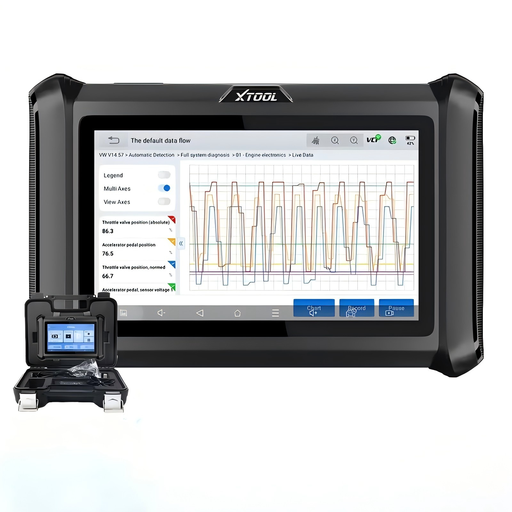
What sets it apart: The XTOOL D7S expands diagnostic capabilities with advanced ECU coding and a very large number of service functions. Its support for CAN FD and DoIP makes it a future-proof tool for a modern workshop.
Advantages:
Who it's for: Suitable for professional mechanics and workshops that regularly perform complex coding and a wide range of service procedures on various brands.
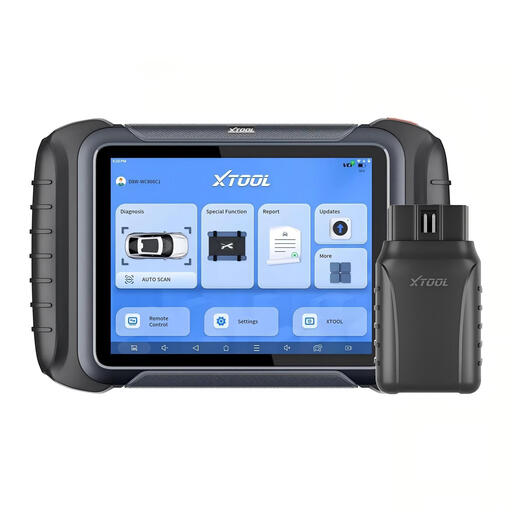
What sets it apart: The XTOOL D8W offers maximum flexibility with its wireless connection and advanced diagnostic features like topological module mapping. It is designed for demanding workshop use where efficiency and a detailed system overview are paramount.
Advantages:
Who it's for: The top choice for professional automotive workshops and diagnostic specialists who need a fast, wireless, and feature-rich diagnostic tool for the workshop to efficiently analyse even complex faults.
The models presented here cover a wide spectrum of requirements. However, if you are looking for a tool for a very specific application or with a different combination of functions, you can find more models in our main category.
Explore Our Full Range of Vehicle OBD2 Scanners
A basic OBD2 scanner can typically only read and clear emission-related fault codes from the engine control unit. In contrast, a professional all-system diagnostic tool can access all control units in the vehicle (e.g., ABS, airbag, transmission, comfort electronics), display live data, perform active tests, and execute service functions like resetting the oil or brake warning.
Bi-directional control (also called an active test) allows the diagnostic tool to send commands directly to the vehicle's actuators and components. Instead of just receiving data, the mechanic can, for example, command a specific injector to activate, turn on the fuel pump, or operate the power windows. This is extremely useful for verifying the function of components without having to remove them.
Yes, regular updates are crucial. Vehicle manufacturers continuously release new models and software versions for their control units. An update ensures that your diagnostic tool is compatible with the latest vehicles, receives new functions, and has known software bugs fixed. Pay attention to the update model when purchasing: some devices offer lifetime updates for free, while others require an annual subscription.