
Lieferung heute & morgen

Qualitätsgarantie

Willkommens-Angebote freischalten: KOSTENLOSE Lieferung | Bis zu 80 % RABATT | Kostenlose 30-Tage-JoyPlus-Testphase
App herunterladen
Modern vehicle maintenance requires more than just a wrench and technical skill. Complex electronic systems control nearly every function in a car. Anyone looking to perform repairs and maintenance themselves, or a workshop aiming to service a wide range of vehicles, needs a powerful automotive diagnostic tool. A simple device for reading fault codes is often no longer sufficient. Features like ECU coding, bidirectional control, and service resets are crucial for carrying out work at a professional level.
This article serves as a guide. It explains the key features to look for when choosing an automotive scan tool with coding and presents a selection of models relevant for ambitious DIY enthusiasts and independent workshops.
The market offers a multitude of devices with varying functional scopes. To make an informed decision, you should consider the following technical aspects.
A modern all-system diagnostic tool goes far beyond standard OBD2 functions. Look for the following advanced capabilities:
Newer vehicle generations use advanced communication protocols. A future-proof diagnostic tool should support them:
Vehicle technology is constantly evolving. Regular software updates are necessary to cover new vehicle models, functions, and bug fixes. Some manufacturers offer a diagnostic tool with lifetime updates. This can save significant costs in the long run, as there are no annual subscription fees.
Based on the criteria mentioned, we have compiled a selection of devices that stand out for their functionality and technical features.
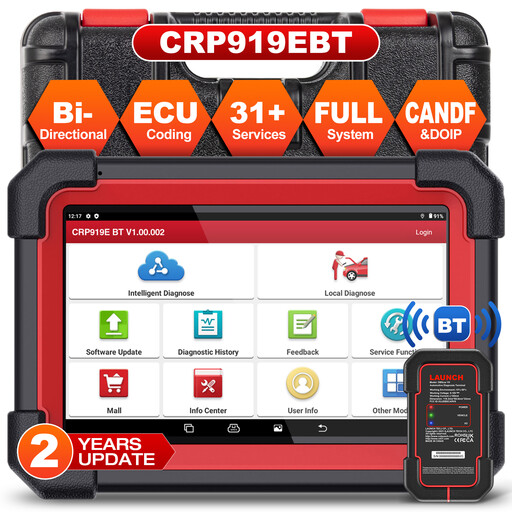
Why It Stands Out: The LAUNCH CRP919E BT is an evolution of the CRP919E and is distinguished by its Bluetooth diagnostic tool interface (DBScar VII VCI), which enables wireless operation. Support for the modern CAN FD and DoIP protocols makes it a versatile tool for current and future vehicle models.
Advantages:
Who It's For: This device is aimed at independent workshops and ambitious DIYers who need a powerful, multi-brand professional workshop diagnostic tool with wireless connectivity and support for the latest vehicle protocols.
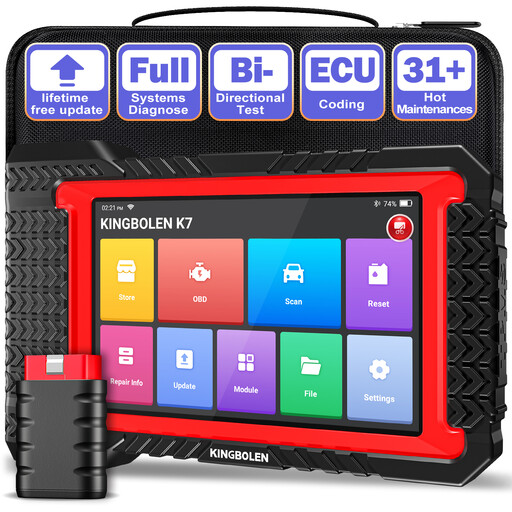
Why It Stands Out: The main feature of the KINGBOLEN K7 is the promise of lifetime free updates. This eliminates recurring costs and makes the device an economically attractive long-term investment. It offers a comprehensive range of functions, including both online and offline ECU coding.
Advantages:
Who It's For: Ideal for budget-conscious workshops and advanced DIYers looking for a future-proof ECU coding tool with no running costs and who value broad vehicle coverage.
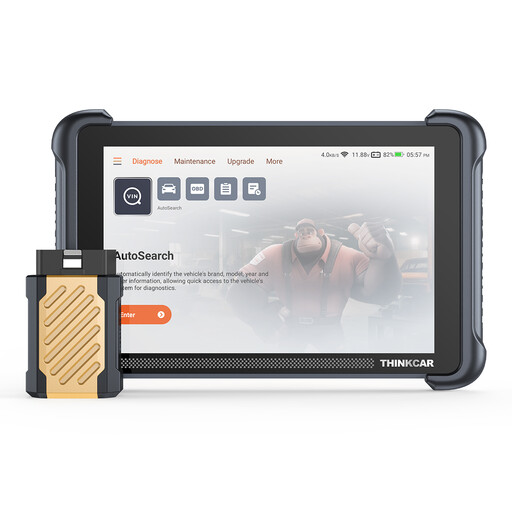
Why It Stands Out: The ThinkScan 689BT also combines lifetime free updates with an impressive number of over 34 service functions. Like the other models, it supports the CAN FD and DoIP protocols, providing a solid foundation for working on modern vehicles.
Advantages:
Who It's For: An excellent choice for technicians and enthusiasts looking for a device with a particularly high number of integrated service functions and the benefit of lifetime updates.
The devices presented here offer a broad range of functions for general vehicle diagnostics and maintenance. However, sometimes specialized tools are required for specific tasks. For example, if you want to specifically check the condition of your vehicle's battery and charging system, a dedicated testing device is useful.
Discover our selection of Car Battery Testers to find the right tool for your needs.
1. What is the difference between an OBD2 scanner and an all-system diagnostic tool? A standard OBD2 scanner, as required by law, can only access the engine control unit and read emission-related fault codes. In contrast, an all-system diagnostic tool can communicate with all control units installed in the vehicle, including ABS, airbag, transmission, air conditioning, and comfort electronics. This allows for a much deeper and more comprehensive fault diagnosis.
2. Can I damage my ECU with a coding tool?ECU coding involves changing configurations within the control unit. Improper use carries risks and can lead to malfunctions. It is crucial to follow the device's instructions carefully and be aware of the changes being made. For beginners, it is advisable to start with pure diagnostic functions and simple service resets to gain experience.
3. Do I always need an internet connection for ECU coding? This depends on the diagnostic tool and the vehicle manufacturer. Some devices support both online and offline coding. With online coding, the code data is retrieved directly from the manufacturer's server, which is often more precise but requires a stable internet connection. Offline coding uses the database stored in the device's software.