Who photographs autumn leaves on woodland paths?

Woodland landscape photographers

If you want to capture paths, groups of trees and autumn colours together, angle of view, ease of use and a suitable zoom are important things to consider. Nature photographer Vivienne Arnold’s woodland photography guide explores the specific challenges of photographing woods and trees.

Leaf detail photographers

If you want individual leaf veins, droplets or textures to fill the frame, check the lens’s minimum focusing distance and magnification ratio. The fotocommunity photography school explains that depth of field decreases as magnification increases.

All-weather walkers

If you take photos on damp paths or in drizzle, check the protection ratings for the camera body and lens separately, and consider the weight of your complete kit. OM SYSTEM and Ricoh Imaging Europe list weather protection features for certain camera models; this does not mean that every attached lens is protected.

What should you look for when choosing a camera?

First decide whether you’ll prioritise woodland views, fine leaf textures or reliable protection in damp weather. The points below will help you match your camera and lens to your main subject.

Priority What to check before buying Who is this especially important for?
Woodland views and angle of view Focal length range of the kit zoom and lens mount If I want to photograph paths and groups of trees alongside autumn leaves, I need an angle of view that suits my subjects. Around 33% of consumers prioritise woodland views and flexible framing.
Leaf veins and droplets Maximum magnification ratio and the lens’s shooting conditions If I want small details to fill a large part of the frame, I look at the magnification ratio rather than just the minimum focusing distance. Around 25% of consumers prioritise enlarged leaf details.
Sharp images in changing light In-body or lens stabilisation and a suitable shutter speed If I’m taking handheld photos between bright clearings and shadows, I want to limit camera shake while accounting for moving leaves. Around 25% of consumers prioritise photography in changing woodland light.
Weather protection and a light kit Protection for the camera body and lens, and the weight of the complete kit If I’m out in damp conditions and need to carry my kit for a while, I check its protection and total weight together. Around 17% of consumers prioritise weather protection and ease of carrying.

Common misconceptions when buying a camera

  • Assuming “close focusing” means true macro

    A short minimum focusing distance doesn’t tell you how large a leaf detail will appear on the sensor. Canon lists a maximum magnification ratio of 0.16x for the RF-S 18–45 mm at 45 mm with autofocus; Ricoh’s close-up function from 1 cm for the WG-90 refers to a distance, not a 1:1 magnification ratio.

    Decide how large you want the leaf veins to appear in the finished image, then compare the magnification ratios of the specific lenses you’re considering.

    You may need an additional, suitable lens for greater magnification.

  • Assuming the camera body’s weather protection applies to every kit lens

    A protection rating for the camera body doesn’t prove that the attached lens is protected too. OM SYSTEM lists IP53 for the OM-5 Mark II body; Canon doesn’t specify dust or splash protection for the RF-S 18–45 mm.

    Check the protection ratings for the exact camera body and lens you plan to use together.

    For a protected kit, you may need a suitably protected lens or additional rain protection.

  • Comparing only the weight of the camera body

    The lens affects the weight of the kit you’ll actually carry along the woodland path. OM SYSTEM lists the OM-5 Mark II at 418 g with battery and memory card; digitalkamera.de measured 672 g with a 12–45 mm kit lens.

    Compare the weight and contents of the complete, ready-to-use setup.

    Extra lenses and, where needed, a spare battery will add to the weight of your kit.

Camera brands and suitable product ranges

Canon

The EOS R50 with an RF-S standard zoom is an interchangeable-lens option for woodland views and the leaves around you.

  • Canon Europe lists the EOS R50 body at around 375 g with battery and card; the RF-S 18–45 mm features optical stabilisation.
  • No dust or splash protection is specified for this lens. Canon Deutschland lists its maximum magnification ratio at 45 mm as 0.16x with autofocus.

Nikon

Z50II kits with a DX zoom lens are worth considering if you want to choose a bundle suited to woodland views or greater reach.

  • Nikon Deutschland describes the kit with the NIKKOR Z DX 16–50 mm f/3.5–6.3 VR as a compact standard zoom with lens stabilisation.
  • This doesn’t automatically mean it has weather protection or is suitable for macro photography. Nikon notes that this kit doesn’t include a charger, so check exactly what’s included.

OM SYSTEM

The OM-5 Mark II is a weather-sealed interchangeable-lens option for walks in changeable weather.

  • OM SYSTEM Deutschland lists IP53 for the body and a weight of 418 g with battery and memory card.
  • The body’s protection doesn’t automatically apply to the lens you choose. digitalkamera.de measured 672 g with a 12–45 mm kit lens and lists a CIPA battery life of 310 shots.

Sony

The α6700 is an APS-C interchangeable-lens camera for anyone looking to combine in-body stabilisation with their choice of lens.

  • Sony Deutschland lists an APS-C sensor with around 26 MP, an E-mount and built-in 5-axis stabilisation.
  • Camera body specifications don’t tell you the magnification ratio or weather protection of a lens chosen separately.

Fujifilm

The X-S20 is an APS-C option with in-body image stabilisation for handheld photography.

  • Fujifilm lists 26.1 MP and 5-axis in-body image stabilisation. The 7.0-stop figure relates to the specified CIPA test with the XF35mmF1.4 R.
  • You can’t apply this test result to every lens or assume it will freeze leaves moving in the wind.

PENTAX

The WG-90 is a rugged camera with a fixed lens, ideal for walks where you don’t want to change lenses.

  • Ricoh Imaging Europe lists the WG-90 as waterproof to 14 m for up to two hours, among other features. It has a fixed zoom equivalent to 28–140 mm in 35 mm format and a close-up function from 1 cm.
  • Its 1/2.3-inch sensor and fixed lens set it apart from an interchangeable-lens camera. The minimum focusing distance alone doesn’t confirm a particular magnification ratio.

Joybuy products for woodland and leaf photography

The Joybuy products below are compact action cameras and digital cameras. Before buying, check that the design, zoom and stated weather protection suit your woodland or leaf photography.
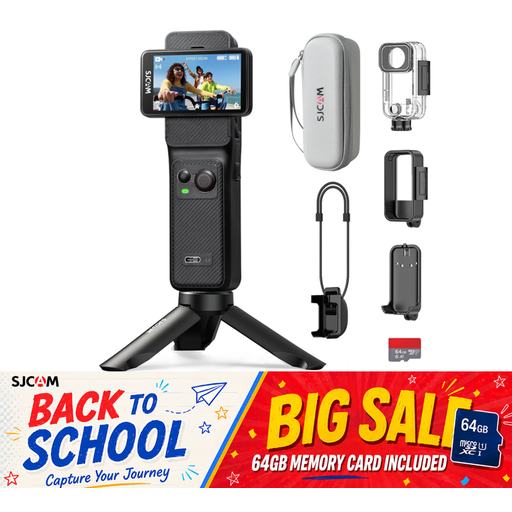
SJCAM C400 Action Camera 4K

SJCAM C400 Action Camera 4K

This action camera may appeal if you want to travel light on damp walks; its stated waterproof rating of up to 30 m relies on using the supplied waterproof case.

The product description lists 6-axis stabilisation, two touchscreens, 7 hours of battery life and a 64-GB card included.

Joybuy

KOMERY G7 5K Digital Camera

KOMERY G7 5K Digital Camera

If you’re looking for a portable point-and-shoot camera with digital zoom, check whether that zoom gives you enough flexibility to frame the woodland views you want.

The product description lists 80 MP, 18x digital zoom and 5K video.

Joybuy
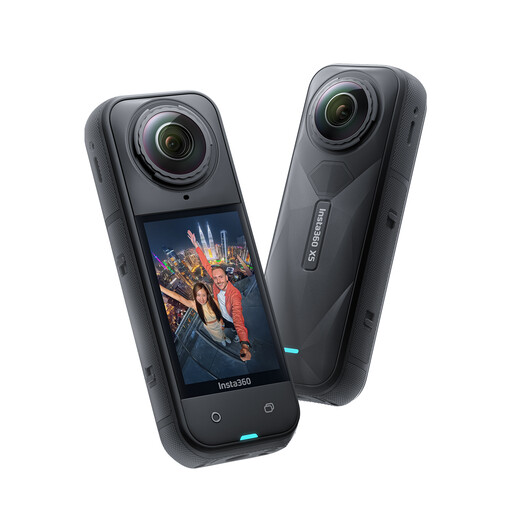
Insta360 X5 Waterproof 8K 360° Action Camera

Insta360 X5 Waterproof 8K 360° Action Camera

A 360° action camera may be a good choice for wide-angle scenes. Before buying, check that 360° capture and reframing afterwards suit the composition you’re after.

The product description lists 8K 360° video and a replaceable lens. Check the specific conditions of its stated water protection before use.

Joybuy
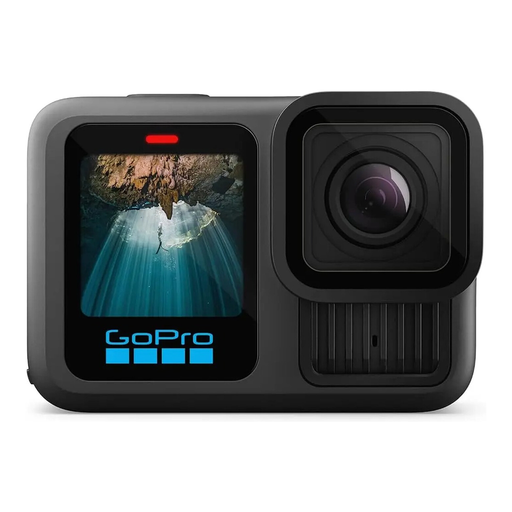
GoPro HERO13 Black Waterproof Action Camera

GoPro HERO13 Black Waterproof Action Camera

If you’re considering an action camera for woodland views and leaf photography, check that its design and compatible lens system suit your subjects.

The product description lists 27-MP photos, 5.3K60 video and compatibility with HB Series lenses. Check the specific conditions of its stated water protection before use.

Joybuy

Frequently asked questions

Do I need a macro lens straight away to photograph individual autumn leaves?

No, not if you want to show the whole leaf in its surroundings. If you want very small details to appear large in the frame, compare the maximum magnification ratio of the lens included in the kit: Canon lists 0.16x at 45 mm for the RF-S 18–45 mm with autofocus, not 1:1. Depth of field decreases at higher magnifications.

What should I check before my first woodland walk?

Check that the zoom lens fits your camera mount, and get familiar with the focus point, shutter speed and stabilisation before you head out. In wet conditions, check the protection ratings for the camera body and lens separately; a lens listed as unprotected isn’t made safe just because the camera body is protected.

What extra equipment and rights should I consider when buying a camera?

Check whether the kit includes the lens you need, a memory card and, if required, a charger; Nikon specifically notes that a documented Z50II kit doesn’t include a charger. When buying as a consumer, distinguish your statutory rights against the seller from a voluntary guarantee. Under § 438 BGB, claims for defects generally become time-barred two years from delivery.

Can I leave the woodland path to take a photo of a leaf?

There’s no general answer without knowing the specific location. Under § 14 of the Federal Forest Act, access to forests for recreation is generally permitted; individual states set out the details and restrictions. Nature reserves are also subject to specific protection rules. Check signs and local nature reserve regulations before leaving the path or touching plants.