For cooks with limited worktop space
If you want to put your appliance away after blending, a hand blender is a natural place to start. The SWR describes hand blenders as easy to handle and suitable for small quantities in an appropriate container.


For small batches of avocado dressing and limited worktop space, a hand blender that can be put away, used in a suitably narrow container, is usually the best place to start. A mini blender is more suitable if you also regularly make drinks or dips. In that case, check the space it takes up, the beaker and how much cleaning is involved, rather than judging it on wattage alone.
If you want to put your appliance away after blending, a hand blender is a natural place to start. The SWR describes hand blenders as easy to handle and suitable for small quantities in an appropriate container.
What matters is whether the blending tool, container and amount you’re making work well together. Check this with the container you plan to use, rather than assuming a general recommendation tells you the minimum quantity you can blend.
If you want to make dips or drinks as well as dressing, extra features or a dedicated blending beaker could come in handy. Weigh these against the space required and the parts you’ll need to clean and store afterwards.
A good fit if: You usually make small portions and want to put the appliance away after use. Check that the blending foot reaches far enough into your container for the portion you normally make.
The trade-off: You guide the appliance by hand, and accessory sets may need extra storage space.
A good fit if: You regularly make dips or drinks in its own beaker as well as dressing. Philips lists dips as a use for the HR2602/01 model; nutribullet does the same for the NB603DG model.
The trade-off: The base needs space while in use, and the beaker needs cleaning. A drinking lid alone doesn’t tell you whether the beaker and portion are right for your dressing.
A good fit if: You regularly blend larger quantities or other ingredients and have a dedicated place for it.
The trade-off: A larger design isn’t automatically better for small portions of dressing or limited worktop space.
| What to consider | What to check when buying | Who should pay particular attention? |
|---|---|---|
| Space and storage | Check the base’s dimensions against the space available, and allow for storage space for the beaker and accessories. | I want to clear my worktop after blending and be able to put the appliance away; around 36 % of consumers put space requirements first. |
| Portion and container | Check the container’s shape and usable capacity for your usual portion. With a hand blender, make sure the blending foot can be immersed far enough. | If I’m only making a little dressing, the tool should suit both my portion and my container; around 29 % of consumers put portion size first. |
| Cleaning | Check which parts need cleaning and what the instructions say about how to clean them. | I want to clean the appliance after each use without having to deal with an unnecessary number of separate parts; around 21 % of consumers prioritise ease of cleaning. |
| Other blending jobs | Decide what else you’ll use it for, then compare what’s included and how much storage space you’ll need. | If I also blend dips or drinks, extra features should genuinely suit my day-to-day needs; around 14 % of consumers put other blending jobs first. |
Even a small blender needs space while it’s running. A hand blender set may also need extra storage space for the beaker and accessories.
Measure the space you have and compare it with the dimensions of the specific model. Also think about where you’ll keep the beaker and accessories after blending.
Wattage figures describe different appliances; they don’t tell you how they’ll perform with the same portion of dressing under comparable conditions.
Start by checking the portion size, container, intended uses and ease of handling. Don’t use wattage alone to rank appliances for avocado dressing.
For the ESGE M 250, the basic appliance and a container described as suitable for salad dressings are listed separately. So the beaker isn’t automatically included in every package.
Check the full model and package name against the list of included parts before relying on a particular container or attachment.
Worth considering if you’re comparing hand blenders and what comes in a set.
The HR2602/01 mini blender is worth considering if you want to make dips or drinks as well as dressing.
The Kult X Mix & Go is aimed at anyone who wants to make drinks to take away as well as dressing.
The Original 600 NB603DG is an option if you make dips or smoothies as well as dressing.
Zauberstab models are an alternative to other hand blenders if you want to blend directly in a container you already own.
The Joybuy products below are hand blenders for use in a suitable container, and can be put away after use.
 No image available
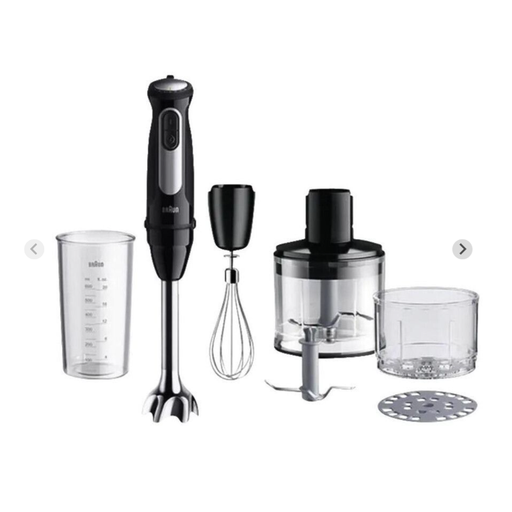
As a hand blender, this model is suitable for blending in your chosen container; whether it works for your portion also depends on the container’s shape.
The product description lists 1000 W, Turbo Boost and an ice-crusher attachment.
 No image available
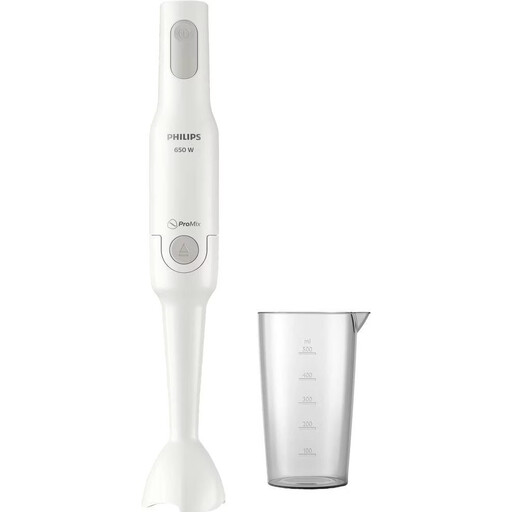
This hand blender with blending beaker is designed for use in your chosen container. Check that the beaker and portion are right for your needs.
The product name lists 650 W. According to the product description, the detachable parts are dishwasher-safe.
 No image available
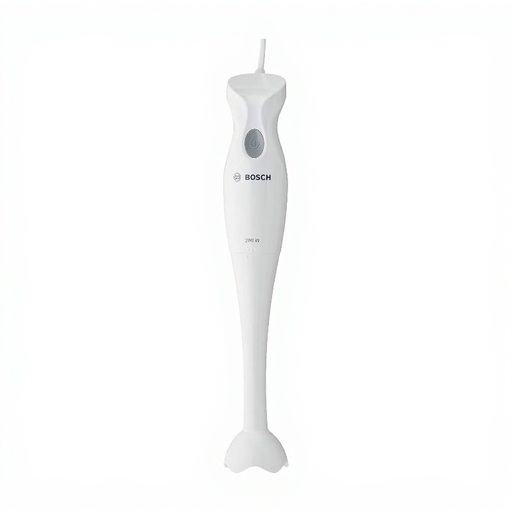
The product description recommends using a tall, narrow container. Check whether it suits the portion of dressing you usually make.
The product name lists 280 W. The description lists a width of 61 mm, a weight of 0,6 kg and a detachable, dishwasher-safe blending foot.
 No image available
This hand blender with beaker may suit blending in your chosen container; check whether the beaker is right for your portion of dressing.
The product name lists 700 W. The description lists a 600-ml beaker, two speeds and detachable parts.
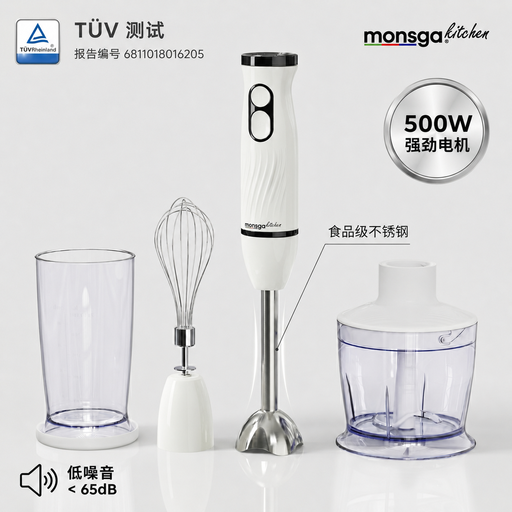 No image available
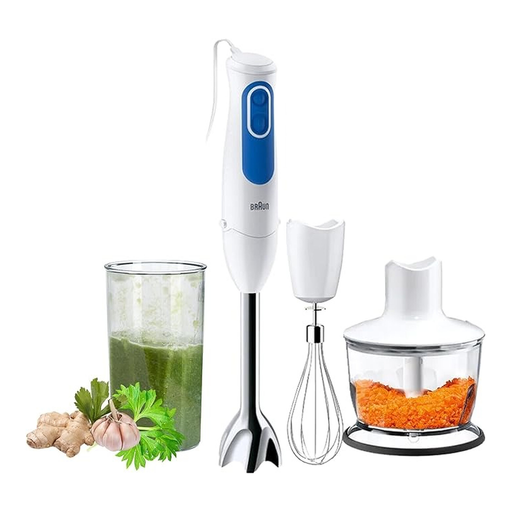
This set is an option if you want to use a whisk and chopper as well as make dressing; allow space to store the extra parts.
The product name lists standard and turbo modes, plus a 500-ml beaker and a 500-ml chopper. According to the product description, the detachable parts are dishwasher-safe.
For small portions, a hand blender that you can put away, used with a suitable container, is a good place to start. If you regularly blend drinks in their own beaker, compare mini blenders based on their actual dimensions and how much cleaning they involve.
Read the instructions for the specific model, check which containers are intended for use with it, and make sure attachments are securely fitted. For the ESGE M 250, the manufacturer lists 220–240 V and a maximum continuous operating time of five minutes; these details don’t automatically apply to other models.
Check the instructions to see how each part can be cleaned and whether you’ll need extra beakers or attachments for the jobs you have in mind. If a product is faulty, your statutory rights against the seller are separate from any voluntary guarantee. The Verbraucherzentrale also explains that ordinary online purchases generally come with a 14-day right to cancel, although exceptions may apply.
EU rules on food-contact materials apply to parts intended to come into contact with food. Electrical appliances are subject to the relevant EU regulations; the Bundesnetzagentur says its checks include looking for CE marking, product identification and German-language instructions. A CE mark isn’t a performance test for avocado dressing.