Small batches
If you’re making just one portion of dressing, a handy appliance that takes up little space matters. ETM TESTMAGAZIN describes easy, space-saving storage as an advantage of a hand blender.


For a small batch of avocado dressing that you’re serving straight away, a hand blender with a suitable beaker is often a space-saving choice. ETM TESTMAGAZIN highlights how easy it is to store compact hand blenders, but you should still check that the beaker suits the quantity you plan to make and find out how the parts need to be cleaned. A mini blender may be a better fit if you want to store or take your dressing with you in a sealed container, while a larger countertop blender can make sense if you have other blending jobs or larger quantities in mind. Wattage alone tells you neither how quiet a blender is nor whether it’s suitable for every small batch.
If you’re making just one portion of dressing, a handy appliance that takes up little space matters. ETM TESTMAGAZIN describes easy, space-saving storage as an advantage of a hand blender.
You want to clean the accessible parts quickly after blending, before someone else uses the kitchen. Bosch Home Appliances lists a removable metal blending foot for the MSM64110, but remember to check the care instructions for each part.
If you’re blending at a time when you might disturb others, check how noisy the exact model is. COMPUTER BILD reviews individual hand blenders separately; wattage is no substitute for comparing them.
A good fit if: you want to make a small batch straight away, then put the appliance and accessories away.
The trade-off: You guide the appliance yourself while blending, and splash protection and cleaning requirements vary by model. COMPUTER BILD noted that the tested Kenwood HDP106WG was difficult to clean.
A good fit if: you want to store or take your dressing with you in the blending container. WMF lists a 0.6-litre container with a lid for the Kult X Mix & Go.
The trade-off: The container, lid and blade unit all need cleaning after use. Its capacity doesn’t prove that every small batch will blend well in it.
A good fit if: you regularly blend other ingredients or larger quantities, and have room for the appliance and its container.
The trade-off: If you only make a small batch now and then, the extra uses don’t automatically justify the additional space and cleaning. Check whether the specific model can handle the quantity you want to blend.
When choosing a blender for small batches of avocado dressing in a shared kitchen, start with what matters most to you: a suitable portion size, easy cleaning, consideration for others or the ability to tackle other blending jobs.
| Priority | What to check before buying | Who it matters most to |
|---|---|---|
| Small batch and minimal counter space | Beaker size, dimensions and the manufacturer’s guidance on the intended fill quantity. | If I’m making just a small batch, I want the beaker and appliance to suit the quantity and fit on my limited worktop. This is the main priority for around 36% of consumers. |
| Cleaning after shared use | Care instructions for the blending foot, blade area and container; only put parts in the dishwasher if the manufacturer says they are dishwasher-safe. | After blending, I want to be able to reach the parts that come into contact with food and clean them according to the instructions. Cleaning is a priority for around 29% of consumers. |
| Being considerate of others and avoiding splashes | Noise and splash-protection reviews for the specific model, as well as a suitable beaker. | If other people are in the kitchen, I want to minimise splashes and know how noisy the specific model is. Being considerate of others is the main priority for around 21% of consumers. |
| Other blending jobs | The ingredients and quantities you plan to use, along with the intended uses and accessories for the specific model. | If I want to use the blender for other ingredients too, suitable uses matter more than making dressing alone. Versatility comes first for around 14% of consumers. |
Power, noise and blending results are separate characteristics. Wattage alone doesn’t tell you how a particular model will perform with a small batch of dressing.
Compare reviews of the exact model for the feature that matters most to you.
Removable doesn’t mean every part can go in the dishwasher. COMPUTER BILD described the blending foot of the tested Kenwood HDP106WG as not dishwasher-safe.
Check the care instructions for the blending foot, beaker and blade unit separately. If parts need to be washed by hand, cleaning will take extra time after blending.
Having more uses doesn’t tell you whether the specific model will blend a small quantity of dressing well. A larger appliance can also take up more space and require more cleaning.
Start by considering your usual portion size and the other blending jobs you actually plan to do.
The features and limitations below apply to the specific models mentioned, not necessarily to a brand’s entire range.
The Triblade HDP106WG is a hand blender supplied with a 700-ml beaker.
ErgoMixx models such as the MSM64110 are hand blenders with a removable blending foot and a mixing or measuring beaker.
The SM 3773 is a hand blender with a removable blending shaft and a 0.7-litre container with a lid.
The MultiQuick range includes hand blenders with different features; what’s included and how each one handles depend on the specific model.
The Kult X Mix & Go is a mini blender with a sealable container.
The products below include hand blenders for sauces and blending in a beaker. Before buying, check that the portion you plan to make falls within the manufacturer’s guidance for the specific model, and see what information is available about the parts that come into contact with food.
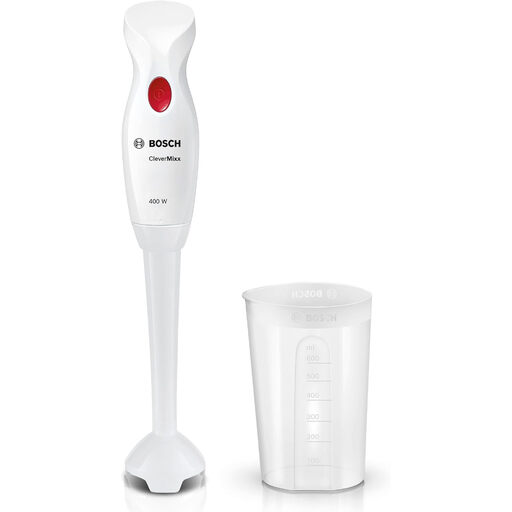 No image available
Worth considering as a hand blender for dressing; check whether a suitable beaker is included and if the portion you plan to make falls within the manufacturer’s guidance.
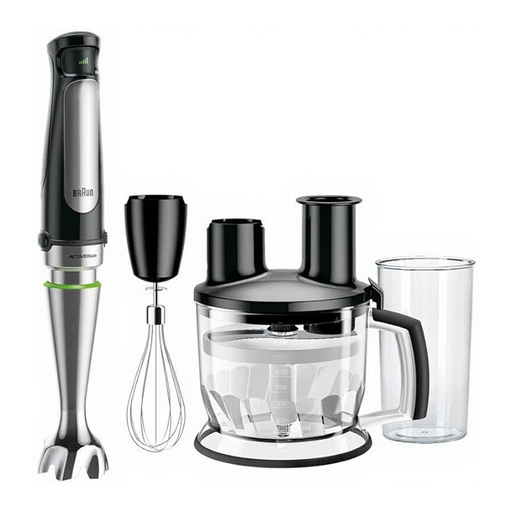 No image available
If you’re planning other blending jobs as well as making dressing, check which accessories are included in the specific offer and whether the quantity you plan to make is suitable for the model.
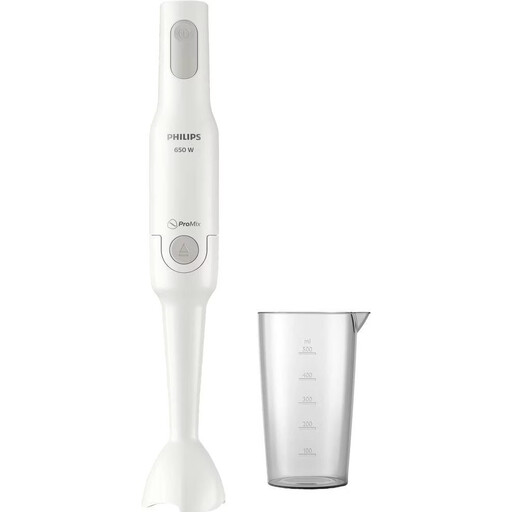 No image available
The product name mentions a mixing beaker, but check whether the quantity of dressing you want to make is suitable for this specific model.
 No image available
The product name mentions a beaker and additional accessories; check that the beaker’s capacity suits your portion and which parts you’re likely to use.
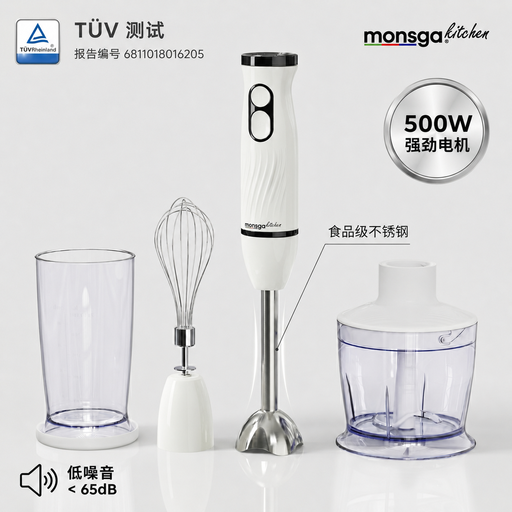 No image available
The product name mentions a beaker and an anti-splash design; check the recommended portion size and which parts the instructions say are safe to clean.
No, you shouldn’t assume that all parts are dishwasher-safe. Detach removable parts from the motor handle and check the care instructions for the exact model and each accessory. The German Federal Institute for Risk Assessment offers consumer advice on cleaning as part of food hygiene.
No. A lid is for sealing or taking the container with you; it doesn’t tell you the smallest quantity the blender can process. Check the details and instructions for the specific model.
According to the European Commission, food contact materials must meet the requirements of Regulation (EC) No 1935/2004. Whether an electrical appliance needs CE marking depends on which harmonised EU rules apply to it. Check the manufacturer’s information about the parts that come into contact with food and the applicable marking requirements.
You can’t work this out from the container’s capacity alone. Check the manufacturer’s instructions for the specific model and compare them with the portion you usually make.