Families making several breakfast portions
If you want to prepare several portions at once, the jug’s usable capacity matters more than its maximum capacity.


A jug blender is a good choice for making several breakfast portions, provided the total amount you need fits within its stated usable capacity. A compact portable blender is better suited to smaller portions if you don’t mind blending in several batches. Soft avocado alone doesn’t call for a high-powered blender; if you regularly use fibrous or frozen ingredients, choose a model based on how well it handles those specific tasks.
If you want to prepare several portions at once, the jug’s usable capacity matters more than its maximum capacity.
If you use your blender frequently, check which parts of the specific model can be removed and are listed by the manufacturer as dishwasher-safe.
If you regularly add fibrous or frozen ingredients to your avocado, check that the product information and tests cover those specific blending tasks.
First, decide whether you want to blend the whole breakfast quantity in one go. Then compare how easy the blender is to clean, and check that it can handle the ingredients you regularly add to your recipes beyond soft avocado.
| Buying priority | What to check | Who is it important to? |
|---|---|---|
| Several portions at once | Compare the quantity in your recipe with the usable capacity; don’t confuse this with the jug’s maximum capacity. | If you want to make several breakfast portions in one go, the jug’s usable capacity is key. Around 36% of consumers put family-sized capacity first. |
| Quick and easy cleaning | Check whether the blades can be removed on the specific model and which parts are dishwasher-safe. | If you blend frequently in the morning, you’ll want to get the jug and blades ready for next time without a fuss. Around 29% of consumers consider cleaning a top priority. |
| Fibrous or frozen ingredients | Check the manufacturer’s information and model-specific tests for these exact ingredients; wattage alone doesn’t tell you how well a blender will perform. | If you regularly add fibrous or frozen ingredients to your smoothies as well as avocado, make sure the blender can handle them. Around 21% of consumers prioritise these additional ingredients. |
| Small portions and limited worktop space | Consider the usable capacity per blending cycle, the appliance’s dimensions and the number of cups supplied separately. | If you’re short on worktop space and usually blend individual portions, making several batches may suit you better than using a larger jug. Around 14% of consumers prioritise a compact design. |
The Bosch MMB6762M has a maximum jug capacity of 3 l but a usable capacity of 2 l. For family-sized portions, what matters is whether the usable capacity is enough for your recipe.
Compare the amount you plan to make with the usable capacity stated for the specific model.
A CHIP test reports that high power alone doesn’t guarantee good blending results. With soft avocado, portion size and cleaning matter; fibrous or frozen ingredients bring different demands.
If you regularly use additional ingredients, check the information or test results for the specific model and use.
The stated usable capacity of each blending cup for the Tefal BL15F is 0.6 l. Two cups don’t increase the quantity you can blend at the same time.
Compare the number of cups and the usable capacity per blending cycle separately.
The Verbraucherzentrale distinguishes your statutory rights against the seller from a voluntary guarantee, which is subject to separate terms and conditions.
If there’s a fault, contact the seller and have your proof of purchase ready. Check the terms of any additional guarantee separately.
The VitaPower Serie 6 MMB6762M is a jug blender for larger quantities and additional blending tasks.
The BL91HD is a larger jug blender, while the BL15F is a compact option for smaller individual portions.
The PowerBlend JB1000WH and JB9040 models differ in usable capacity and choice of programmes.
The 5000 Series HR3030/00 is a glass jug blender for smoothies and other blending tasks.
The Gourmet 6 TB6-1-6ST is a jug blender with a stated usable capacity and recipe programmes.
The Joybuy products below are jug and smoothie blenders for breakfast drinks. Compare the stated capacity of each with the amount you plan to make, and consider whether you might need to blend in several batches.
 No image available
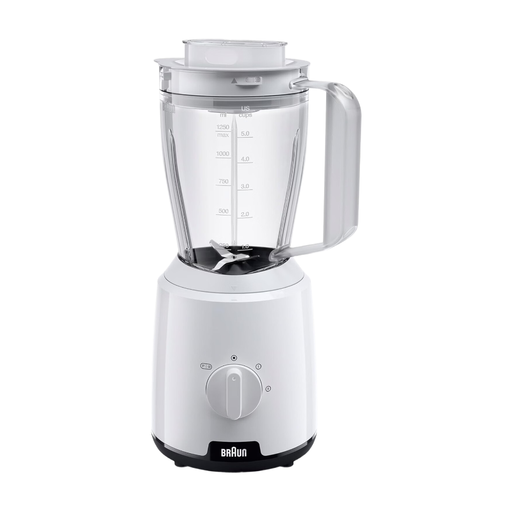
The product title lists an ice-crush function for smoothies with the occasional addition of ice.
The title lists a 1.5-l blending jug, 600 W, two speeds and a pulse function. Braun states that the JB1000WH has a usable capacity of 1.25 l. The product description says that the removable parts are dishwasher-safe. The instructions advise running the blender for no more than 2 minutes at a time and allowing the motor to cool between cycles.
 No image available
For fruit and vegetable smoothies, the product description highlights a detachable design for easy cleaning.
The title lists 600 W, 1.5 l, three speeds and an ice-crushing function. The description says to clean it with warm, soapy water.
 No image available
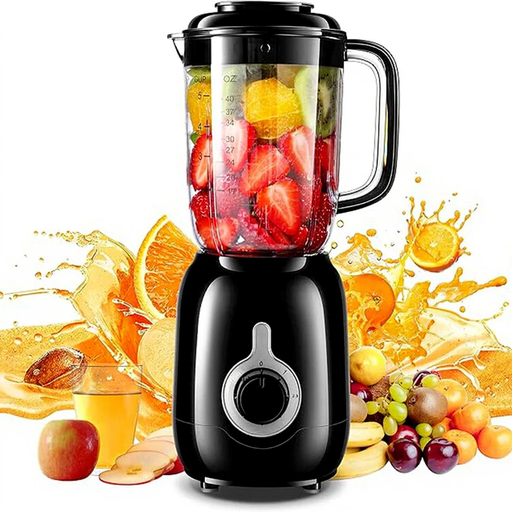
The product description lists smoothies and crushing ice among its uses.
The title lists 500 W, two speeds, a pulse function and four stainless steel blades. The instructions say to add at least 300 ml of liquid.
 No image available
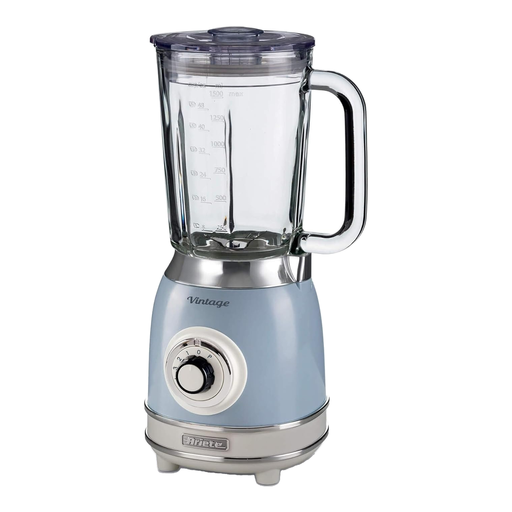
The product title lists an ice-crushing function for smoothies with ice.
The title lists 1.5 l, 1,000 W, four speeds and a pulse function. The description lists a glass jug and dishwasher-safe components.
 No image available
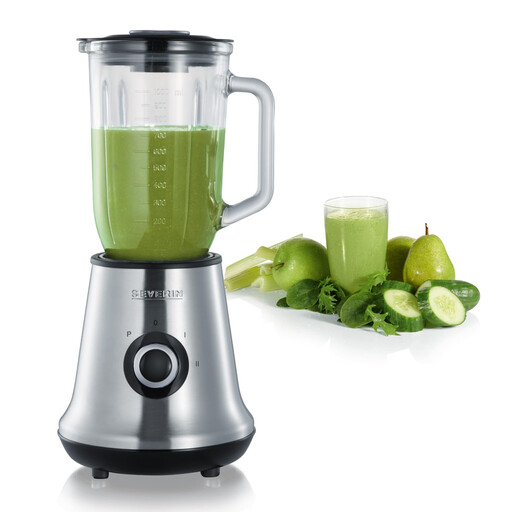
The product description lists smoothies and shakes, while the title mentions a filling opening.
The title lists a 1.0-l glass jug, 500 W, two speeds and a pulse function.
Add together the recipe quantities for all the portions you want, then compare the total with the usable capacity of the specific model. For example, Bosch distinguishes between the MMB6762M’s maximum jug capacity of 3 l and its usable capacity of 2 l.
Remove the stone and use only the flesh. The Federal Centre for Nutrition recommends loosening the stone from the flesh with a spoon.
The German Federal Institute for Risk Assessment recommends drinking freshly made smoothies as soon as possible. For green smoothies, it specifically advises keeping them at no more than 7 °C until they’re consumed and drinking them on the day they’re made; this isn’t a product-specific guarantee of shelf life.
No. Blending doesn’t replace heating. The German Federal Institute for Risk Assessment recommends that frozen berries are thoroughly heated before consumption, particularly for people in vulnerable groups.
For new mains-powered appliances placed on the market in Germany and designed for 50 to 1,000 V AC, the 1. ProdSV requires, among other things, an EU declaration of conformity following the prescribed procedure and CE marking by the manufacturer. Before making an appliance available for sale, retailers must check, among other things, its markings, operating instructions and safety information in German.