Single portions when space is limited
If you usually blend for yourself, a compact appliance and a cup that’s easy to store are important considerations. KONSUMENT describes smoothie makers as more compact and better suited to smaller quantities.


For a single avocado smoothie when space is limited, a compact smoothie maker with a drinking cup is usually enough. If you want to make several portions or tackle other kitchen tasks, a traditional blender may be a better fit. The Austrian consumer information association (VKI) points out that a high wattage alone doesn’t guarantee good blending results. So compare the appliance’s dimensions, container capacity and ease of cleaning, and check that the model you’re considering is suitable for your ingredients.
If you usually blend for yourself, a compact appliance and a cup that’s easy to store are important considerations. KONSUMENT describes smoothie makers as more compact and better suited to smaller quantities.
If you use your blender regularly, it’s worth checking in advance how easy it is to clean the cup, lid, seals and blade unit. Dishwasher suitability can vary from one component to another.
If you want to make larger quantities, sauces or dips as well as smoothies, a traditional blender may be better suited to your needs. Make sure you have enough space for both using and cleaning it.
A good fit if: you mainly make single portions and have limited worktop space.
Things to consider: The smaller container is less practical for making several portions. Also check how easy the blade and cup are to clean.
A good fit if: you regularly make several portions or prepare dishes other than smoothies.
Things to consider: A larger container takes up more space. If you’re making single portions, check that the model works well with smaller quantities.
| Criteria | What to check before buying | Who it matters to |
|---|---|---|
| Footprint and portion size | Compare the appliance’s full dimensions, storage requirements and the cup’s actual capacity. | If I’m blending for one and have very little worktop space, I want to know whether the appliance and cup will both fit. Shoppers whose main concerns are limited space and single portions are likely to make up around 36% of those interested in buying in this scenario. |
| Cleaning | Check which parts of the specific model can be taken apart and are dishwasher-safe. | If I make smoothies frequently, I want to clean the cup and blade unit without any fiddly steps. Shoppers who prioritise ease of cleaning are likely to make up around 29% of those interested in buying in this scenario. |
| Frozen or hard ingredients | Check the product details and manual to see which ingredients and quantities the model is designed for; don’t judge by wattage alone. | If I want to use frozen fruit or ice, the appliance must be specifically suitable for it. Shoppers whose main concern is blending frozen ingredients are likely to make up around 21% of those interested in buying in this scenario. |
| Several portions and other uses | Compare the usable capacity with the applications the model is designed for. | If I also want to make dips, sauces or larger quantities, I need a container that’s suitable for those portions. Shoppers who prioritise versatility are likely to make up around 14% of those interested in buying in this scenario. |
The VKI points out that a high power rating alone is no reliable guarantee of good blending results.
Check that the specific model is suitable for your ingredients, and consider the container and blade system as well as the power.
The product information may apply to only some components. The blade unit, for example, may need to be cleaned separately.
Check the manual for your specific model to see how to clean the cup, lid, seal and blades.
If any parts need to be washed by hand, factor in the extra cleaning after each use.
In a small kitchen, you’ll also need space for the cup or blending jug when it’s attached.
Compare the appliance’s full dimensions with your worktop and intended storage space.
The VitaPower Serie 2 MMB2111S is a mini blender with a 0.6-litre to-go cup for single portions.
The Kult X Mix & Go combines a compact blender with a 0.6-litre container that can also be used as a drinking bottle.
The PowerBlend 1 JB1050WH is a traditional blender with a glass jug.
The BlendBoss is a smoothie maker with a drinking cup and automatic programmes.
This selection focuses mainly on compact smoothie makers with drinking cups for single portions, as well as one traditional blender with a larger container.
 No image available
The blending and drinking cup makes this a good option if you want to prepare a portion without transferring it to another container.
The product title lists three automatic programmes, an ice-crushing function and dishwasher-safe parts.
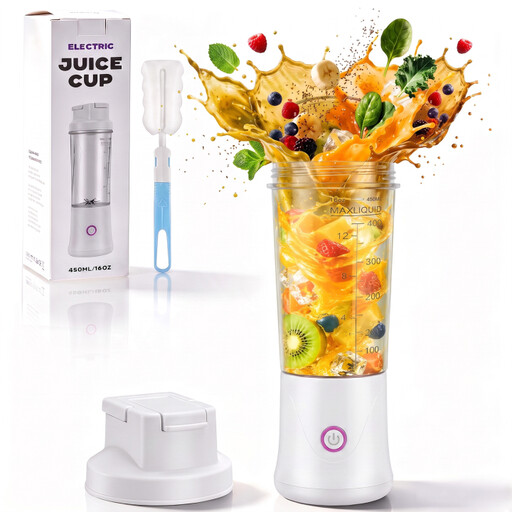 No image available
The portable design and stated capacity make it suitable for a single portion.
The product description recommends cutting ingredients into smaller pieces before blending and not overfilling the container.
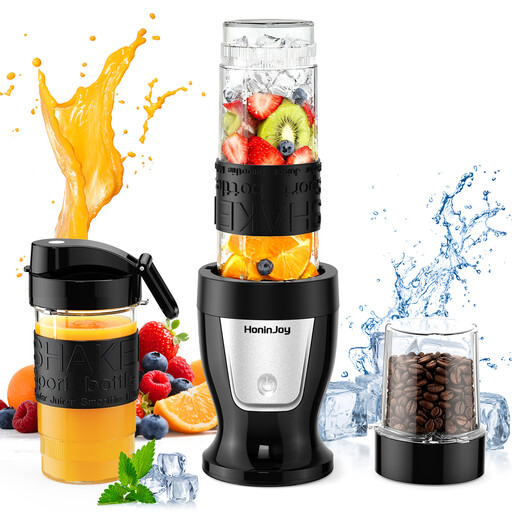 No image available
Two portable cups are useful if you want to prepare single portions to take with you.
The product title lists 20 oz and 14 oz cups, as well as a grinder cup.
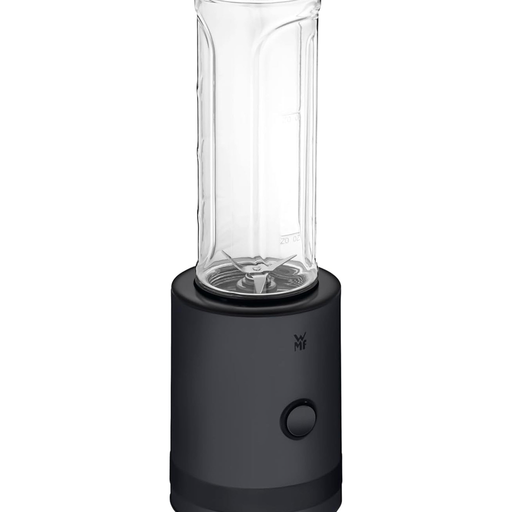 No image available
Two containers designed for blending and drinking can be handy when you’re preparing single portions.
The product title lists a power rating of 300 W. According to the description, the containers and lids are dishwasher-safe; the blade unit should be rinsed under running water. The stated maximum continuous running time is one minute.
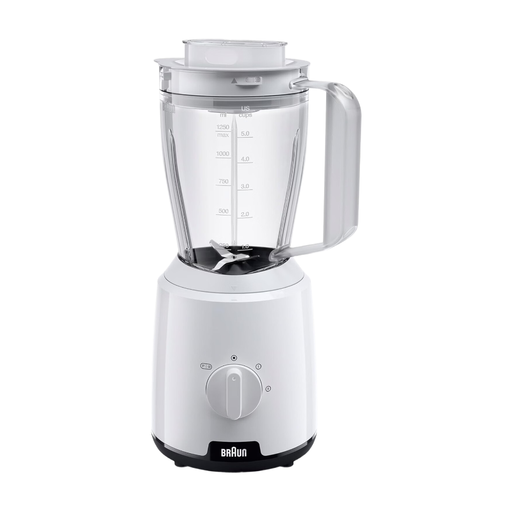 No image available
The larger container may suit you if you want to prepare more than a small portion or make other dishes; check that it fits in your kitchen.
The product title lists a power rating of 600 W, two speeds and an ice-crushing function.
For a thinner consistency, add water, milk or a suitable plant-based alternative, then blend again. Make sure you don’t exceed the fill line of the container you’re using.
Not always: some appliances have only certain components that are dishwasher-safe. Check the manual for your specific blade unit and clean any hard-to-reach areas as directed.
The seller is generally responsible for your statutory rights; a voluntary guarantee is separate. If there’s a fault, the first step may be to have the appliance repaired or replaced.
For electrical appliances covered by the relevant rules, the manufacturer uses the CE mark to declare that the product meets applicable EU requirements. It isn’t an individual approval issued by a central EU body. Check the mark on the listing or appliance for the specific product variant.