
Lieferung heute & morgen

Qualitätsgarantie

Willkommens-Angebote freischalten: KOSTENLOSE Lieferung | Bis zu 80 % RABATT | Kostenlose 30-Tage-JoyPlus-Testphase
App herunterladen
Buying a new bed is a decision that impacts your daily life for years. Yet, the market is flooded with models whose true quality often only reveals itself after months of use. A squeaky frame, sagging slats, or fabric that wears out quickly—these problems are avoidable. This guide will help you identify the crucial features and find a bed that truly meets your standards for stability, function, and style.
Before we dive into the important features, let's look at three typical problems that often lead to disappointment:
To avoid the problems mentioned above, you should check three key aspects before buying. These form the foundation for a durable and satisfying choice.
The stability of a bed is directly linked to its construction. Pay attention to the following objective criteria:
The material determines not only the look but also the durability and maintenance effort.
A good bed adapts to your life circumstances—not the other way around.
Here are some models that represent a considered choice for different requirements, based on objective features.
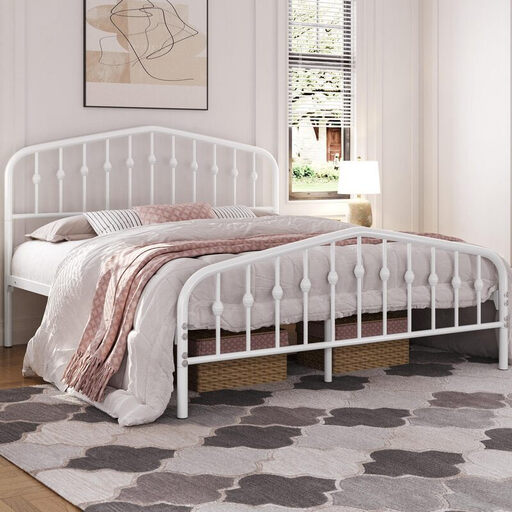
Why it's a great fit: Perfect for a first apartment together. It combines a generous sleeping area with a timeless design and a solid construction, without breaking the bank.
The design with 12 metal slats and 9 support legs counteracts the instability trap. The 32 cm ground clearance solves the problem of wasted space.
High weight capacity up to 363 kg; scratch-resistant powder coating; no separate slatted base required.
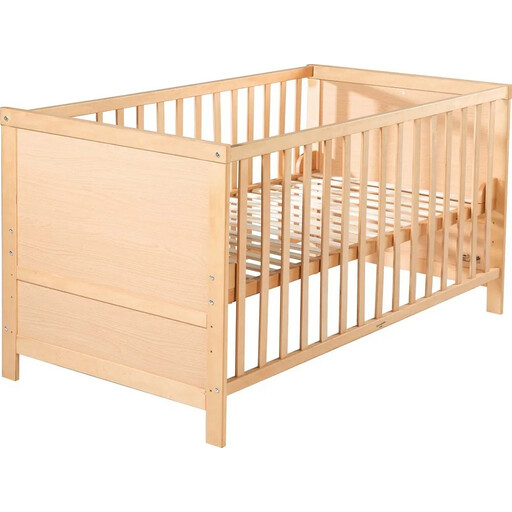
Why it's a great fit: A long-term investment that grows with your child. It covers needs from infancy to primary school age, saving on future costs.
This bed solves the flexibility trap, as it can be converted from a crib to a junior bed in a few simple steps, ensuring it remains useful for many years.
3-level height adjustment; 3 removable bars for independent entry and exit; converts to a junior bed without needing to buy extra parts.

Why it's a great fit: For anyone seeking a **modern bed frame** with comfort. The fabric cover and padded headboard create a cosy atmosphere in contemporary bedrooms.
Attaching the slats with Velcro fasteners prevents squeaking. The height-adjustable headboard solves the problem of incompatibility with different mattress heights.
Headboard can be mounted at two heights (107.5 cm and 117.5 cm); noise-dampening construction; no box spring required.
We've compiled a complete, up-to-date list of products that meet these strict selection criteria and safety requirements.
For a double bed (e.g., 140x200 cm, 160x200 cm, or larger) that will be regularly used by two adults, a manufacturer-specified maximum static weight capacity of at least 250 kg is recommended. This ensures the frame can support the weight of the occupants plus a heavy mattress over the long term without material fatigue. Models with a capacity over 300 kg offer an additional safety margin.
Not necessarily. Many modern metal beds are sold as a complete system with integrated metal or wooden slats that are already matched to the frame. Check the product description to see if a slatted base is included. If so, you won't need an additional one and can place the mattress directly on top.
A "convertible" or "grow-with-me" crib is designed to adapt to the different developmental stages of a child. Typically, it starts as a crib with a high mattress position for infants. Later, the mattress level can be lowered. As the child grows, some of the bars (toddler rails) can be removed, and eventually, the slatted sides can be completely detached to transform it into an open junior bed. This extends its usability from a few months to several years.