
Lieferung heute & morgen

Qualitätsgarantie

Willkommens-Angebote freischalten: KOSTENLOSE Lieferung | Bis zu 80 % RABATT | Kostenlose 30-Tage-JoyPlus-Testphase
App herunterladen
Deciding to buy an e-bike is the first step towards greater mobility and riding enjoyment. But the market is overwhelming and full of technical jargon. Many buyers focus on the wrong features and end up dissatisfied shortly after their purchase. To ensure this doesn't happen to you, we'll show you the three pitfalls you should know about and which objective criteria truly matter.
Marketing promises can often create more confusion than clarity. Pay close attention to these three points to make an informed decision:
To find the right electric bike for you, you should focus on the technical facts that match your individual needs.
The position of the motor has a major impact on the bike's handling.
Conclusion: Pay less attention to the 250 watts and more to the torque (Nm) and motor position. For everyday and touring riders, 50–70 Nm is a good benchmark. Sporty e-mountain bike riders will benefit from 85 Nm or more.
A battery's capacity is measured in watt-hours (Wh). This value is the most reliable indicator of potential range. It is calculated from the voltage (Volts, V) and the nominal charge (amp-hours, Ah). A 500 Wh battery offers more energy reserves than a 400 Wh one, regardless of the voltage. For daily commutes in the city, a 400–500 Wh battery may be sufficient. For long tours or hilly regions, capacities of 600 Wh or more are recommended.
An e-bike is heavier and faster than a conventional bicycle. Reliable brakes are therefore not a luxury, but a necessity.
A robust derailleur system from established manufacturers (e.g., Shimano or SRAM) with a sufficient number of gears ensures efficient riding on varied terrain.
Based on these objective criteria, we have compiled a few models for different user profiles.
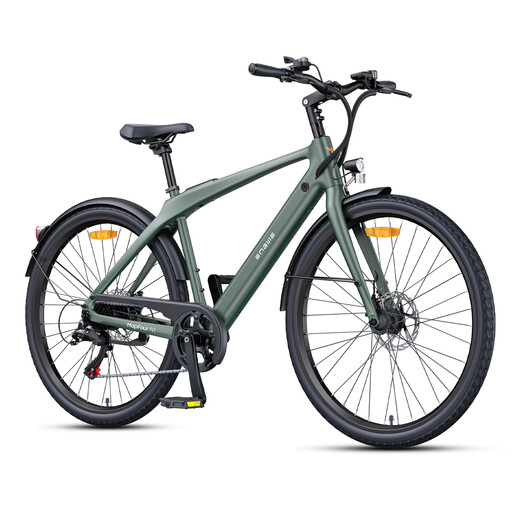
Why this model is a good fit: Ideal for commuters who need to carry their bike into their flat or office. The extremely low weight, thanks to the carbon frame, makes it very manageable in daily urban life. The torque sensor provides a natural, intuitive ride feel in city traffic.
This bike focuses on a core competency: being a lightweight e-bike for the city. It doesn't promise exaggerated off-road capabilities but instead delivers a high-quality solution optimised for the urban environment.
Carbon frame: At just 15.6 kg, it is significantly lighter than most other e-bikes. Torque sensor: Ensures smooth and responsive motor assistance.
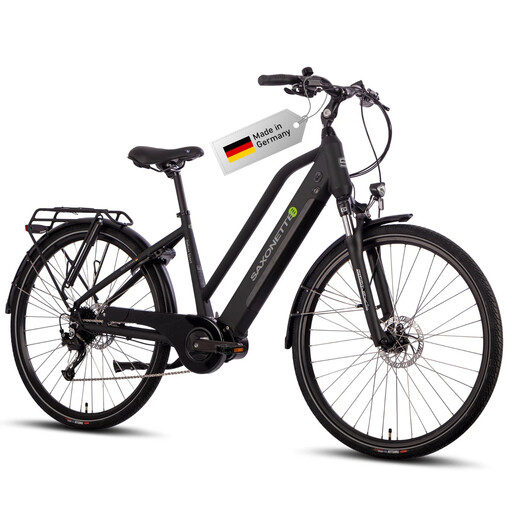
Why this model is a good fit: Perfect for longer excursions and daily use. The step-through e-bike frame allows for comfortable mounting and dismounting, while the powerful mid-drive motor provides confident assistance even on climbs. A classic trekking e-bike built for comfort and range.
This bike invests specifically in the crucial components: a mid-drive motor with 70 Nm of torque provides power on hills, and hydraulic disc brakes ensure the necessary safety. No corners are cut where it matters.
Powerful mid-drive motor: The 70 Nm of torque makes climbs effortless. Comfort and safety: Step-through frame, suspension fork, and hydraulic disc brakes.
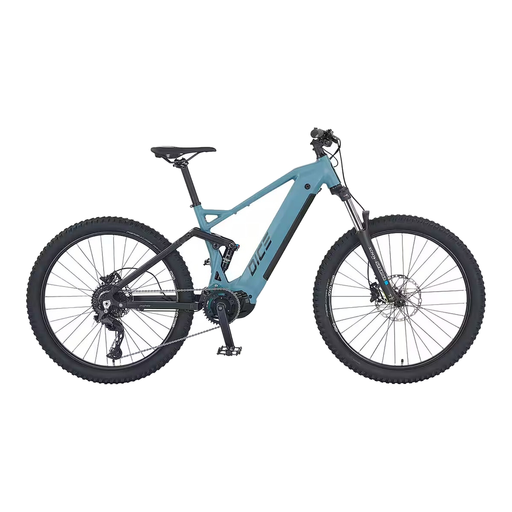
Why this model is a good fit: Designed for demanding trails and rough terrain. The full-suspension chassis smooths out bumps, while the extremely high-torque motor conquers even the steepest climbs. A pure piece of sports equipment for e-mountain bike enthusiasts.
This e-MTB makes no compromises. Instead of being an all-rounder, it specialises in maximum off-road performance. The focus is clearly on the extremely high torque and a robust, full-suspension chassis—exactly what counts on the trail.
Massive torque: The AEG SportDrive II motor delivers 100 Nm for maximum climbing power. Full suspension: Suntour air suspension fork and shock for control and comfort on demanding trails.
We have compiled a complete, up-to-date list of products that fully meet these strict selection criteria and German safety regulations.
In common parlance, the terms are often used interchangeably. Legally, however, there is an important distinction: a pedelec (Pedal Electric Cycle) only assists the rider while they are pedalling and is limited to 25 km/h. It is legally considered a bicycle, requiring no insurance or licence. E-bikes that can also be ridden via a throttle without pedalling or that provide assistance beyond 25 km/h (S-Pedelecs) are classified as light mopeds and require both insurance and a licence. Most models sold in Germany are pedelecs.
Torque is one of the most important metrics for an e-bike's performance, especially with a mid-drive motor. It describes the rotational force with which the motor assists your pedalling. High torque (e.g., 70 Nm or more) means the bike accelerates powerfully and can tackle hills much more easily. For flat city riding, 40–50 Nm is often sufficient, whereas for hilly terrain or carrying loads, higher torque makes a crucial difference.
In Germany, there is no legal requirement for third-party liability insurance for pedelecs up to 25 km/h. However, it is strongly recommended to include the e-bike in your personal liability insurance to be covered for damages to third parties in an accident. Additionally, a special e-bike insurance policy (or an add-on to your home contents insurance) is advisable to protect against theft, vandalism, or battery damage, as e-bikes are a popular target for thieves.