
Lieferung heute & morgen

Qualitätsgarantie

Willkommens-Angebote freischalten: KOSTENLOSE Lieferung | Bis zu 80 % RABATT | Kostenlose 30-Tage-JoyPlus-Testphase
App herunterladen
A contact grill promises quick, versatile, and low-fat meals—from crispy paninis and juicy steaks to grilled vegetables. But the market is flooded with appliances whose marketing promises often fall short in practice. As your Joybuy Product Recommendation Officer, I'll help you spot the common pitfalls and find a model that truly fits your needs.
Many appliances look convincing at first glance but turn out to be a bad purchase after a short time. Pay close attention to these three points to avoid disappointment.
The "Wattage Trap": High Power Without Efficiency A high wattage (e.g., 2000W or more) is often used as a key selling point. But power alone doesn't guarantee good grilling results. Inefficient heating elements or poor heat distribution lead to significant energy loss, long preheating times, and unevenly cooked food. What matters is how effectively the heat is transferred to the plates and retained there.
The "Non-Stick" Illusion: Coatings That Don't Last Virtually every electric grill advertises a non-stick coating. On budget-friendly models, however, this can wear off after just a few months, especially with frequent use and cleaning. The result: food sticks, cleaning becomes a chore, and your enjoyment of the appliance fades. The quality and durability of the coating are more important than its mere existence.
The Cleaning Trap: Fixed Grill Plates Models without a contact grill with removable plates are often cheaper, but this price advantage quickly becomes a liability. Cleaning fixed, ridged plates directly on the unit is cumbersome and time-consuming. Grease and burnt-on food collect in hard-to-reach corners. As a result, many such appliances end up unused in a cupboard after a short time.
To find the right contact grill for your household, you should focus on objective, technical features rather than marketing buzzwords.
Solid performance is the foundation for versatile grilling. For a good steak grill that can sear meat perfectly, models with 1800 to 2200 watts are a good guideline. Even more important, however, is an adjustable thermostat. It allows you to precisely adapt the temperature to the food you're cooking—low for a sandwich maker, medium for vegetables, and high for steaks. Without this feature, you are severely limited.
The grill plates are the heart of the appliance. Here are the most important aspects:
We have selected a few models based on their technical specifications and suitability for specific user groups.
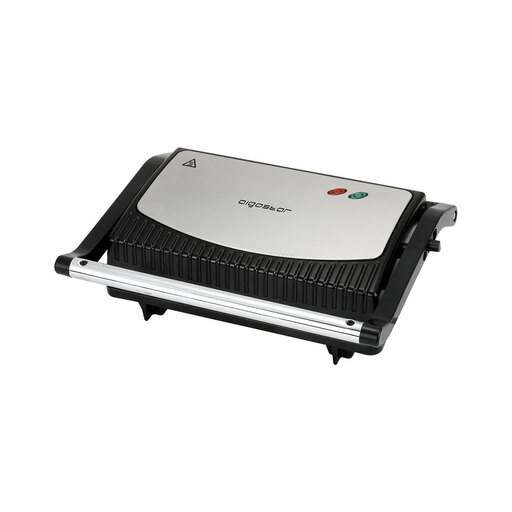
Why This Fits Their Persona: Ideal for students, singles, or small households looking for a straightforward appliance primarily for sandwiches, wraps, and paninis. Its compact design and affordable price make it a practical starter appliance.
This model avoids the "wattage trap" because its 800 watts of power are perfectly sufficient for its intended purpose (sandwiches and paninis). It doesn't promise steakhouse quality but delivers reliable performance for simple tasks.
The plates can be opened 180 degrees, allowing the unit to be used as a small, open table grill. Its compact footprint makes it easy to store.
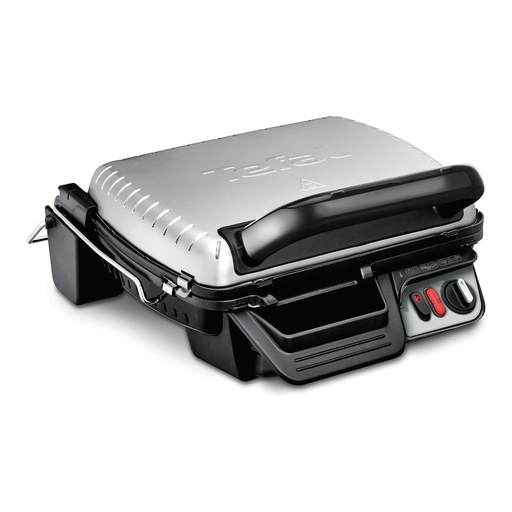
Why This Fits Their Persona: Perfect for families or home cooks looking for a versatile all-in-one appliance. This Tefal contact grill can prepare sandwiches, meat, fish, and vegetables, both as a contact grill and as an open table grill.
This model masterfully solves the "cleaning trap": the non-stick grill plates are removable and dishwasher-safe. This makes cleaning up after grilling marinated meat or cheesy sandwiches hassle-free.
The 3-in-1 functionality (contact grill, table grill, oven position) and adjustable thermostat offer maximum flexibility. The 2000 watts of power ensure fast heat-up times and a perfect sear.

Why This Fits Their Persona: For demanding users who value precision, performance, and high-quality materials. This appliance allows for the preparation of more complex dishes where precise temperature control is crucial.
This model bypasses the "wattage trap" with its embedded heating elements and separate temperature controls for the top and bottom plates. The 2000 watts are used with extreme efficiency and precision, allowing for perfect control over the cooking process.
The separate temperature control is a standout feature, allowing you to, for example, grill a steak with high bottom heat and gentler top heat. The die-cast aluminium plates are durable and dishwasher-safe.
We have compiled a complete, up-to-date list of products that fully meet these strict selection criteria and safety standards.
1. What's the most effective way to clean a contact grill? The easiest method is to choose a model with removable, dishwasher-safe plates. For fixed plates, let the appliance cool down slightly after use and after unplugging it, then wipe the still-warm plates with a damp cloth or paper towel. Do not use abrasive sponges or harsh cleaning agents to avoid damaging the non-stick coating.
2. How much wattage should a good contact grill have? For simple tasks like toasting sandwiches or for use as a panini press, 750 to 1000 watts is sufficient. If you plan to regularly sear meat or use the appliance as a full-fledged table grill, models with 1800 to 2200 watts are recommended. More important than the raw wattage, however, is an adjustable thermostat to adapt the heat to the food.
3. Can you really cook a good steak on a contact grill? Yes, it's possible, provided the contact grill meets the necessary requirements. The appliance should be able to reach a high maximum temperature (over 200°C) and have sufficient power (approx. 2000 watts or more) to maintain the temperature even when cold meat is placed on it. A model advertised as a steak grill that features a searing function is a good choice for this.