
Lieferung heute & morgen

Qualitätsgarantie

Willkommens-Angebote freischalten: KOSTENLOSE Lieferung | Bis zu 80 % RABATT | Kostenlose 30-Tage-JoyPlus-Testphase
App herunterladen
A flexible cooking solution is a practical addition to many situations: for a first apartment with limited space, as a portable cooktop in an RV or cabin, or to ensure you can still enjoy hot meals during a kitchen renovation. A double induction cooktop promises both efficiency and convenience. However, the market is flooded with models whose performance claims often don't hold up in practice. Before you make a decision, it's crucial to understand the common pitfalls to avoid a bad investment.
As your Joybuy Product Recommendation Officer, I'm here to help you identify the key features and make an informed choice.
Many appliances boast high wattage ratings and modern designs, but the devil is in the details. Pay close attention to these three areas where manufacturers often cut corners:
To avoid these problems, you should check three core technical aspects before buying. These will determine whether a 2-burner induction cooktop truly delivers in daily use.
The maximum total power is only half the story. The crucial factor is how that power is managed. Look for models that offer dynamic power sharing or whose controls clearly indicate which power combinations are possible. A good double induction cooktop should allow you to run at least one hob at high power while the second continues to operate stably at a medium level. A power rating of at least 1800–2000 watts per individual hob is a good benchmark for rapid heating.
Precise control is the heart of a good cooktop. A sensor-touch control panel is not only modern but also easy to clean. However, what's on the inside is even more important:
As this is a high-power electrical appliance, safety features are essential. The following should be standard:
The surface should be made of high-quality, scratch-resistant glass-ceramic. This material is not only durable but can also be cleaned with a single wipe after cooking.
Based on these objective criteria, we have identified a few models that represent a suitable solution for different user profiles.
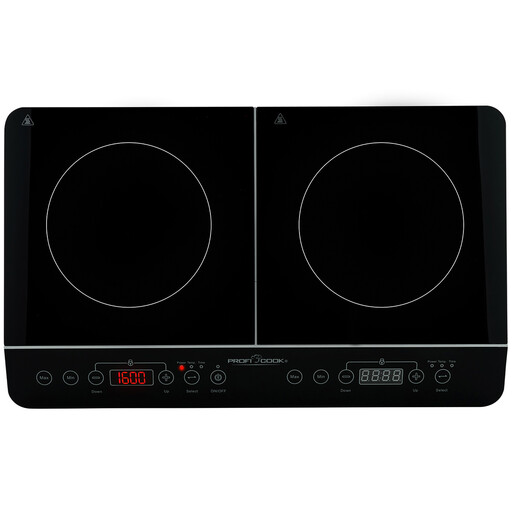
Why it's a great fit: Ideal for anyone seeking a full-featured yet portable cooking solution. Whether as the main hob in a small kitchen or as a powerful addition for parties, the two independently controlled zones allow for true multitasking.
With 16 function levels per hob (6 power and 10 temperature levels), it offers highly precise control, avoiding the trap of coarse settings. The total 3500 W output is managed intelligently.
Sensor-touch control panel for easy cleaning and operation. Comprehensive safety features include pan detection, overheat protection, and a timer.
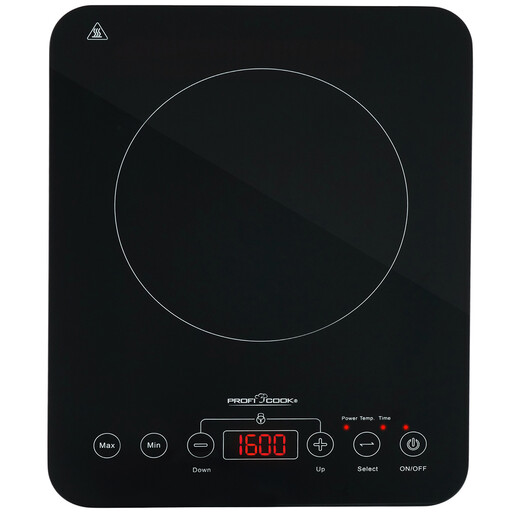
Why it's a great fit: Perfect for a single-person household, a dorm room, or as an efficient cooktop for camping. Its focus on a single, powerful hob makes it compact and uncompromising on performance.
By forgoing a second hob, it completely eliminates the power-sharing problem. With 10 power and 10 temperature levels, it offers the precision that is often missing from budget double cooktops.
Very compact design and low weight. According to the manufacturer, the ECO-Save function results in 55% time savings compared to conventional heating plates.
We have compiled a complete, up-to-date list of products that fully meet these strict selection criteria and relevant safety standards.
Induction cooktops require exclusively ferromagnetic cookware. This includes pots and pans made of cast iron, enamelled iron, or special induction-ready stainless steel. You can easily test if your existing cookware is suitable with a magnet: if it sticks to the bottom of the pot, the cookware is induction-compatible. Cookware made of pure aluminium, copper, or glass will not work.
Every portable induction cooktop generates some operating noise. This primarily comes from the internal fan that protects the electronics from overheating. The volume varies depending on the model and the selected power level. Higher-quality units often feature temperature-controlled fans that run only when needed and are quieter. A quiet hum during operation is normal and not a cause for concern.
The maximum power rating, e.g., 3500 watts, is only drawn when both hobs are at full capacity. However, compared to conventional electric cooktops (like coil or standard ceramic), induction technology is significantly more energy-efficient. Heat is generated directly in the base of the pot, not on the hob itself, which means less energy is lost. The actual power consumption depends heavily on usage duration and the selected power levels, but the shorter heating times result in energy savings in daily use.