
Lieferung heute & morgen

Qualitätsgarantie

Willkommens-Angebote freischalten: KOSTENLOSE Lieferung | Bis zu 80 % RABATT | Kostenlose 30-Tage-JoyPlus-Testphase
App herunterladen
The anticipation for the winter sports season is immense, but choosing the right ski gear can quickly become overwhelming. It’s often not until you’re on the slopes that you discover your supposedly waterproof jacket is soaked after the first touch of snow, or your expensive high-tech goggles fog up during a snowfall. Such experiences are not only frustrating but can also put an unnecessary strain on your budget.
Many buyers fall into two common pitfalls: they trust marketing terms like "waterproof" without understanding the technical differences, or they invest in professional-grade equipment with features they don't actually need for a typical day on the slopes. This guide will help you identify the crucial features and find functional gear that is tailored to your actual needs.
Instead of being swayed by advertising promises, you should base your purchasing decision on objective, technical parameters. Three areas are particularly critical: the safety of your helmet, the functionality of your ski goggles, and the material properties of your clothing and gloves.
A helmet is an indispensable part of your ski gear. However, not all helmets offer the same level of protection. A key feature of modern helmets is the MIPS (Multi-directional Impact Protection System). This system consists of a low-friction layer inside the helmet that allows the head to move 10–15 mm relative to the helmet during an angled impact. This brief movement can help reduce the rotational forces that act on the brain. A ski helmet with MIPS is therefore not a marketing gimmick, but a safety feature based on physical principles that should be considered during your selection.
Good vision is essential for safety on the slopes. The most important characteristic of ski goggles is their ability to adapt to different light conditions.
The term "waterproof" is often used loosely. A simple coating only makes a garment water-repellent and quickly loses its effectiveness. True waterproofness is achieved through special membranes, such as a TPU (Thermoplastic Polyurethane) membrane. This is integrated as a middle layer and reliably prevents water from penetrating while remaining breathable.
This is particularly relevant for kids' ski gloves, as children often play in the snow. Look for an explicit mention of a waterproof membrane. For insulated ski pants for men or women, the quality of the insulation is just as crucial as waterproofness. Specifications in grams (e.g., 120g insulation) provide an indication of the warmth level.
Based on these objective criteria, we have selected products that offer a suitable solution for specific user profiles.
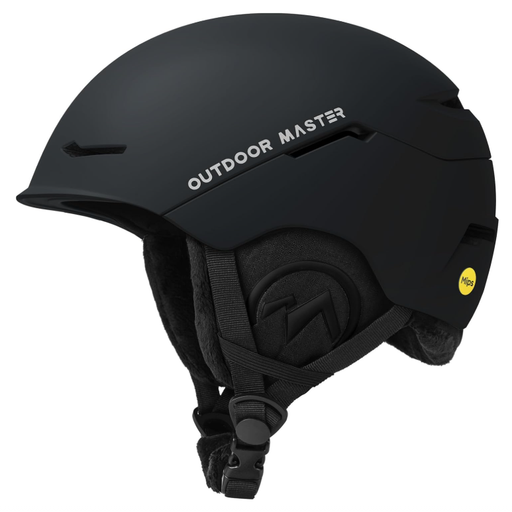
Why it's a match: Offers advanced safety technology (MIPS) at an accessible price point. Ideal for anyone starting out in winter sports or upgrading old gear without compromising on fundamental safety.
Instead of focusing on visual gimmicks, this helmet concentrates on the proven safety feature of MIPS, thus avoiding the purchase of helmets with empty marketing promises.
Integrated MIPS system to reduce rotational forces during an impact. Adjustable fit and ventilation for comfort.

Why it's a match: Perfect for skiers who are out in changing light conditions—from bright sunshine to overcast flat light—and need consistently clear vision without having to buy multiple pairs of goggles.
Instead of buying multiple goggles for different conditions, this set with magnetic interchangeable lenses offers an all-in-one solution, preventing unnecessary spending on redundant gear.
Magnetic quick-change system for lenses (includes a low-light lens). The OTG design is also compatible with most prescription glasses.
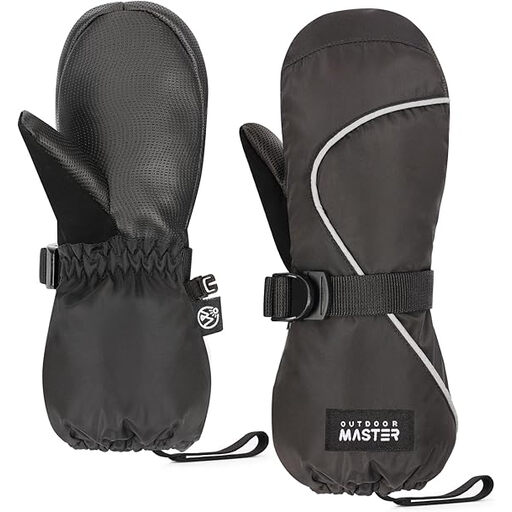
Why it's a match: Designed for the real-world needs of children: durable, warm, and with thoughtful details like anti-loss wrist leashes that stand up to the typical challenges of a family day in the snow.
These mittens go beyond a simple "water-repellent" coating and use a TPU insert for reliable waterproofing, ensuring kids' hands stay dry even after hours in the snow.
Dual-layer moisture protection with waterproof TPU inserts. Practical anti-loss wrist leashes and adjustable wrist buckles prevent the gloves from getting lost.
We have compiled a complete, up-to-date list of products that fully meet these strict selection criteria and German safety regulations.
Regardless of visible damage, most manufacturers recommend replacing a ski helmet every 3 to 5 years. The shock-absorbing EPS material inside can lose its protective properties over time due to UV radiation and temperature fluctuations. After a significant fall or impact, a helmet must always be replaced immediately, even if there is no visible external damage.
VLT stands for "Visible Light Transmission" and indicates the percentage of visible light that passes through the goggle lens. A low VLT value (e.g., 10–25%) is ideal for bright, sunny days as it reduces glare. A high VLT value (e.g., 60–90%) lets more light through and is suitable for overcast days, snowfall, or dusk. Goggles with interchangeable lenses offer the flexibility to be prepared for both scenarios.
Not necessarily. Price alone is not a guarantee of quality. The crucial factors are the materials used and the construction. A less expensive glove with a proven waterproof membrane (like TPU or Gore-Tex) and solid insulation can be superior to a more expensive model that is only superficially coated. Focus on the technical specifications rather than the brand name or price.