
Lieferung heute & morgen

Qualitätsgarantie

Willkommens-Angebote freischalten: KOSTENLOSE Lieferung | Bis zu 80 % RABATT | Kostenlose 30-Tage-JoyPlus-Testphase
App herunterladen
A pristine exterior for your home, garden, and vehicle is something many owners aspire to. A pressure washer promises to get this job done quickly and efficiently. However, the market is flooded with devices whose marketing claims often suggest more than the technology can deliver. Before you buy a pressure washer, it's crucial to understand the common pitfalls that can lead to a rash and ultimately unsatisfying purchase.
As your Joybuy Product Recommendation Officer, I'll help you find objective criteria for your decision and distinguish marketing hype from genuine performance features. Let's focus on the three most common sources of error:
To make an informed purchasing decision, you should focus on a few, but critical, technical specifications. These determine whether a device is suitable for your needs and represents a worthwhile long-term investment.
The effectiveness of a pressure washer is a result of the interplay between water pressure and flow rate.
A unit with 180 bar and only 350 l/h will loosen stubborn dirt, but cleaning an entire patio will be very time-consuming. A model with balanced specs, for example 145 bar and 500 l/h, often offers more practical overall performance.
The pump generates the high water pressure and is the most heavily stressed component. The material of the pump head is a direct indicator of the device's longevity.
For most homeowners, a model with an aluminium pump is a solid and durable choice.
The choice of power source depends directly on your area of application.
Here are some models tailored to specific user profiles and their requirements.
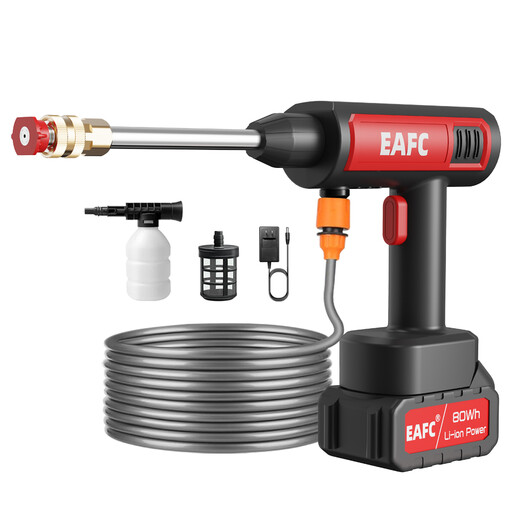
Why This Fits Their Persona: Ideal for users who need a straightforward solution for quick cleaning tasks without access to a power or water connection. Perfect for cleaning bicycles, balcony furniture, or for washing the car on the go.
This device doesn't advertise unrealistic pressure values. Its value lies in its portability and self-priming function, which allows it to draw water from a bucket. It focuses on its core competency: maximum flexibility.
Complete independence from power and water connections. Lightweight, handy design for effortless transport and storage.
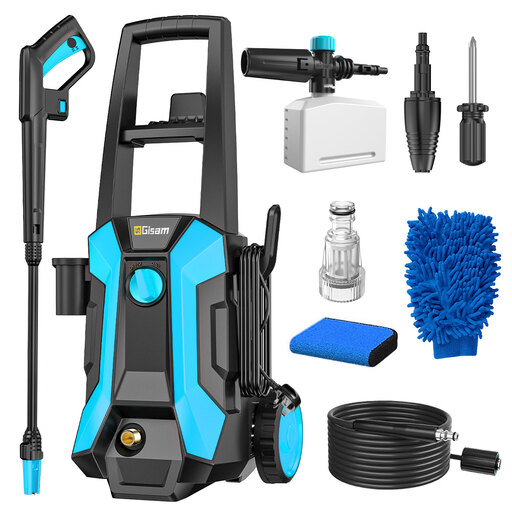
Why This Fits Their Persona: A reliable workhorse for the most common cleaning tasks around the house and garden. Powerful enough for patio cleaning, yet flexible enough for washing the car.
This model avoids the pressure trap by offering a balanced ratio of 180 bar pressure and a solid flow rate of 480 l/h. This combination ensures effective and swift cleaning, rather than just maximizing one of the two values.
The integrated hose reel prevents hose tangles and simplifies storage. The 8-meter hose provides a large operating radius for cleaning jobs without constantly moving the unit.
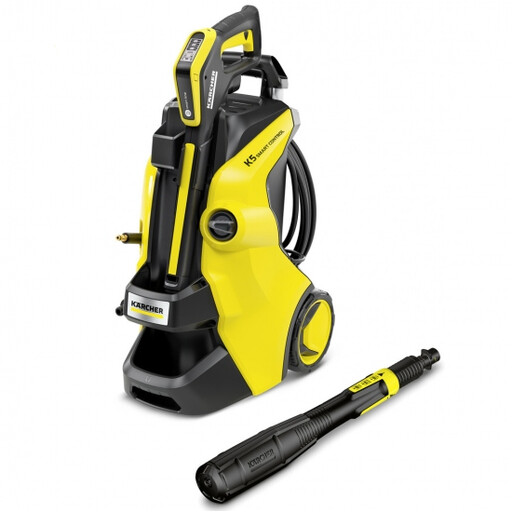
Why This Fits Their Persona: For users who value brand quality, durability, and technological features. Ideal for anyone who wants to achieve precise, application-specific cleaning results and invest in a long-lasting device.
This K?rcher pressure washer avoids the material trap by using a durable, water-cooled aluminum pump. Instead of empty promises, the device relies on transparent, app-controllable performance data and a robust construction.
The Bluetooth connectivity with the Home & Garden app allows for precise pressure adjustment for any surface. The switchable Boost mode provides extra power reserves for particularly stubborn dirt.
There are special requirements, particularly for vehicle care. We have compiled a selection of devices that are excellently suited as pressure washers for cars.
To prevent frost damage, it is essential to completely drain the unit before the first frost. Disconnect all hoses and the gun from the device. Start the motor for a few seconds until no more water comes out of the connections. Store the pressure washer and its accessories in a dry, frost-free place, such as a basement or garage.
The following values can serve as a rough guide:
Yes, this is possible with many models, provided they are marked as "self-priming." These devices can draw water from alternative sources like a rain barrel or a bucket. It is important to use a suction hose with a filter at the end to prevent dirt particles from entering and damaging the pump. The height difference between the water source and the device should be as minimal as possible.