
Lieferung heute & morgen

Qualitätsgarantie

Willkommens-Angebote freischalten: KOSTENLOSE Lieferung | Bis zu 80 % RABATT | Kostenlose 30-Tage-JoyPlus-Testphase
App herunterladen
A spilled glass of red wine on the new sofa, muddy paw prints from the dog on the carpet, or the unavoidable traces of daily life on car seats—stains on upholstery and textiles are a nuisance. A high-performance upholstery cleaner promises a quick fix. However, the market is flooded with devices whose marketing promises often suggest more than the technology can deliver. Many buyers end up with a machine that soaks fabrics instead of cleaning them or fails on stubborn stains.
As your Joybuy Product Recommendation Officer, I'll help you identify the critical features. This guide reveals the most common pitfalls when buying and which technical parameters you need to look for to make an informed decision for an effective spot cleaner.
Before you invest, you should be aware of the typical weaknesses that can render a promising device useless.
Don't be fooled by high wattage ratings. The true performance of an upholstery cleaner lies in the combination of specific technical features.
It's important to understand the difference between the common technologies:
The two most important metrics for efficient cleaning are suction power and the size of the water tanks.
An integrated heating function is a significant advantage. Modern devices often offer multiple modes to handle different textiles and levels of soiling:
A device that masters these three modes offers maximum flexibility and cleaning power for almost any household challenge.
Based on the criteria above, we have identified a product that is well-suited for specific user profiles.
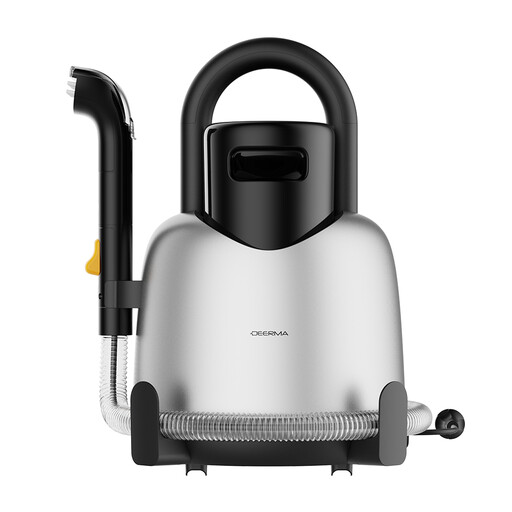
Why it's a good fit: Ideal for families with children or pets, as well as for thorough vehicle interior cleaning. This model combines high performance with versatility to effectively tackle both everyday mishaps and deep-seated dirt.
With suction power of 13 kPa, moisture is powerfully extracted from the fabric, minimising the risk of wet upholstery and mould growth. The 3-stage system with 100°C steam and 60°C hot water effectively combats grease and old stains where cold cleaners fail.
The device offers three temperature modes (steam, hot water, room temperature) for different textiles. The large tanks (1.7 L fresh water, 1.4 L dirty water) and the set of 5 brush attachments allow for uninterrupted and versatile cleaning throughout the home and car.
We have compiled a complete, up-to-date list of products that fully meet these strict selection criteria and German safety regulations.
1. Can any upholstery cleaner be used for car seats? In principle, yes. Most upholstery cleaners are also suitable as a device for cleaning car seats. The key is to have compact attachments to easily reach tight spots and contours. Also, check the material compatibility of your car seats, especially with leather or delicate fabrics, and test the device on an inconspicuous area first. High suction power is particularly important in a car to prevent residual moisture and odours.
2. What is the difference between an upholstery cleaner and a large carpet washer? An upholstery cleaner (often called a spot cleaner) is typically a more compact, portable device optimised for cleaning furniture, mattresses, and car seats. A large carpet washer or carpet cleaner is designed for large carpeted areas, often pushed like a vacuum cleaner and equipped with wider floor nozzles. However, many modern upholstery cleaners are powerful enough to handle smaller rugs with ease.
3. How often should you clean upholstered furniture? A deep clean with a spray extraction cleaner is recommended once or twice a year for normally used upholstered furniture to remove deep-seated dirt, dust, and allergens. Stains, of course, should always be treated as quickly as possible. In households with children, pets, or allergy sufferers, more frequent cleaning may be beneficial.