
Lieferung heute & morgen

Qualitätsgarantie

Willkommens-Angebote freischalten: KOSTENLOSE Lieferung | Bis zu 80 % RABATT | Kostenlose 30-Tage-JoyPlus-Testphase
App herunterladen
Choosing the right motherboard is the cornerstone of any new PC build. With the launch of AMD's Ryzen 9000 processors, many users are wondering which platform offers the right balance of performance, future-proofing, and price. The MSI B850 Gaming Plus WIFI Motherboard presents itself as an attractive option, but the market is filled with marketing promises and technical pitfalls. This guide will help you separate fact from fiction and make an informed decision.
When purchasing a new motherboard for the AM5 platform, many users fall into expensive traps that are easily avoidable.
To avoid these mistakes, you should carefully examine three technical aspects. These will determine the longevity and performance of your system.
For most PC gamers and enthusiasts, the B850 chipset represents an ideal compromise. Unlike the more expensive X870E chipset, which provides PCIe 5.0 for multiple slots, the B850 focuses on the essentials:
For a system with a single graphics card and one main SSD, this is perfectly sufficient and offers a better B850 chipset price-to-performance ratio.
Modern processors like the Ryzen 9000 series require a stable and clean power supply, especially under load. Look for a motherboard with a robust VRM design (e.g., 12 or more phases) and generously sized heatsinks on the voltage regulators. A good cooling system, like the FROZR GUARD cooling on the MSI B850 Gaming Plus WIFI, prevents thermal throttling and ensures your processor can reach its full potential.
A future-proof ATX Motherboard AM5 should support modern standards to remain relevant in the years to come.
Instead of presenting an overwhelming list, we have selected models that cater to specific user profiles and are designed to avoid the pitfalls mentioned above.
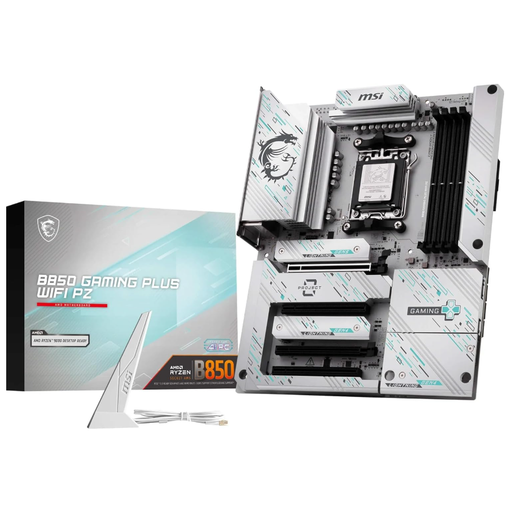
Why This Fits Their Persona: Ideal for gamers who want to build a powerful system with a Ryzen 9000 processor without paying for unused enthusiast features. It offers a balanced mix of modern technologies and stable performance.
It sidesteps the "enthusiast tax" by using the B850 chipset and prevents performance loss with a solid 12-phase VRM and comprehensive FROZR GUARD cooling.
Offers PCIe 5.0 for the GPU, a Gen5 M.2 slot, WiFi 7, and 5Gbps LAN. The power delivery is designed for high-end CPUs like the Ryzen 7 9700X.
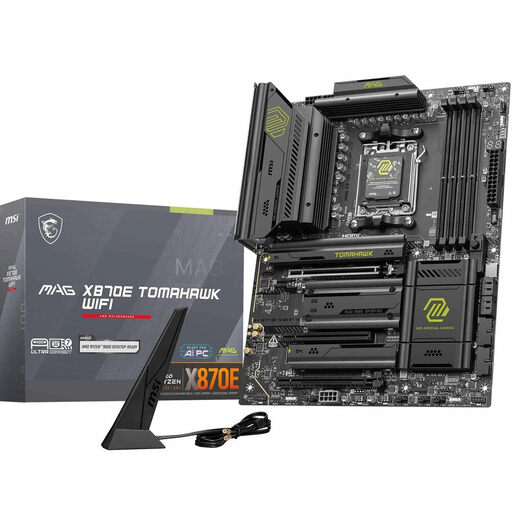
Why This Fits Their Persona: For users who want maximum expandability and are willing to invest in additional PCIe 5.0 lanes, more M.2 slots, and USB4 connectivity. Ideal for builds that are expected to be heavily upgraded in the future.
The higher price is justified by tangible, usable benefits like dual M.2 Gen5 slots and an even stronger 14+2+1 phase power delivery system. It's a deliberate investment in maximum flexibility.
Comprehensive PCIe 5.0 support for the GPU and two NVMe SSDs, USB4 with 40 Gbps, and a robust 8-layer PCB for high stability during overclocking.
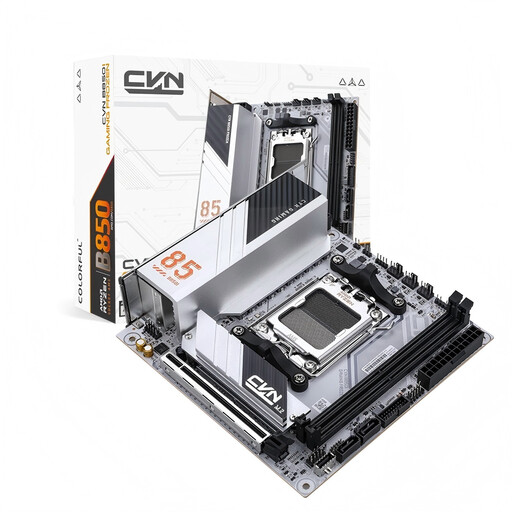
Why This Fits Their Persona: Perfect for users who want to build a powerful gaming system in a small ITX case without compromising on core features.
It proves that a small form factor doesn't have to mean a performance compromise. It integrates the B850 chipset and PCIe 5.0 instead of falling back on a weaker chipset.
Combines a compact ITX format with a PCIe 5.0 x16 slot, a Gen5 M.2 slot, and WiFi 6E. The white design is also a visual highlight.
We have compiled a complete, real-time list of products that fully satisfy these strict selection criteria and UK safety regulations.
Do I need a BIOS update for a B850 motherboard with a Ryzen 9000 processor? Motherboards with the B850 chipset are specifically designed for the AMD Ryzen 9000 series and should be compatible out of the box. However, it is good practice to visit the manufacturer's website after assembly to check if a newer BIOS version is available that can further optimize stability and performance.
Is the B850 chipset sufficient for an AMD Ryzen 7 9700X? Yes, absolutely. A high-quality B850 motherboard like the MSI B850 Gaming Plus WIFI has sufficiently strong power delivery and cooling to run an AMD Ryzen 7 9700X or even more powerful models stably. The chipset itself does not limit the processor's performance.
What is the difference between PCIe 5.0 and PCIe 4.0 for gaming? Currently (as of 2026), the performance differences between PCIe 4.0 and PCIe 5.0 for graphics cards in day-to-day gaming are still minimal. However, PCIe 5.0 offers double the theoretical bandwidth. Buying a motherboard with a PCIe 5.0 x16 slot is an investment in the future, ensuring you are ready for upcoming graphics card generations that may fully utilize this bandwidth.