
Lieferung heute & morgen

Qualitätsgarantie

Willkommens-Angebote freischalten: KOSTENLOSE Lieferung | Bis zu 80 % RABATT | Kostenlose 30-Tage-JoyPlus-Testphase
App herunterladen
A baby activity cube combines several types of play in one compact toy. For children aged 1 to 3, features such as turning, pressing, slotting and sound effects can offer interesting opportunities for independent exploration. At the same time, models differ significantly in terms of material, volume, age recommendation and everyday practicality.
Parents and relatives should therefore not rely solely on terms like “Montessori” or “learning toy”. What really matters are verifiable product details and whether the toy suits your home environment and your child’s developmental stage.
An activity cube may be advertised with numerous play modes. However, if only a few controls are actually used or the functions are very similar, the added value remains limited. A sensible combination includes different types of movement – for example, turning, pressing, sliding, dialling and role play.
According to the product description, the 8-in-1 model includes a piano, a guitar, a play telephone, gears and a musical windmill. This brings together various hand movements in a single product.
The term Montessori activity cube often describes a design that encourages independent discovery and simple cause-and-effect relationships. However, it is not an automatically protected quality or safety mark. Buyers should also check the age recommendation, material, workmanship and ease of use.
A baby motor skills toy should ideally be usable without complicated assistance. For younger children, large, easy-to-reach elements are usually more practical than small switches that require a lot of force.
Musical toys for toddlers can be handy at home, in a restaurant or when travelling, provided the volume and power supply suit the setting. If there is no volume control or the sound cannot be switched off, the toy may be unsuitable for a flat or a car journey.
For electronic products, the battery compartment, battery type and the ability to turn the device off are also important points to check. The product description for the activity cube mentions electronic music and sound functions; you should check the product page for specific details about batteries and volume control before purchasing.
The correct age recommendation is more than just marketing information. A learning toy for 1 to 3 year olds should match the child’s size, reach and strength. The 8-in-1 model featured here is intended by the supplier for children aged 1 to 3.
For children under 3, small removable parts are particularly relevant. Even if a product is described as having “no loose parts”, you should regularly check the cube for cracks, loose elements and damage. Use should always follow the manufacturer’s safety instructions and be under appropriate supervision.
According to the product details, the cube is made from ABS plastic, is BPA-free and has rounded edges. Such information is an important selection criterion, but does not replace checking the actual item after unpacking.
Look out for:
A CE marking is a manufacturer’s declaration that certain EU requirements have been met. It is not an independent test seal. For specific questions about conformity, you should refer to the manufacturer’s or retailer’s information.
With stated dimensions of approximately 23 × 23 × 24 cm, the activity cube is compact enough for a child’s bedroom, a play corner or for transport. A carry handle can make it easier to move around. Before buying, it is worth checking whether the cube stands steadily on the intended surface and whether there is enough space for your child’s movements.
A busy board for babies or an activity cube is not a substitute for free play, physical activity and shared time together. It works best as one building block among several age-appropriate play options.
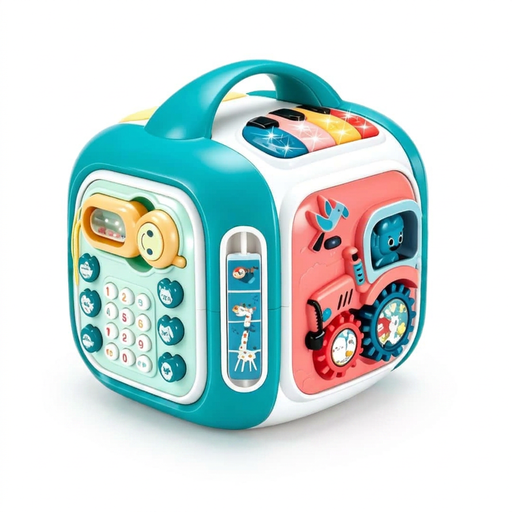
Why this product suits the profile: The cube combines eight play areas in one product and is intended by the supplier for children aged 1 to 3. This can reduce the need for several individual motor skills toys.
Several different controls prevent the toy from being limited to just one type of play. The rounded edges and the stated ABS material should still be checked before purchase.
Eight play modes are stated, along with dimensions of approximately 23 × 23 × 24 cm. A carry handle makes it easier to transport.
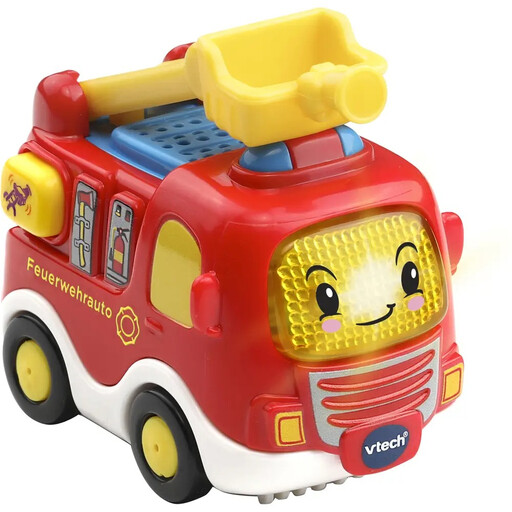
Why this product suits the profile: For families who prefer a clearly defined branded product with documented technical specifications, this vehicle offers a manageable selection of functions.
The age recommendation from 1 year, the battery requirement of two AAA batteries and the care instructions are all clearly stated.
Light, sounds and songs; stated weight of 162 g; compatible with other Tut Tut Baby Flitzer play sets.
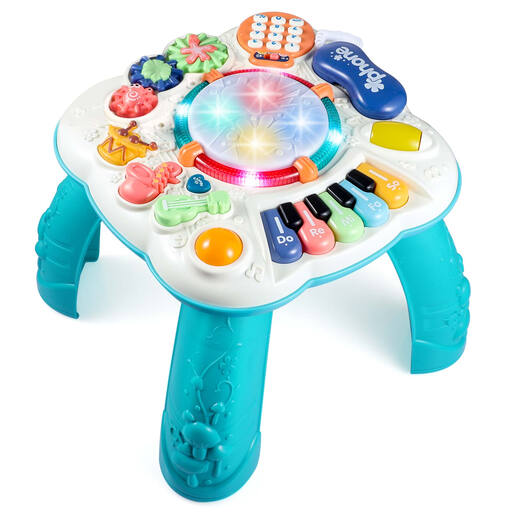
Why this product suits the profile: The combination of piano, drum, telephone and gears is aimed at families looking for a larger play station for both floor play and standing phases.
The product description mentions a volume control and a sleep mode. You should confirm these features on the product page before ordering.
Two ways to play thanks to removable legs; six designated play areas; age range according to the supplier: 6 to 36 months.
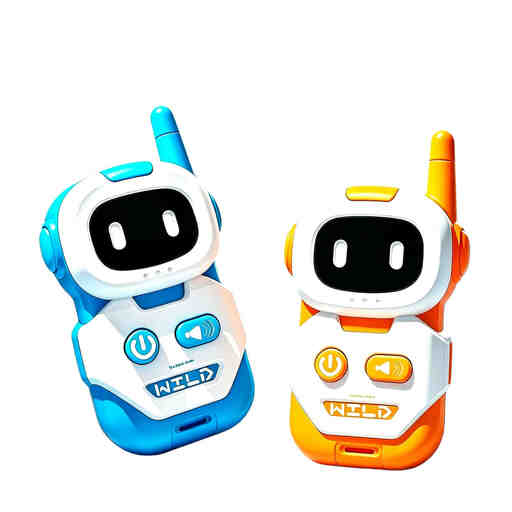
Why this product suits the profile: As a gift for younger siblings or children under 1, this toy offers drum surfaces, lights, animal sounds and shape sorting.
According to the description, the age range covers 6 to 36 months. You should check this against the child’s actual developmental stage before buying.
Four designated play areas; BPA-free ABS plastic according to the supplier; batteries are not included according to the product description.
We have put together a complete, regularly updated list of products that fully meet these strict selection criteria and the safety regulations in force in the EU.
The lifespan of an activity cube depends on how it is used, stored and made. Wipe plastic surfaces according to the manufacturer’s care instructions and do not use unsuitable cleaning products. Battery-operated models should be stored in a dry place. The battery compartment must remain closed and should be checked regularly for leaking batteries.
With daily use, moving parts are subject to greater wear and tear. Before each longer play session, check that buttons, gears and covers are securely attached. Damaged products should not be used further.
Many models are aimed at children from 1 year old. The specific age recommendation is crucial, as play modes, component size and the force required to operate them vary. For children under 3, age-appropriate supervision is particularly important.
A low, pleasantly adjustable volume is sensible for everyday use. Check whether the product has a volume control or a sleep mode. Electronic toys should not be used continuously directly next to the child’s ear.
There is no one-size-fits-all answer to this. Models with different types of movement can offer changing play stimuli. Naming colours, shapes or sounds together can make play more varied, without imposing a specific learning pace on the child.