
Lieferung heute & morgen

Qualitätsgarantie

Willkommens-Angebote freischalten: KOSTENLOSE Lieferung | Bis zu 80 % RABATT | Kostenlose 30-Tage-JoyPlus-Testphase
App herunterladen
Baby and toddler toys should be fun while also supporting the child’s development. For parents, grandparents and other family members, choosing between motor skills toys, Montessori toys, musical toys and movement toys is not always straightforward. Age recommendations, material information and numerous claims about learning benefits can make comparisons more difficult.
The following criteria can help you assess marketing claims and choose a product that suits the child’s age, your living situation and the intended play area.
A toy with lights, music, buttons and moving parts may seem versatile. However, younger babies can find too many stimuli confusing at once. What matters is not the number of functions, but whether the child can understand how to use them independently. Clear actions such as pressing, turning, pulling, sorting or stacking are particularly useful.
The phrase “for babies and toddlers” does not replace a specific age recommendation. A toy with small pieces for inserting or sorting may be unsuitable for children under three. You should therefore check:
Even with age-appropriate products, supervision is advisable, especially when children still put objects in their mouths.
Terms such as “non-toxic” or “child-friendly” are not, on their own, a complete basis for making a purchase. Look for clear information about the material, workmanship, manufacturer and safety markings. For the plastic toys featured here, the product description specifies BPA-free ABS and rounded edges. One wooden product is described as being made from FSC-certified wood. This information should be checked against the product’s actual labelling.
For babies from around six months, easily accessible elements, high-contrast shapes, gentle movements and easy-to-grip surfaces are often suitable. Sensory toys with sounds or light effects should be designed so that an action produces a clear response.
From around twelve months, stacking toys, sorting games and simple activity features become more important. Children between two and three can often connect several steps, such as sorting a piece, turning an object and then observing the result.
The age recommendation is intended as a guide. Development varies from child to child, and a toy should neither be clearly overwhelming nor consist solely of passive observation.
For plastic toys, the product description should specify the material as precisely as possible. Rounded edges and sturdy construction reduce visible injury risks, but they do not replace regular checks. Before every use, inspect the toy for cracks, sharp edges, loose parts and damaged battery compartments.
A play mat for babies should be easy to clean and remain stable on the intended surface. The EVA puzzle mats available here consist of six square tiles and ten edge pieces. Before buying, measure the size of the play area. You should also check whether the mat moves around during play and whether it can be aired sufficiently after unpacking.
With baby musical toys and electronic activity toys, volume, battery type and operation are important considerations. Batteries must be kept out of children’s reach; the details vary from product to product. According to the product descriptions, batteries are not included with the baby musical drum toy or the rolling penguin.
Light and sound functions should be switchable or used sparingly. A musical toy can be useful during shared playtime, but it should not run continuously during quiet periods. Electronic toys can complement interaction, but they do not replace talking to your child, movement or free play with simple objects.
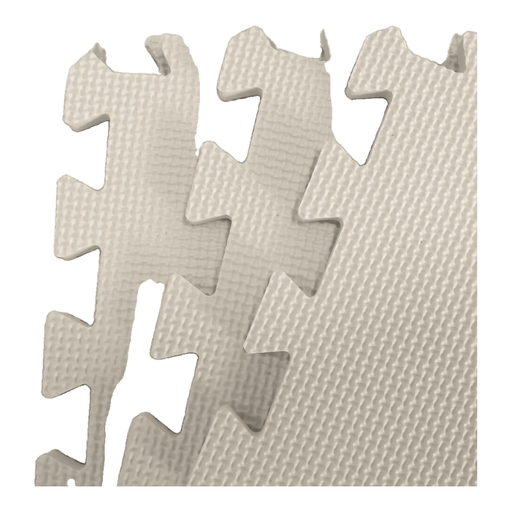
Why this product suits this profile: The six EVA foam tiles can be connected to create a defined play area and separated again when needed. This is useful for families who initially want to create a manageable space.
The product information specifies the material, number and dimensions of the tiles. This makes it easier to estimate the actual space required before buying.
EVA foam, interlocking system, six square tiles and ten edge pieces according to the product description.
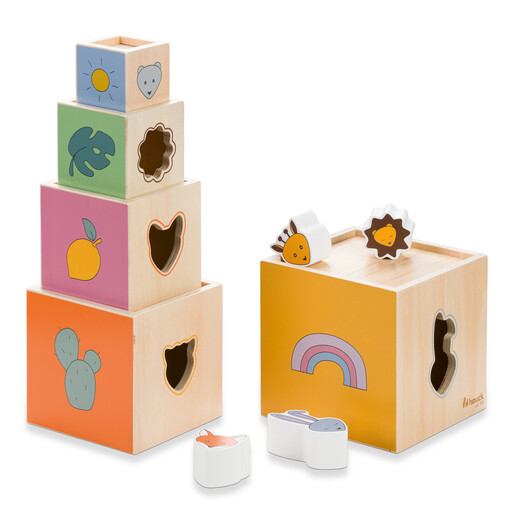
Why this product suits this profile: This wooden toy combines stacking, sorting and matching in one hands-on play activity and requires no batteries.
The age warning points out that the product contains small parts. This makes it easier for buyers to decide whether the toy is suitable for supervised use from twelve months.
FSC-certified wood according to the product information, stackable cubes and sorting openings with animal motifs.

Why this product suits this profile: This compact activity cube combines eight ways to play and has a carry handle, making it suitable for moving between rooms or taking on trips.
The product description lists the individual play activities, the dimensions of 23 × 23 × 24 cm and the recommended age of one to three years.
ABS plastic, rounded edges and piano, guitar, telephone, cogwheel and music functions according to the product information.
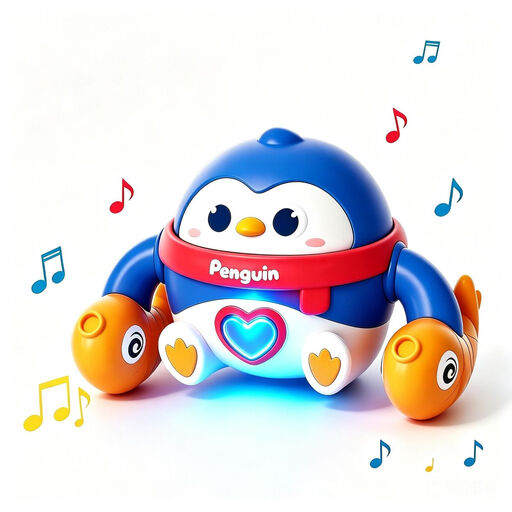
Why this product suits this profile: The rolling penguin is designed for families who want to combine crawling time and visual tracking with interactive responses.
The description specifies the rolling function, motion sensor, age range and the fact that batteries are not included.
360-degree rolling movement, light function and music according to the manufacturer; use only in a clear, supervised area.
We have put together a complete, regularly updated list of products that fully meet these strict selection criteria and the safety regulations applicable in the EU.
From six months, easy-to-grip and simple-to-use products may be suitable, such as simple sensory toys, a non-slip play mat or a musical toy with a clear age recommendation. Look for large, securely attached elements and supervise your child during play.
How long a toy remains useful depends on the child’s stage of development and how varied the play activity is. A sorting or stacking toy may first be used for grasping and later for matching. Electronic products remain interesting when they offer different functions, but play should still be varied and combined with free play.
In addition to the purchase price, you may need to pay for batteries and, where applicable, replacement parts. Before buying, check which type of battery is required and whether batteries are included. The product information should also make it clear whether the light and sound can be operated or switched off separately.