
Lieferung heute & morgen

Qualitätsgarantie

Willkommens-Angebote freischalten: KOSTENLOSE Lieferung | Bis zu 80 % RABATT | Kostenlose 30-Tage-JoyPlus-Testphase
App herunterladen
A baby bedside crib is designed to keep your newborn close while still providing a separate sleep space. In practice, however, it’s not just the design that determines how well it works day to day. The height, fixing system, mattress dimensions and cleaning requirements all need to suit your adult bed and how long you plan to use it.
A multi-level height adjustment sounds flexible at first. What really matters, though, is whether the sleeping height can actually be matched to your adult bed’s mattress. Bed frames with storage drawers, high sides or box-spring bases can also make fitting more difficult.
So, check the following:
A simple height adjustment is no substitute for a secure connection to the adult bed.
A baby crib with mattress is handy when the mattress is made to fit the sleeping area exactly. However, extra pillows, loose blankets, padded bumpers or other soft inserts don’t automatically belong in the sleep space. Always follow the instruction manual and use only the components intended for your specific model.
Look out for:
A generous set with bedding, a canopy or a bumper may look appealing, but it shouldn’t lead to an overcrowded sleep area.
A mobile baby crib or a bedside crib with wheels can be moved around the home more easily. That doesn’t mean it can be freely moved while in use. The wheels must stand on a flat, hard surface and be locked when the crib is stationary. For overnight use next to the parents’ bed, secure attachment to the bed is also essential.
A height-adjustable bedside crib should be adjustable in several clearly defined steps or within a clear range. Some models offer five, six or seven positions. Compare the manufacturer’s specification with the height of your adult mattress, not just the overall height of the bed frame.
For unusual bed shapes, an additional extension kit may be needed. Also check whether the fixing system is only suitable for certain frame thicknesses.
A bedside crib from birth is often only intended for the first few months of life. With compact co-sleepers, use ends at around six months, nine kilograms of body weight, or as soon as your child can sit, kneel or pull themselves up, depending on the model. Larger wooden models measuring 60 × 120 cm, on the other hand, can be used for longer as a baby or toddler bed.
Three details are important:
The actual usage duration always depends on the instruction manual and your child’s development.
Mesh side panels can make it easier to see your child and help with air circulation. For wooden cribs, sturdy side panels, a safe slatted base and information about low-emission materials are relevant points to check. Claims like “skin-friendly” or “breathable” should be seen as product features, not medical effects.
For everyday use, removable covers, machine-washable fabrics and easy-to-wipe frames are practical. Regularly check screws, connections, straps and brakes.
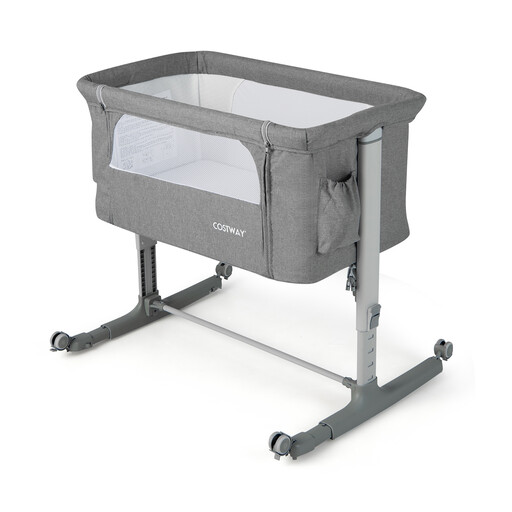
Why this product fits the profile: This model combines a bedside crib, cradle and bassinet in one compact design, making it ideal for families who want multiple functions without taking up too much space.
Five height positions, two fixing straps and lockable wheels make the relevant adjustment points easy to check before purchase.
Three modes of use, mesh side panels, mattress and carry bag are all included in the stated package.
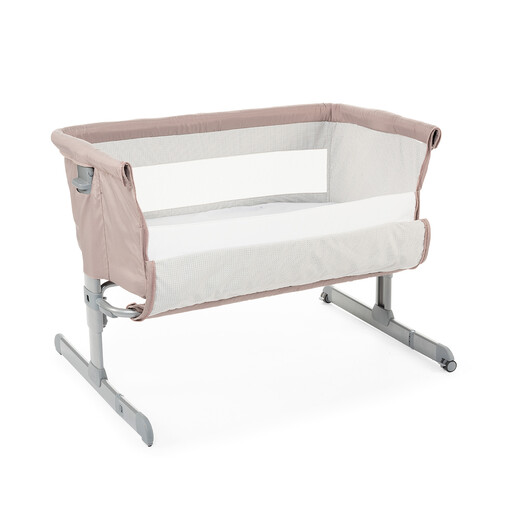
Why this product fits the profile: This co-sleeper is aimed at parents who want a clearly defined solution for the first few months, with easy cleaning and flexible bed height adjustment.
Six height positions, a strap system for attachment and a stated maximum load of 9 kg make it easier to check suitability.
Large mesh windows, removable covers, a mattress and two wheels with safety brakes are all specified.
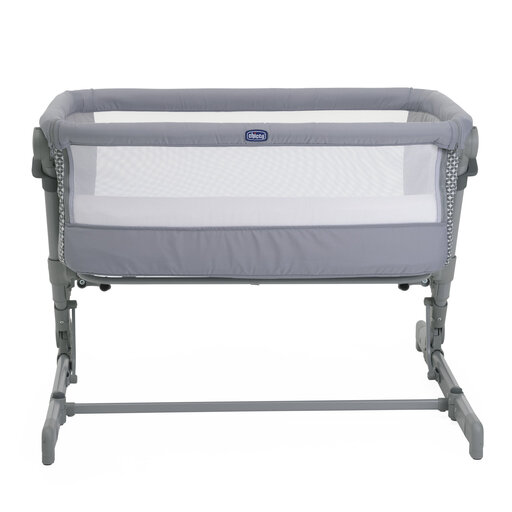
Why this product fits the profile: For families who frequently change location or have limited storage space, the foldable design with transport function is a key feature.
According to the product details, this model can be folded without disassembly. Always check the fixing and locking mechanisms before each use.
Six height positions, foldable frame, four wheels and a removable, washable cover are all specified.
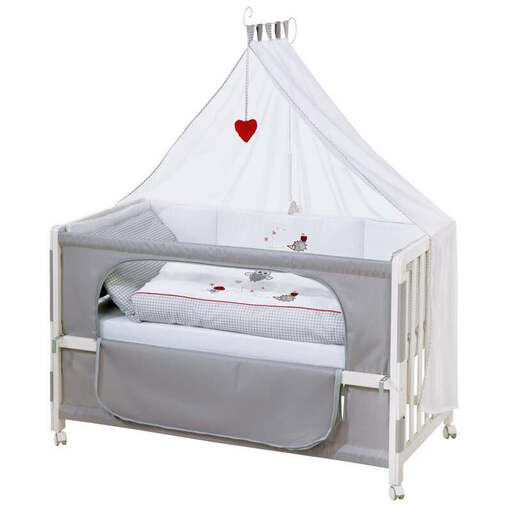
Why this product fits the profile: The roba bedside crib is designed for parents who want a larger sleeping area and plan to use it later as a toddler or junior bed.
The six height positions, adjustable metal brackets and the recommended mattress size of 60 × 120 cm are clearly stated.
Mattress, bedding, side panel, wheels with brakes and later conversion into several bed types are all mentioned in the product details.
We’ve put together a full, regularly updated list of products that fully meet these strict selection criteria and the safety regulations in force in the EU.
For a model with a standard reference, such as EN 1130:2019 or EN 716–1:2017 + AC:2019, check the specific marking on the product and in the documentation. A standard reference does not replace correct assembly and regular inspection.
That depends on the model and your child’s development. Compact co-sleepers are often intended for up to around six months or until a certain weight limit is reached. Larger models measuring 60 × 120 cm can be used for longer as a baby or toddler bed. As soon as your child can sit, kneel, pull themselves up or climb out independently, you need to reassess whether it’s still suitable.
Yes, if it’s being used as a bedside crib next to the parents’ bed. Straps or metal brackets must be fitted according to the instructions. Before each use, check the attachment, the gap and the locking mechanisms. Free-standing use is only permitted if the product is designed for that purpose.
That depends on the model. For several of the products listed here, a suitable mattress is included. What matters is that you only use the size specified by the manufacturer. When buying, also check whether the cover is removable and washable according to the care label.