
Lieferung heute & morgen

Qualitätsgarantie

Willkommens-Angebote freischalten: KOSTENLOSE Lieferung | Bis zu 80 % RABATT | Kostenlose 30-Tage-JoyPlus-Testphase
App herunterladen
A baby bedside crib can make night-time feeding, soothing and checking on your little one much easier, with everything within arm’s reach. However, baby bedside cribs differ significantly when it comes to attachment, height adjustment, sleeping surface and portability. An attractive design or a low price alone doesn’t tell you whether the model will suit your bed and your daily routine.
Many models boast flexible use. What really matters, though, is how high your bed’s mattress sits, how thick the bed frame is, and whether the attachment can actually be secured to the frame. Some models, for example, specify a maximum frame thickness. If yours doesn’t match, the bedside crib can’t be attached as intended.
A baby cot with wheels is easier to move around the house. However, when the cot is stationary, the wheels must lock securely. Wheels also don’t replace a proper attachment to your bed. For the co-sleeper function, the supplied straps or brackets are what really matter.
A bedside crib from birth is often only designed for the first developmental stage. Depending on the model, manufacturers specify a weight limit or advise stopping use once your baby can sit, kneel, pull themselves up or climb out independently. These details are more important than any general age claims.
A height-adjustable bedside crib should match the height of your mattress. Check the following before you buy:
The crib should only be assembled according to the instructions, and you should check it is secure before every use. For a baby cot for the parent’s bed, a stable connection is a key selection criterion.
A bedside crib with mattress is practical when the mattress size and sleeping surface match exactly. Only use the size specified by the manufacturer. Among the products below, you’ll find sleeping surfaces of 45 × 90 cm, 60 × 120 cm or around 83 × 50 cm.
The mattress should lie flat and must not be supplemented with extra padding, pillows, thick blankets or cot bumpers. A breathable mesh side panel makes it easier to keep an eye on your baby and supports air circulation, but it doesn’t replace a safe sleeping environment.
Fabric covers should be removable and washable according to the care instructions. Mesh fabric can improve visibility, while wooden models often offer a larger sleeping surface and can be repurposed for longer. A foldable baby cot with a carry bag is better suited for travel or frequent changes of location. Pay attention to the folded size, weight, and whether all parts can be stored securely during transport.
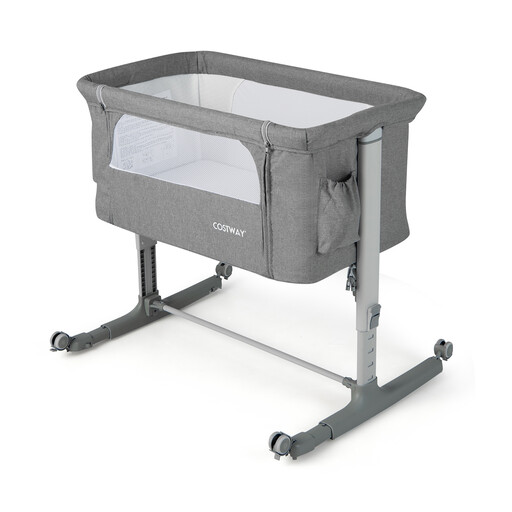
Why this product suits the profile: This model combines five height positions, mesh sides, lockable wheels and a carry bag. It’s ideal for parents looking for a compact solution for the first few months.
The product details specify a maximum weight of 9 kg and use from 0 to 5 months. This makes the short usage period much clearer.
Five height levels, four lockable wheels, carry bag and a wash-friendly zip according to the product description.
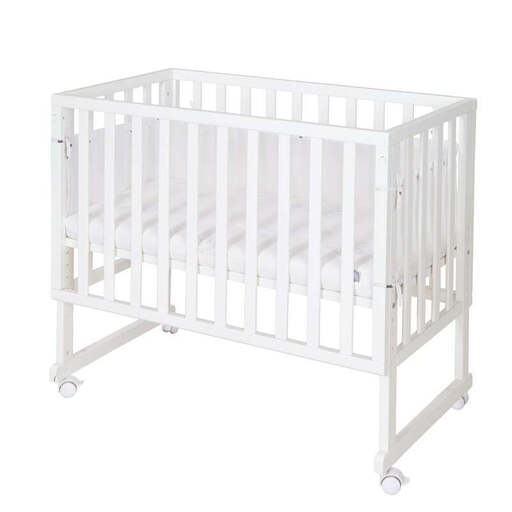
Why this product suits the profile: This wooden model offers a 45 × 90 cm sleeping surface with mattress, mesh surround, safety strap and seven height levels.
The stated EN 1130 standard and the specific details about the strap, mattress size and lockable wheels make it easier to check before use.
Washable mattress cover, four lockable wheels and use as a bench according to the product details.
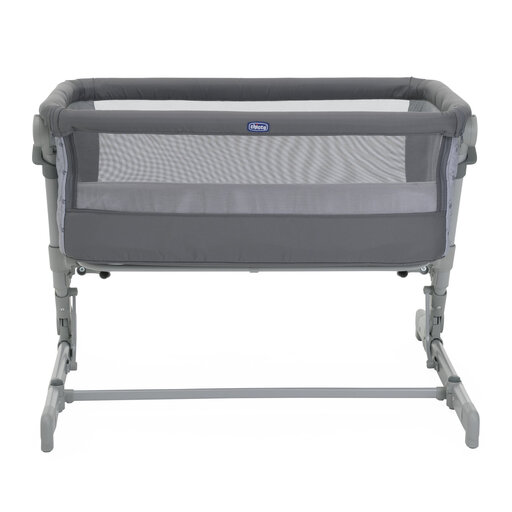
Why this product suits the profile: This model is aimed at parents who need a portable baby cot with a quick folding function and flexible adjustment to different bed heights.
The six height positions, the strap attachment system and the safety advice to check straps and locks are clearly stated.
Folds flat without disassembly, six height levels, mesh material and a removable, machine-washable cover according to the product description.
We’ve put together a complete, regularly updated list of products that fully meet these strict selection criteria and the safety regulations in force in the EU.
Assemble the baby bedside crib fully according to the instructions and check the following before first use:
A co-sleeper baby cot should not be equipped with pillows, soft toys, thick blankets or extra padding. The specific instructions from the manufacturer always take priority.
That depends on the model, your baby’s weight and their development. Some products are designed for up to around 9 kg or until your baby can sit, kneel or pull themselves up. Larger wooden models with 60 × 120 cm can, according to the product details, be used for longer as a baby or toddler cot. However, use as a bedside crib ends as soon as the safety limits are reached.
The cot is secured to the intended bed frame using straps or brackets. Beforehand, you must check the mattress height, frame thickness and gap. After assembly, there must be no dangerous gap. Check the connection regularly and do not move the cot while it is docked.
In addition to the purchase price, you may need to budget for suitable fitted sheets, replacement covers or a replacement mattress. If you wash items frequently, machine-washable covers are practical. Make sure you only use accessories in the size recommended by the manufacturer, so the sleeping surface remains a perfect fit.