
Lieferung heute & morgen

Qualitätsgarantie

Willkommens-Angebote freischalten: KOSTENLOSE Lieferung | Bis zu 80 % RABATT | Kostenlose 30-Tage-JoyPlus-Testphase
App herunterladen
When you start weaning, spilled drinks, purée on tops and dropped food become part of daily life. A suitable baby bib can protect clothes and the table area, provided the material, cut and fastening match the situation. However, eye-catching product claims don’t automatically mean a practical solution.
A thin, water-repellent bib can keep liquid off clothes, but it won’t necessarily protect sleeves or the lap. For self-feeding, a generous cut or a long-sleeved bib is often more practical than a small standard model.
A baby bib with a crumb catcher is only helpful if the pocket stands open firmly. With soft or poorly folded designs, dropped food can still end up on the lap or floor. So check the construction on product images and details before you buy.
Multiple poppers or a Velcro fastening make adjustment easier. However, the fastening must not be too tight and should have no hard edges around the neck. A bib must be removed before sleep; adult supervision is required during mealtimes.
For weaning, materials that are easy to clean after eating are ideal. A silicone baby bib can usually be rinsed under running water or cleaned with warm washing-up water. Some models are suitable for the top rack of the dishwasher. Polyester bibs, depending on the design, can be wiped clean or machine-washed at a specified temperature.
If you’re specifically looking for a BPA-free bib, look for a clear manufacturer statement. The silicone models mentioned below are labelled BPA-, PVC- and phthalate-free. Such claims refer to the specific product declaration and should not be assumed for other models.
A sleeveless bib is often enough for short meals or as light protection when feeding. A long-sleeved bib also covers the sleeves and can be more practical for purée-based foods, finger foods or messy eating attempts. Look for elasticated sleeve cuffs, adequate back coverage and a fastening that’s easy to use.
A wipe-clean bib saves time when it can be cleaned straight after each meal. Check:
A baby bib set is especially practical for households with several meals a day. Two or more bibs mean you can use a clean one while the other dries or is being washed.
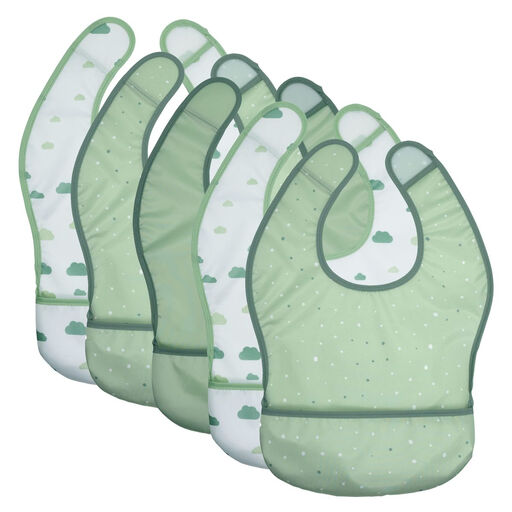
Why this product fits the profile: The 5-pack is ideal for families who need several sleeveless bibs for meals, outings and quick changes in between.
The product details mention water-repellent polyester and cleaning by wiping or machine washing at 30 °C. The Velcro fastening is adjustable.
Five bibs made from 100 % polyester, measuring approximately 38 × 25 cm and OEKO-TEX Standard 100 according to the product description.
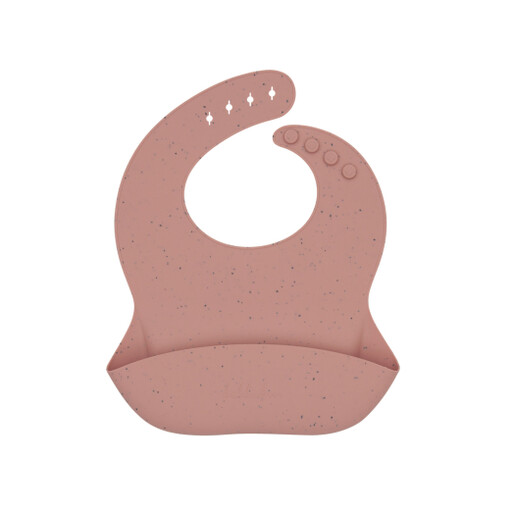
Why this product fits the profile: This silicone model is aimed at parents who want a declared material composition, a crumb catcher and easy cleaning all in one.
The wide, open crumb catcher addresses the problem of dropped food. Multiple popper positions allow for an adjustable fit.
100 % platinum silicone according to the manufacturer, declared BPA-, PVC- and phthalate-free; suitable for the top dishwasher rack.
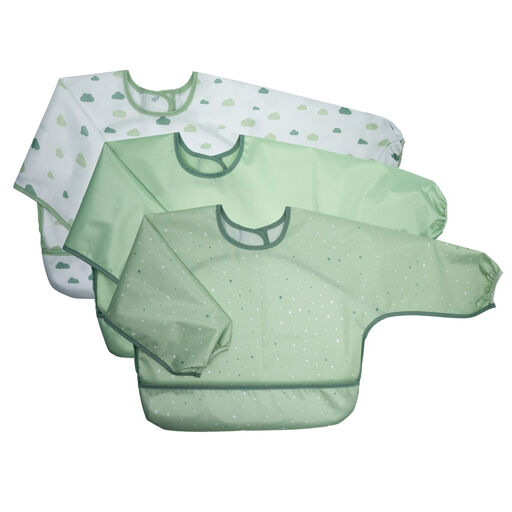
Why this product fits the profile: The long-sleeved bib is suitable for meals with a higher risk of mess and also covers the sleeves.
The sleeves and integrated crumb catcher extend the coverage compared to a sleeveless model. The water-repellent fabric is wipeable and washable according to the details.
3-pack made from 100 % polyester, Velcro fastening, crumb catcher and size recommendation for babies and toddlers from 6 to 24 months.
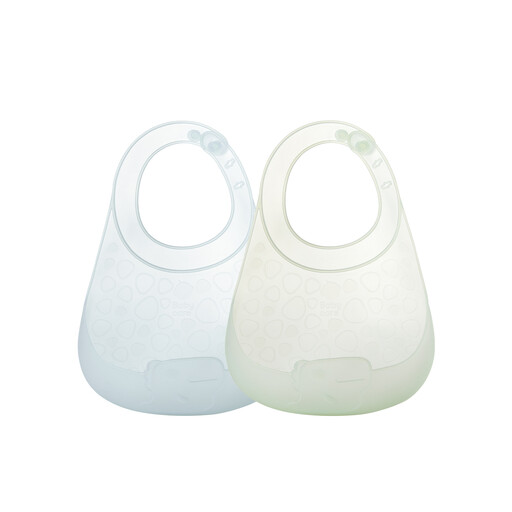
Why this product fits the profile: Two lightweight silicone bibs with a storage box are ideal for families who want to keep one at home and one in the changing bag.
The 3D structure is designed to hold its shape during mealtimes. Multiple fastening positions help with adjusting to different sizes.
2-pack made from food-grade silicone, declared BPA-, PVC- and phthalate-free; dishwasher-safe according to the product details and comes with a travel box.
We’ve put together a full, regularly updated list of products that fully meet these strict selection criteria and the safety regulations in force in the EU.
Many models are recommended from around 6 months. However, the manufacturer’s age recommendation, your child’s height and the fit around the neck are what matter. A bib should not be too large, but it also shouldn’t unnecessarily restrict movement.
Silicone is usually quick to wipe clean and can be combined with a crumb catcher. Polyester bibs are often lighter and can be kept as a set for several meals. The right choice depends on whether quick cleaning, a compact size for out and about, or greater coverage is your priority.
For daily use, several bibs make sense, especially with multiple meals and frequent washing. A baby bib set reduces waiting time for drying. For particularly messy foods, you might also keep a long-sleeved model handy for certain meals.