
Lieferung heute & morgen

Qualitätsgarantie

Willkommens-Angebote freischalten: KOSTENLOSE Lieferung | Bis zu 80 % RABATT | Kostenlose 30-Tage-JoyPlus-Testphase
App herunterladen
A baby bottle brush set can make everyday life with bottles, teats and breast pump parts easier. However, sets vary considerably in terms of brush design, drying and storage. A large number of components alone says little about how practical a set really is.
Typical buying pitfalls arise in three areas:
For families, it is therefore worth taking a close look at the complete baby bottle cleaning set, rather than focusing solely on the design or the number of accessories.
A bottle brush for baby bottles should reach the entire inside without putting unnecessary strain on delicate surfaces. A separate, narrower teat brush is useful for teats. It fits into small openings more easily and helps remove milk residue.
A baby straw brush is practical for training cups and bottles with valves. Make sure it is long enough and has a diameter that fits the opening. A universal handle with several attachments can save space, provided the connection is secure and can be rinsed thoroughly.
For products used with baby tableware, specific information is more important than general advertising claims. Silicone, plastic and nylon bristles are commonly used. A silicone bottle brush is flexible and easy to rinse after use. Whether a component can be boiled must be stated explicitly in the instructions for use.
When buying a BPA-free bottle brush, check that this information applies to the plastic parts actually used. Parents may also want to look for the following details:
Material information does not replace proper cleaning. After every use, all parts should be rinsed thoroughly and dried completely.
A baby bottle drying rack prevents cleaned bottles from being placed directly on a damp work surface. A folding model saves space in small kitchens. A waterproof travel box is useful when you are out and about, although only completely dry parts should be stored in it.
If you also want to clean breast pump accessories, check whether the set includes small, angled brushes. Breast shields, valves and connecting tubes often require different shapes from a classic baby bottle. A 7-in-1 bottle cleaning set can cover a range of tasks, provided the included attachments are suitable for your own accessories.

Why this product suits this profile: This set combines a bottle brush, teat brush, straw brush, soap dispenser, folding drying rack and travel box in one solution for use at home and on the go.
The separate brush heads reduce the need to buy several individual products. The drying rack addresses the frequently overlooked need for a place to put items after rinsing.
According to the product information: food-grade silicone, BPA-free plastic parts, folding draining rack and waterproof storage box.
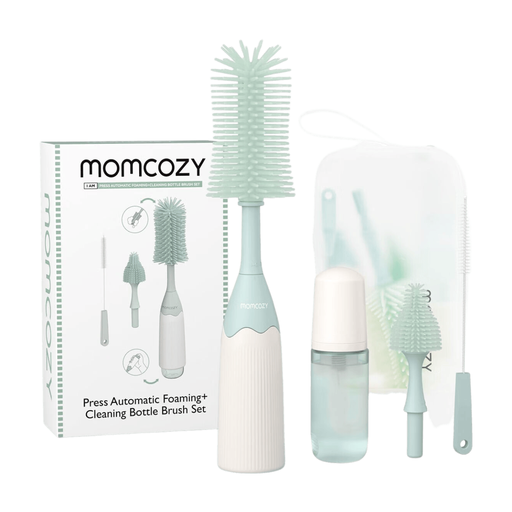
Why this product suits this profile: The press-action design, removable heads and separate brushes for teats and narrow openings are ideal for families who regularly clean a range of accessories.
The components can be taken apart and rinsed individually. This leaves less cleaning product or milk residue hidden in the connection points.
According to the product information: food-grade silicone, BPA-free plastic parts, Press-to-Foam function, removable heads and travel case.
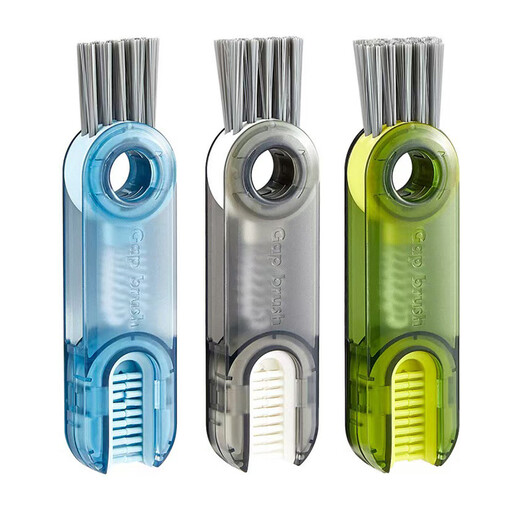
Why this product suits this profile: As an additional tool, the 3-in-1 brush is suitable for cup openings, lid areas and narrow gaps around the home.
The shaped heads are designed for gaps and lid contours. A brush specifically intended for bottles and teats should still be used for those items.
According to the product information: three cleaning functions and a U-shaped head for hard-to-reach areas around cups and lids.
We have put together a complete, regularly updated list of products that fully meet these strict selection criteria and the safety regulations applicable in the EU.
Before first use, all removable parts should be rinsed according to the instructions. For daily cleaning, we recommend a mild washing-up liquid and plenty of clean water. Do not force the brush into narrow openings, as the bristles may come loose or components may become misshapen.
The following steps help after rinsing:
It is not possible to give a fixed lifespan for a baby bottle brush in general. Frequency of use, material and care are the key factors. Replace the product if the bristles become frayed, the silicone develops cracks, odours remain despite cleaning or the connections are no longer secure.
First, take the bottle apart completely. Clean the inside, thread, teat and valves with suitable brushes, then rinse everything thoroughly. The individual parts should be completely dry before being reassembled or put away.
This depends on the material, level of use and cleaning routine. A reliable replacement schedule cannot be determined by calendar time alone. Visible wear, damaged bristles or cracks are practical reasons to replace it.
A set is particularly useful if you use several bottles, teats, straws or breast pump parts. If you only clean one bottle, a suitable bottle brush and a separate teat brush may be enough. The key is to ensure that all existing openings can be reached and that the parts can then be dried properly.