Joybuy Insights

Baby Bottle Buyer’s Guide: Avoid Mistakes and Choose the Right One

Choosing the right baby bottle can quickly feel overwhelming for expectant parents. The market is flooded with countless models, all promising unique benefits. However, not every expensive or heavily advertised bottle is the right one for your child. As a Joybuy Product Recommendation Officer, I'll help you distinguish essential features from mere marketing promises and make an informed decision.

In this guide, we'll focus on the crucial criteria and show you the common pitfalls to avoid, helping you find a bottle that your baby will accept and that will make your daily routine easier.

The 3 Most Common Pitfalls When Buying a Baby Bottle

Before we dive into the technical details, it's important to be aware of the most common mistakes that often lead to frustration and unnecessary expenses.

  1. Believing in a "One-Size-Fits-All" Solution: Many brands market their bottles as universally suitable. The reality, however, is that every baby has individual feeding preferences. A bottle loved by one child might be completely rejected by another. Buying a large baby bottle set before birth therefore carries the risk of it going unused.
  2. Overlooking Cleaning Complexity: A sophisticated anti-colic system sounds promising, but it can consist of many small, individual parts. If these aren't meticulously cleaned and correctly reassembled after each use, germs can build up or the system's function can be compromised. The complex handling quickly becomes a burden in daily life.
  3. Focusing on the Bottle, Not the Teat: Often, more attention is paid to the bottle's design than to the most crucial element: the teat. Its material, shape, and hole size (flow rate) are the main factors for acceptance by the baby and comfort during feeding.

What Really Matters: The Key Parameters of a Good Baby Bottle

To avoid a bad purchase, you should base your choice on a few, but crucial, technical features.

Material: Polypropylene (PP), Polyamide (PA), or Glass?

All baby bottles sold in the EU must be BPA-free. The differences lie in their other material properties:

  • Polypropylene (PP): The most common plastic for baby bottles. It's lightweight, shatterproof, and inexpensive. Over time, PP bottles can become discoloured by food (e.g., carrot juice) and are less scratch-resistant.
  • Polyamide (PA): A higher-quality plastic that is as transparent as glass but also lightweight and shatterproof. PA bottles are generally more durable and scratch-resistant than PP models.
  • Glass: Considered especially hygienic as it doesn't absorb odours or discolouration and is very scratch-resistant. The downside is its heavier weight and risk of breakage, although many models are made from durable borosilicate glass.
  • Silicone: Some bottle bodies are made entirely of soft silicone. They are flexible, shatterproof, and lightweight.

The Teat: The Heart of the Bottle

Choosing the right teat is crucial, especially if you plan to combine breastfeeding and bottle-feeding.

  • Shape: A breast-like baby bottle features a wide, soft teat that mimics the shape of a mother's breast. This is intended to ease the transition for the baby. Models like the Philips Avent bottle or the Chicco NaturalFeeling use such designs.
  • Material: Most teats are made of silicone because it is taste-neutral, hygienic, and durable.
  • Hole Size (Flow Rate): The hole size determines how quickly the milk flows. Manufacturers offer different levels tailored to the baby's age and the type of food. A newborn baby bottle typically has a teat with a very slow flow rate (size S or 0+) to prevent choking.

Anti-Colic Systems: How They Work

An anti-colic baby bottle is designed to prevent the baby from swallowing too much air while feeding, which can lead to stomach pain. There are two main types of systems:

  1. Valve in the Teat: A small valve in the teat or screw ring ensures pressure equalisation inside the bottle. Air can flow in without creating a vacuum. This system is found in many NUK bottles, for example.
  2. Base Valve: Air flows in through holes in the bottle base and rises up the sides as bubbles, without mixing with the milk. The MAM bottle is a well-known example of this technology. This system is considered very effective but requires disassembling the bottle into more parts for cleaning.

Top Picks for Every Need

Instead of making a one-size-fits-all recommendation, we have selected models that cater to the specific needs of parents.
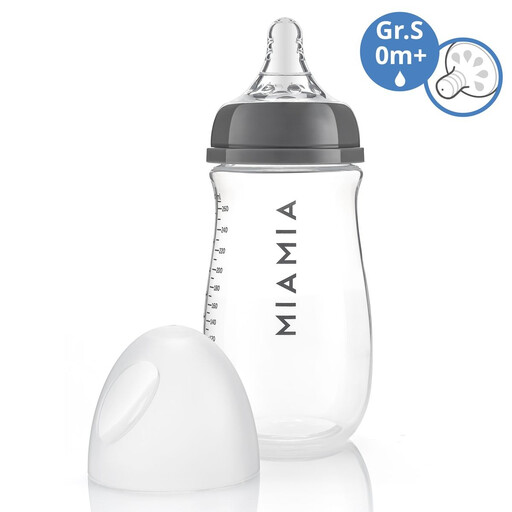
IDEAL FOR: BUDGET-CONSCIOUS BEGINNERS
MiaMia Baby Bottle 260 ml

MiaMia Baby Bottle 260 ml

Why it's a good fit: Ideal for parents looking for functional, straightforward basics without a large investment. It's a great way to test your baby's acceptance of bottle-feeding.

How it avoids the pitfall

It avoids the pitfall of over-complexity. The anti-colic system is integrated directly into the teat, making it much easier to clean than multi-part systems.

Key Advantage

Lightweight and shatterproof PP material. The wide bottle neck makes filling and cleaning significantly easier.
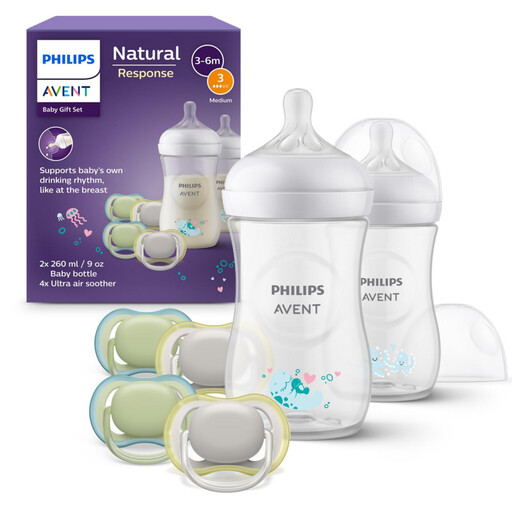
IDEAL FOR: COMBINING BREAST AND BOTTLE
Philips Avent Natural Response Baby Gift Set

Philips Avent Natural Response Baby Gift Set

Why it's a good fit: This set is specifically designed for parents who want to combine breastfeeding and bottle-feeding. The teat is engineered to support the baby's natural drinking rhythm.

How it avoids the pitfall

It addresses the "one-size-fits-all" myth by focusing on a specific need. According to the manufacturer, the teat only releases milk when the baby is actively drinking, just like at the breast.

Key Advantage

Breast-like, no-drip teat designed to ease the transition between breast and bottle. The set also includes soothers and offers excellent value for money.
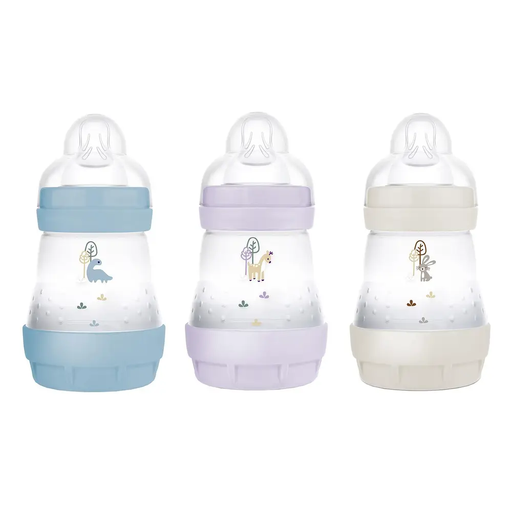
IDEAL FOR: BABIES PRONE TO COLIC
MAM Anti-Colic Bottle, Matte, 0+ Months, 160 ml

MAM Anti-Colic Bottle, Matte, 0+ Months, 160 ml

Why it's a good fit: For parents whose main concern is reducing colic and gas. The base valve system is specifically designed to minimise air swallowing.

How it avoids the pitfall

Although the system consists of several parts, the cleaning effort is mitigated by a practical feature: according to the manufacturer, the bottle can self-sterilise in the microwave.

Key Advantage

The base valve ensures a very even flow and reduces air intake. The flat, soft teat is well-accepted by many babies.

Looking for more options?

We've compiled a complete, up-to-date list of products that fully meet these strict selection criteria and EU safety regulations.

Frequently Asked Questions (FAQ)

How often should you replace baby bottles and teats?

Plastic bottle bodies (PP, PA) should be replaced at the first sign of scratches, discolouration, or cracks, as germs can accumulate in the damaged areas. Glass bottles last a very long time with proper care. Teats are consumables and should be replaced for hygiene and safety reasons every 1–2 months, or at the first signs of wear (e.g., a sticky surface, tears, or an enlarged hole).

Which material is suitable for a baby bottle?

All materials approved for sale in the EU are safe and BPA-free. The choice is a matter of personal preference:

  • PP is the lightweight and budget-friendly all-rounder.
  • PA is a more durable and visually appealing plastic alternative.
  • Glass is the most hygienic, but also the heaviest and most fragile option.
  • Silicone offers a soft, unbreakable alternative.

What is the most efficient way to clean baby bottles?

Proper hygiene is crucial. After each feed, disassemble the bottle into all its parts. Rinse them with warm water and dish soap, using a bottle brush to remove any residue. There are several methods for sterilisation:

  • Boiling: Boil for 5 minutes in a pot of water.
  • Steam Steriliser: An electric steam steriliser is a convenient and fast method.
  • Microwave: Some bottles, like those from MAM, have a self-sterilising function for the microwave. Always follow the manufacturer's instructions for this.

Proper care is complemented by accessories like a practical bottle warmer, which gently and safely brings milk to the correct drinking temperature.