
Lieferung heute & morgen

Qualitätsgarantie

Willkommens-Angebote freischalten: KOSTENLOSE Lieferung | Bis zu 80 % RABATT | Kostenlose 30-Tage-JoyPlus-Testphase
App herunterladen
A baby bottle needs to fit your child's age, feeding method and daily routine. Many poor purchases happen not because of missing features, but because of the wrong combination of bottle size, teat flow and cleaning effort.
A baby bottle with 330 ml offers more reserve, but for a newborn it can be unnecessarily large and heavy to hold. For the first few months, baby bottles with 150 ml are often more manageable. Models with 250 ml or 260 ml suit growing feeding amounts, while 330 ml can be useful mainly for older babies.
The flow must match your baby's drinking style. A teat that is too fast can cause your baby to drink hastily or let milk run out of their mouth. A teat that is too slow prolongs the feed and can lead to frustration. So pay attention to the labelling: slow, normal, medium or fast, and to the manufacturer's age recommendation.
An anti-colic baby bottle has, depending on the model, a valve or base-vent system designed to influence air intake during feeding. This is an objective design feature, but not a guarantee of any specific health benefit. What really matters is the correct teat size, a fully assembled bottle and an upright feeding position.
For a baby bottle for newborns, a slow or normal flow is usually intended. One example is the Chicco NaturalFeeling baby bottle with 150 ml and Normal Flow for babies from 0 months. For babies from around 2 months, models with medium flow are available. From 6 months, a fast flow such as the Chicco NaturalFeeling baby bottle with 330 ml may be suitable.
The age indication is a guide. Also observe your baby's drinking behaviour:
Teats should be checked for cracks, deformation and porous areas before each use. If you see any damage, replace them.
A BPA-free baby bottle is often made from polypropylene, or PP for short. This material is lightweight and shatter-resistant. The teat on many current models is made from silicone. A baby bottle with a silicone teat is appealing for families who prefer an odourless, flexible teat.
Check the product details for:
Not every bottle can go in the microwave. On some models, the teat, retaining ring and cap must be removed before heating. Always follow the manufacturer's instructions.
A wide bottle opening makes filling and reaching the inside with a brush easier. Dishwasher-safe components can simplify daily life, but must be fully disassembled. Valves and teats should be cleaned separately so that no milk residue remains.
Before first use, clean and sterilise the baby bottle according to the instructions. If you use bottles frequently, it is worth having several bottles with the same teat flow level. This makes organising spare parts and cleaning routines much simpler.
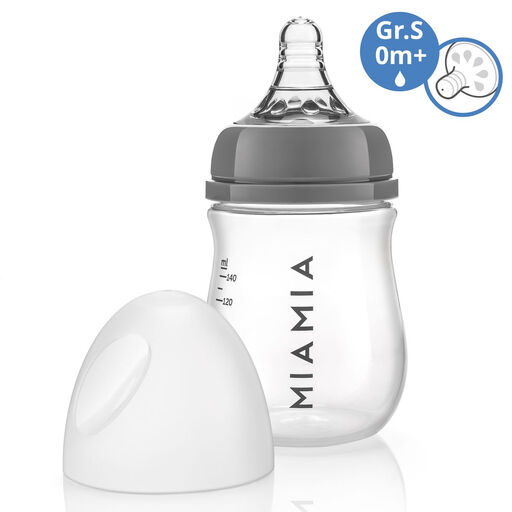
Why this product fits the profile: The compact capacity is suitable for smaller feeding amounts from birth. The slow size S teat is intended for milk, water and first infant formula.
The clear 140 ml size and the slow flow labelling help you avoid an oversized bottle or a teat that is too fast.
BPA-free PP, flexible silicone teat, wide opening and suitability for dishwasher and sterilisation.
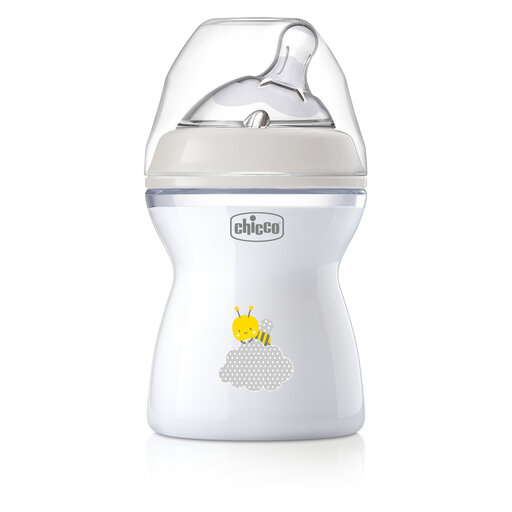
Why this product fits the profile: The 250 ml bottle with medium flow is aimed, according to the product information, at babies from around 2 months and can be used for increasing feeding amounts.
The stated age stage and medium flow reduce the risk of switching to a fast teat too soon.
PP bottle body, silicone teat, double valve system and dishwasher suitability according to product information.
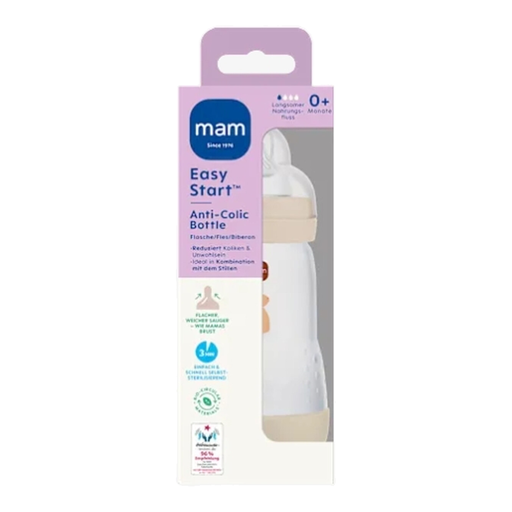
Why this product fits the profile: This model is intended from birth, holds 260 ml and has a flat, soft silicone teat with slow flow. This makes it interesting for bottle feeds when combining breastfeeding and bottle feeding.
The slow flow is clearly stated. The bottle must be fully disassembled for cleaning, which means the valve areas can be checked more easily.
260 ml capacity, PP bottle, silicone teat, self-sterilising function as per instructions and suitability for the top dishwasher rack.

Why this product fits the profile: The bottle warmer is intended for breast milk, infant formula and baby food, and offers programmes for warming, defrosting, keeping warm and steaming.
The selection for milk state, bottle material and amount helps you avoid warming different containers using a single standard time.
Automatic shut-off, timer display, night light and removable, dishwasher-safe parts according to the product description.
We have put together a complete, regularly updated list of products that fully meet these strict selection criteria and the safety regulations in force in the EU.
For newborns, look for models from 0 months with slow or normal flow. A size of 140 or 150 ml is handy for smaller feeds. Also essential are a suitable teat, safe assembly and cleaning according to the manufacturer's instructions.
The bottle body can be used for longer if the material remains intact. Teats should be checked regularly and replaced if you see cracks, discolouration, deformation or according to the manufacturer's instructions. With daily use, check all components for wear and proper function.
Use a suitable bottle warmer for breast milk and baby food, a warm water bath or the method recommended by the manufacturer. Check the temperature before each feed. A bottle should not be heated while sealed, and uneven heating in the microwave can create particularly hot spots.