
Lieferung heute & morgen

Qualitätsgarantie

Willkommens-Angebote freischalten: KOSTENLOSE Lieferung | Bis zu 80 % RABATT | Kostenlose 30-Tage-JoyPlus-Testphase
App herunterladen
From the Joybuy Product Recommendation Officer
A baby bottle needs to do more than just hold liquid in everyday use. What really matters is the right teat size, a controlled flow rate, hygienic materials, and a cleaning routine that doesn't take too much effort. When you're buying your first set, it's easy to end up spending unnecessarily because product promises don't always match what you actually need.
The terms "slow", "medium" and "fast" aren't the same across all brands. What really counts is the manufacturer's specific age and flow rate guidance. A baby bottle for newborns generally needs a slower flow than a baby bottle for babies from 2 months. For older babies, a fast flow may be suitable.
A teat with a larger hole isn't automatically better. Your baby may struggle to manage the amount of liquid. On the other hand, a flow that's too slow can make feeds drag on. You should never try to enlarge the teat yourself with needles or other objects.
An anti-colic valve can, by design, reduce the amount of air your baby takes in during feeding. However, this doesn't guarantee it will prevent colic, reflux or possetting. These systems should be seen as a technical feature, not a medical promise.
It's also important to assemble the bottle correctly. With a bottle with an anti-colic valve, incorrectly fitted valve parts can cause leaks or affect how the bottle feeds.
A baby bottle usually has several parts: the bottle body, teat, screw ring, cap and sometimes a valve. A narrow opening or hard-to-reach parts can make cleaning more difficult. A dishwasher-safe baby bottle is convenient, but it doesn't replace the need to take everything apart and wash each piece thoroughly.
The bottle body is often made from polypropylene (PP). This material is lightweight and resistant to breakage. A BPA-free product should be clearly labelled as such. For the teat, silicone is common because it holds its shape and is easy to clean. A baby bottle with a silicone teat can be suitable for breast milk, first infant formula or mixed feeding, as long as the manufacturer's instructions say so.
For baby and toddler products that hold liquid food, the standard EN 14350 is a useful indicator of the intended product category. However, when choosing, you should always check the specific warnings, age recommendations and care instructions for each product.
For the first few weeks, 140 or 150 ml bottles are often a good size and easy to handle. Models with 250 or 260 ml offer more capacity for growing appetites. A 330 ml bottle can be useful for older babies, provided the age recommendation and teat flow rate are suitable.
Capacity alone doesn't tell you whether a bottle is right for your baby. A large bottle with a fast-flow teat isn't automatically suitable for every baby.
Wider, softer or breast-shaped teats are often marketed for combining breastfeeding with bottle feeding. With a baby bottle for breastfeeding and bottle feeding, you should also pay attention to the teat's position and the recommended feeding technique. The product name "NaturalFeeling baby bottle" describes a design approach; it's not a guarantee that your baby will switch without any issues.
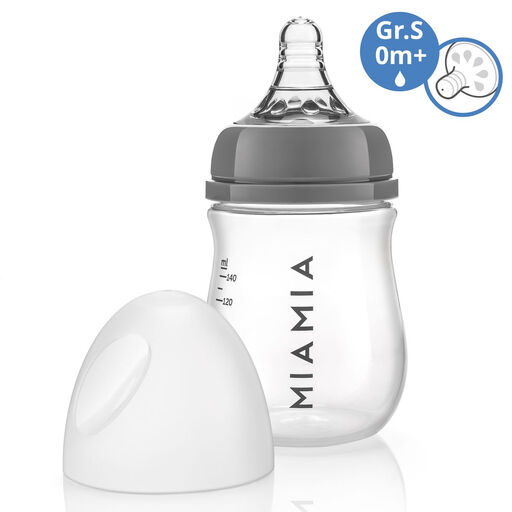
Why this product fits the profile: The compact capacity is ideal for the first feeds and for carers who want a lightweight bottle with a clear, easy-to-read scale.
The size S teat is designed for a slow flow. This means the choice is based on the recommended feeding age, not just the bottle's volume.
140 ml capacity, BPA-free PP and silicone teat; according to product information, it's dishwasher-safe and tested to EN 14350.
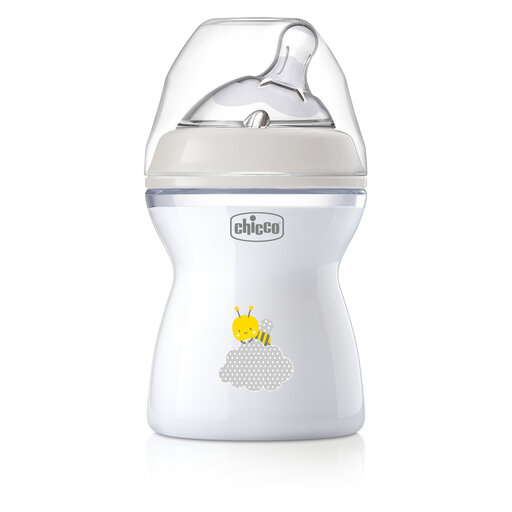
Why this product fits the profile: According to the manufacturer, the 250 ml bottle is suitable for babies from 2 months and combines a medium flow with an angled teat design.
The age recommendation and medium flow are clearly stated. The integrated double valve is described as a design feature, not a medical guarantee.
BPA-free PP bottle body, soft silicone teat, anti-colic valve and can be cleaned in the top rack of the dishwasher.
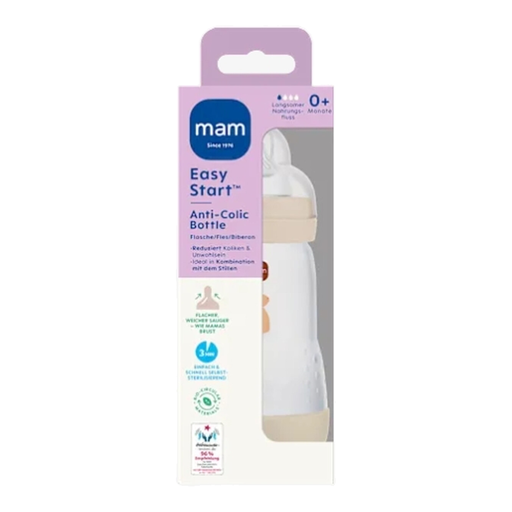
Why this product fits the profile: The 260 ml bottle is suitable from birth and offers a slow flow for daily use, as well as being suitable for combining with breastfeeding.
The bottle is cleaned fully disassembled. This keeps the valve and teat accessible, rather than relying on a simple external rinse.
Slow-flow teat, 260 ml capacity, PP bottle, silicone teat and, according to product information, can be cleaned in the top rack of the dishwasher.
We've put together a complete, regularly updated list of products that fully meet these strict selection criteria and the safety regulations in force in the EU.
Before first use, the bottle and teat should be cleaned and sterilised according to the manufacturer's instructions. For every use, remember:
How long a teat lasts depends on the material, how often it's used and how it's cared for. Some manufacturers recommend replacing it after a certain period; what matters most is the specific instructions for use and the visible condition of the teat.
For newborns, look for models with an age recommendation from birth and a slow flow. A capacity of 140 or 150 ml is often a handy size. For premature babies, special dietary needs or if you're unsure, you should discuss your choice with a healthcare professional.
Don't switch based on age alone. Pay attention to the manufacturer's guidance and how your baby is coping with the current flow. A baby bottle with a medium flow is recommended for some models from around 2 months, while a fast flow is often suitable from 6 months. The exact recommendations vary by brand and teat range.
First, separate all the parts, then wash them with warm water and a suitable cleaning product, making sure to remove any residue from the valves and teat openings. If the baby bottle is dishwasher-safe, follow the recommended position, usually the top rack. Make sure all parts are completely dry before reassembling.