
Lieferung heute & morgen

Qualitätsgarantie

Willkommens-Angebote freischalten: KOSTENLOSE Lieferung | Bis zu 80 % RABATT | Kostenlose 30-Tage-JoyPlus-Testphase
App herunterladen
A baby bottle and feeding set should work reliably in everyday life: when feeding at home, learning to drink at nursery or travelling in the pushchair. Many products look similar at first glance, but differ considerably in terms of materials, cleaning, age recommendations and leak protection.
A leak-proof children's cup is only practical if the lid, seal, valve and drinking attachment are assembled correctly. Multi-part systems can be flexible in everyday use, but require additional cleaning. Residue in straws or valves is easily overlooked.
So look for:
A drinking cup for children aged 6 months and over is not automatically suitable for every child at this developmental stage. A 360° drinking rim, soft silicone attachment or straw each place different demands on oral motor skills and handling. A baby bottle with an anti-colic valve is also designed for a specific teat size and drinking speed.
The manufacturer's age recommendation should match the child's development and the intended use.
“BPA-free” describes an important aspect of the material, but on its own says nothing about whether the product is suitable for use in the microwave, freezer or dishwasher. Stainless steel, polypropylene, PE and silicone have different care requirements. For example, a bottle may be suitable for water and juice, but not for milk or carbonated drinks.
For a BPA-free drinking bottle, the material specifications should be as specific as possible. Examples from the product selection include polypropylene (PP), silicone, PE and 304 stainless steel. It is also important to check whether the manufacturer states that the product is dishwasher-safe, steriliser-safe, microwave-safe or intended for hand washing only.
For a silicone baby feeding set, temperature limits are also important. For example, the Kikka Boo set specifies a temperature range of -40 °C to +230 °C and, according to the product description, is suitable for the freezer, microwave, dishwasher and steam steriliser. Even when reheating food, you should always stir it thoroughly and check its temperature before feeding.
A training cup with handles is particularly suitable for children learning to hold a cup independently. A baby straw cup can be practical when you're out and about, but the straw needs to be cleaned thoroughly. A cup with a drinking rim works differently and should be checked to ensure that its lid closes securely.
Important features include:
With baby bottles, the shape and size of the teat and the drinking opening play a key role. A wide bottle neck makes filling and cleaning easier. An anti-colic system should be understood as a design feature; it does not guarantee any specific medical outcome for an individual child.
Check teats, seals and drinking attachments for cracks or deformation before every use. Products with teats also come with instructions such as checking the temperature of the feed and using the product under adult supervision.
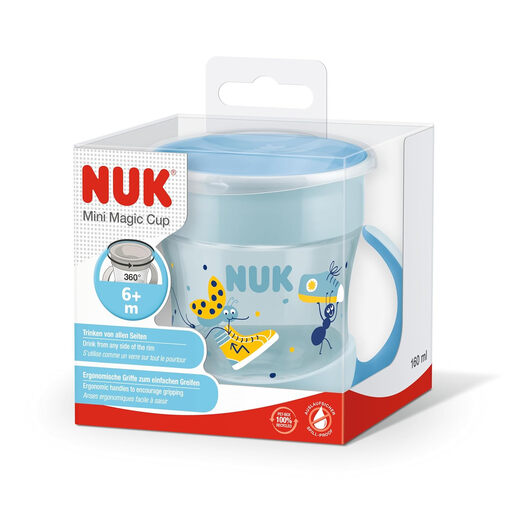
Why this product suits this profile: This compact drinking cup for toddlers features a 360° drinking rim, ergonomic handles and a 160 ml capacity. It is well suited to short drinking breaks and small hands.
The age recommendation from 6 months, protective lid and clearly stated BPA-free material make key buying criteria easy to check.
160 ml capacity, 360° drinking rim, ergonomic handles and suitability for hand washing and the dishwasher according to the product details.
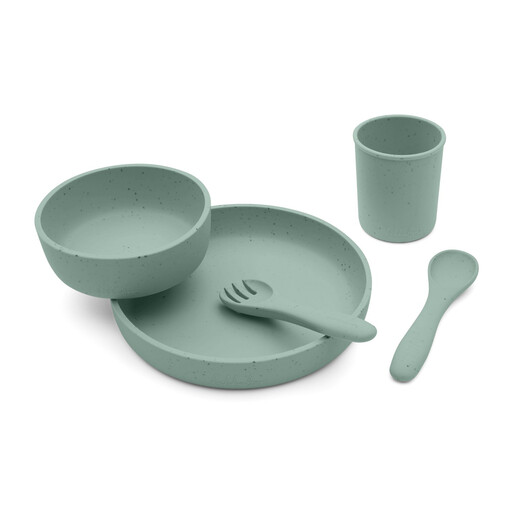
Why this product suits this profile: This five-piece baby tableware set includes a plate, bowl, cup, fork and spoon. According to the product description, the components are made from food-grade platinum silicone.
Instead of buying individual pieces separately, parents receive a coordinated set with clear information about the material, temperature range and cleaning.
Five components, 100% platinum silicone according to the manufacturer, BPA-free, dishwasher-safe and suitable for children from 6 months.
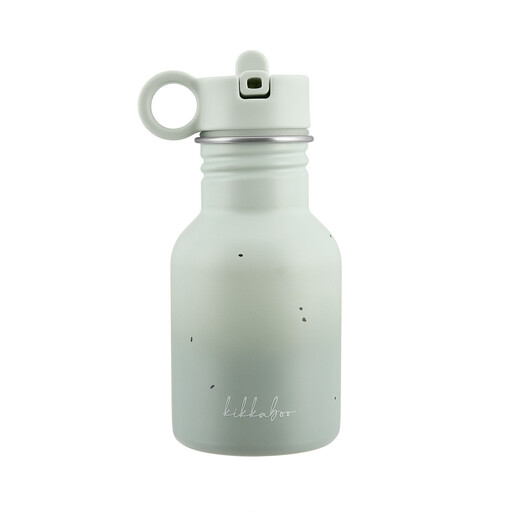
Why this product suits this profile: This stainless steel bottle with an extendable straw is intended for children from 12 months and, according to the description, is suitable for days out or nursery.
The product information clearly defines its use: the bottle is not intended for milk or carbonated drinks and should be washed by hand.
350 ml capacity, 304 stainless steel, extendable drinking straw, leak-proof design and BPA-free materials according to the product description.
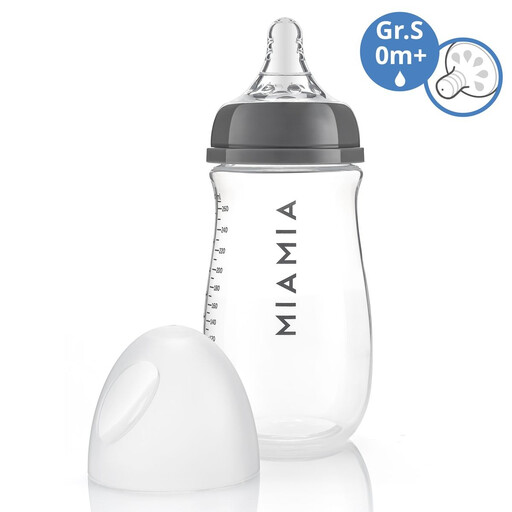
Why this product suits this profile: According to the product description, this baby bottle is suitable from birth and features a size S teat and a wide bottle neck.
The bottle specifies its capacity, teat size, material and care options. This makes it easier to choose than baby bottles with unclear specifications.
260 ml capacity, BPA-free PP and silicone, dishwasher-safe, suitable for sterilising and boiling according to the manufacturer; tested to EN 14350.
We have put together a complete, regularly updated list of products that fully meet these strict selection criteria and the safety regulations applicable in the EU.
A baby bottle, training cup or baby tableware set should be cleaned after every use in accordance with the manufacturer's instructions. Fully dismantle valves, teats and straws. Then check that all parts are dry before putting them back together.
When it comes to service life, the condition of the components matters more than a fixed time period. Replace teats, seals or drinking attachments as soon as you notice cracks, discolouration, sticky surfaces or deformation. A lid that no longer closes securely is also no longer suitable for transport.
Milk and infant formula require particularly high standards of hygiene. Drinks should not be left in a drinking vessel for longer than necessary. With stainless steel straw bottles, you should also check the specific manufacturer's approval, as not every model is suitable for milk or carbonated drinks.
That depends on the child's development and the drinking system. A cup with handles, a 360° drinking rim or a soft attachment can support the transition to independent drinking. The key factors are the age recommendation, a manageable number of individual parts and easy cleaning.
There is no standard service life that applies in every case. Check the bottle body, teat, valves and seals regularly. Any affected parts should be replaced if there is visible damage or a decline in performance. Care instructions, such as whether the product is dishwasher-safe or suitable for sterilisation, should be followed.
For starting solid foods, a plate or bowl, a small spoon and an easy-to-hold cup are useful. A five-piece baby tableware set may also include a fork and replace several separate purchases. Look for non-slip features, easy-to-grip shapes, BPA-free materials and age-appropriate use.