
Lieferung heute & morgen

Qualitätsgarantie

Willkommens-Angebote freischalten: KOSTENLOSE Lieferung | Bis zu 80 % RABATT | Kostenlose 30-Tage-JoyPlus-Testphase
App herunterladen
A baby bottle steriliser can make everyday life with bottles, breastfeeding accessories and small baby items easier. However, models vary considerably in capacity, operation, drying performance and additional features. A higher price does not automatically mean a model is right for your household.
A steam steriliser for baby bottles does not automatically remove milk residue. Bottles, teats and pump parts must first be cleaned according to the instructions for use. Only then is steam treatment appropriate. Appliances with an automatic washing programme combine both steps, but require more space, water and maintenance.
The claim “up to eight bottles” usually refers to specific bottle shapes and a suitable arrangement. Wide glass bottles, teats, sealing rings or breast pump parts can reduce the available space. You should therefore check whether the internal baskets are compatible with your existing bottle system.
A baby bottle steriliser with dryer uses warm air after the steam cycle. A keep-warm function, on the other hand, is designed to keep food or milk at temperature for a certain period. The two functions serve different purposes. A steriliser and bottle warmer can be useful if you regularly want to warm milk or baby food jars.
For a small household, four bottles plus accessories may be sufficient. Families with several daily feeds may benefit from six to eight spaces. Also consider the footprint: an appliance around 30 × 46 cm deep requires a stable, level surface near a plug socket.
Before buying, check:
An electric steriliser for baby bottles often operates using a fixed steam programme. Some models also offer drying, defrosting, warming or automatic washing. Shorter programmes are convenient, but should always be used in accordance with the manufacturer’s instructions. The cycle length is not the only important factor; you also need to ensure that the bottles have been thoroughly cleaned beforehand.
An automatic switch-off, an easily accessible start button and a clearly visible water-level indicator make everyday use easier. For appliances with a heating element, you should also look for information about descaling.
Clear material specifications are important for parts that come into direct contact with baby accessories. Product information often lists plastics such as PP or ABS, as well as metal components in the heating element. A BPA-free and food-safe design should be stated explicitly, but this should not be taken as a complete assessment of every individual use case.
You should also look for:
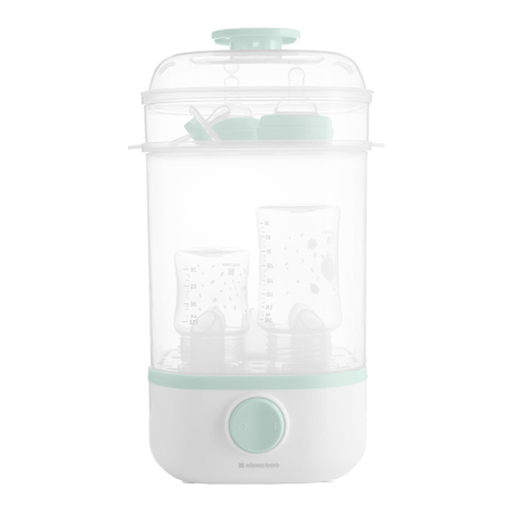
Why this product suits this profile: This compact appliance combines steam sterilisation and steam cooking in one unit and is designed for four to five bottles, including accessories.
The stated capacity and dimensions of 34 × 16 × 17 cm make planning easier when space is limited.
Compact design, transparent lid and two specified operating modes.
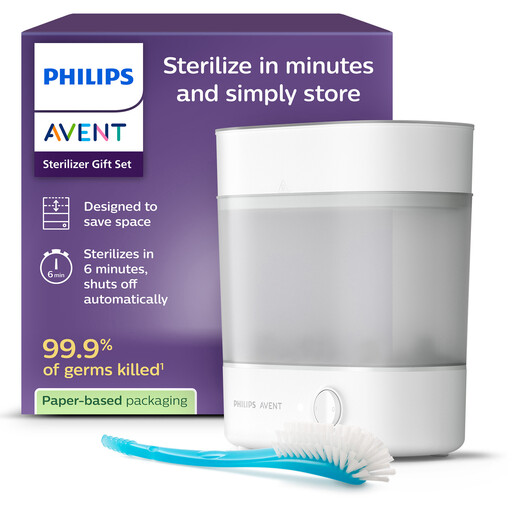
Why this product suits this profile: This model is designed for up to six bottles and, according to Philips product information, features a ten-minute sterilisation cycle and automatic switch-off.
The adjustable design can save space when storing smaller accessories; according to the product description, an integrated drip tray protects the heating plate from drips.
Capacity for up to six bottles, automatic switch-off and a bottle tong included.
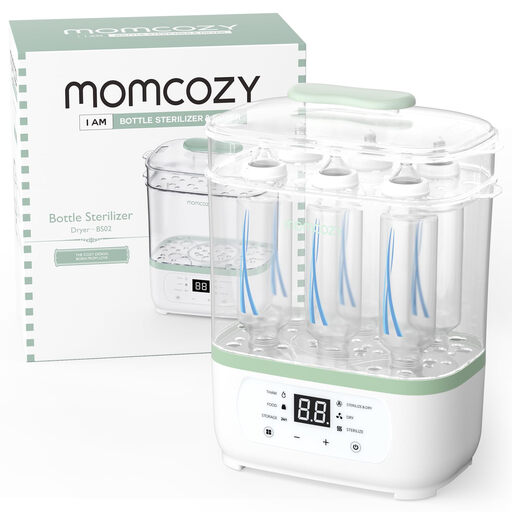
Why this product suits this profile: This appliance combines steam sterilisation, hot-air drying, defrosting and warming and, according to the product information, holds up to eight standard bottles.
The drying function helps prevent damp accessories, while nine combinable modes allow you to adapt the appliance to different routines.
Space for eight bottles, hot-air drying and additional defrosting and warming functions.
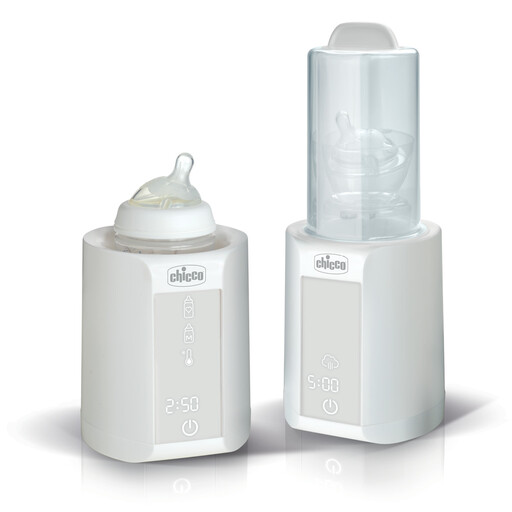
Why this product suits this profile: This 2-in-1 bottle warmer combines warming milk and baby food jars with a steam sterilisation function for bottles and small items.
Separate warming and sterilisation programmes ensure that the additional function is genuinely useful rather than merely existing on paper.
Digital programmes, automatic switch-off, descaling reminder and space for bottles and jars of different sizes.
We have put together a complete, regularly updated list of products that fully meet these strict selection criteria and the safety regulations applicable in the EU.
When using a steriliser for baby accessories, check whether it is also suitable for dummies, pump parts or small teething toys. Not every material is suitable for high temperatures.
This depends on the hardness of your water, how often you use the appliance and the operating instructions. Cleaning is required if you notice visible deposits or longer heating times. Use only the recommended products and unplug the appliance beforehand.
There is no single lifespan that applies in every case. It depends on the heating element, seals, plastic components, water quality and care. Regular descaling, thorough drying and observing the maximum load can help extend the appliance’s service life.
Running costs are mainly determined by electricity consumption, the amount of water used and descaling products. For a realistic estimate, compare the power consumption in watts with the relevant programme duration and your electricity tariff. Appliances with a dryer or washing function may use more energy than a steam-only steriliser, depending on the programme.