
Lieferung heute & morgen

Qualitätsgarantie

Willkommens-Angebote freischalten: KOSTENLOSE Lieferung | Bis zu 80 % RABATT | Kostenlose 30-Tage-JoyPlus-Testphase
App herunterladen
A baby bottle steriliser can make preparing bottles, soothers and breast pump accessories part of your daily routine. However, models vary considerably in capacity, cleaning requirements and features. If you’re expecting a baby or have several children, it’s worth taking a closer look before you buy.
Steam can reduce the number of germs on items that have already been cleaned. However, milk residue, grease and other dirt must be removed first. A steam steriliser for baby bottles is not automatically a washing machine. If you simply put bottles in the appliance, residue may remain in hard-to-reach places.
In everyday use, rinse or wash bottles, teats and accessories after use, following the care instructions, then sterilise them. A baby bottle steriliser with a dryer can then help reduce drying time.
Models that hold six to eight bottles need a suitable amount of worktop space. Before buying, check the appliance’s dimensions, the clearance beneath your wall cupboards and the position of the plug socket. A compact milk bottle steriliser may be a better choice for a small kitchen than a large multifunction appliance.
Washing, sterilising, drying, defrosting and warming in one appliance sounds convenient. But every extra feature can mean more containers, filters, water channels or descaling steps. The key question is: which features will you actually use regularly at home?
Check not only the stated number of bottles, but also whether the appliance suits the shape of your bottles. Wide-neck and glass bottles, teats, pump parts and soothers all take up different amounts of space. For families with twins or several babies, an appliance that holds eight standard bottles per cycle can save time. If you only use it occasionally, a smaller interior is often enough.
An electric baby bottle steriliser usually uses steam. Look for:
If you’re considering a combination appliance, check whether each programme simply warms items, sterilises them with steam or also dries them. A bottle warmer with a steriliser is particularly useful for households where milk or baby food needs warming regularly. Always check the temperature of the food before feeding your baby.
Limescale can affect the appliance’s heating performance. If you live in an area with hard water, check whether the manufacturer recommends regular descaling and which products are suitable. Don’t use fragrances or unsuitable cleaning products in the water container.
For plastic parts, look for details such as BPA-free and food-safe materials. These should be stated in the product description or instruction manual. It’s also important that all the parts can be taken apart and dried thoroughly. This is particularly relevant for a steriliser for soothers and breast pump accessories.
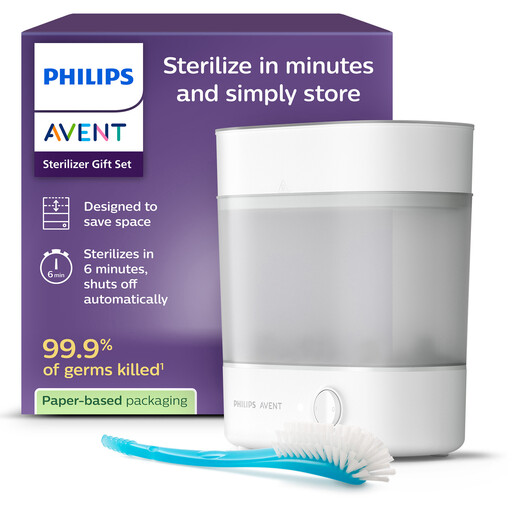
Why it suits this need: According to Philips’ product description, the appliance holds up to six bottles and accessories and has an automatic shut-off feature. It’s a good choice for regular, everyday sterilising without washing or warming functions.
Its straightforward functionality means you won’t need extra space or take on additional maintenance for programmes you rarely use.
Holds up to six bottles, has a ten-minute programme according to the product details, and switches off automatically.
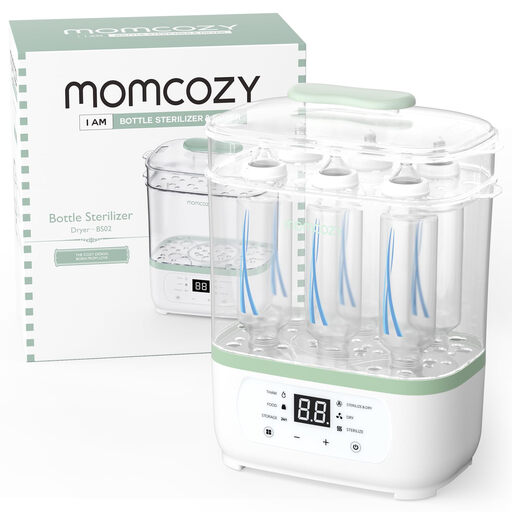
Why it suits this need: According to Momcozy’s product description, this appliance combines steam sterilising, hot-air drying, defrosting and warming. It holds up to eight standard bottles.
The capacity and separate functions are clearly specified in the description. Still, check that its dimensions of 36,2 × 32,5 × 19,7 cm will fit on your worktop before you buy.
Holds up to eight standard bottles, with drying and additional programmes for defrosting and warming baby food.
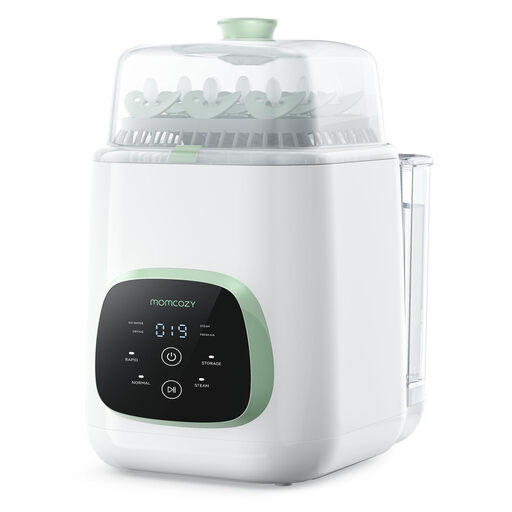
Why it suits this need: According to Momcozy’s product description, this appliance automatically washes, steam-sterilises and dries. It has 26 spray nozzles, nine combinations of settings and space for up to four standard bottles.
The washing function helps avoid the common misconception that cleaning and sterilising are the same thing. However, the water and waste-water containers and filters need regular maintenance.
Automatic washing, sterilising and drying, nine programme settings and cleaning tablets included, according to the product description.
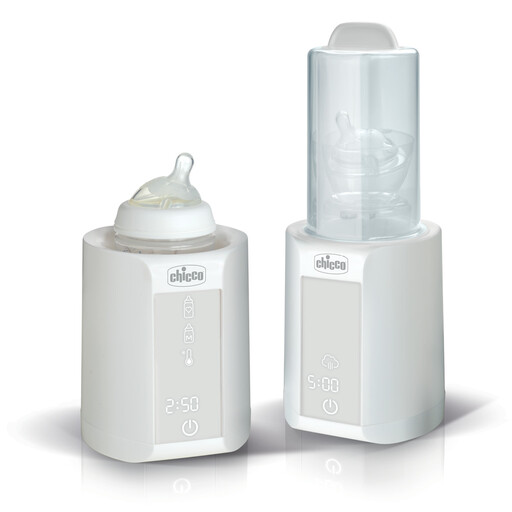
Why it suits this need: According to Chicco’s product description, this appliance warms milk and baby food and also offers steam sterilising. Its digital control panel lets you choose from several programmes.
Its functions are limited to warming and sterilising. If you need an appliance with built-in washing or drying, choose a different type.
2-in-1 design, digital programme selection, automatic shut-off and an audible signal, according to the product details.
We’ve put together a complete, regularly updated list of products that meet these strict selection criteria and fully comply with the safety regulations in force in the EU.
First, rinse off any milk residue with water. Then clean the bottle, teat, cap and any other parts according to the manufacturer’s instructions. Only then should you use the baby bottle steriliser. Make sure the individual parts aren’t nested together in the appliance, so the steam can reach every surface.
How long it lasts depends on how often you use it, water quality, materials and maintenance. Regular descaling, emptying the water container and checking the cable, lid and seals can help keep it in good working order. Always follow the relevant manufacturer’s guidance. Don’t continue using the appliance if it shows visible signs of damage or stops working properly.
Energy use depends on the appliance’s power rating, programme duration and how often you use it. A model with a drying function typically uses electricity for longer than a steam-only steriliser. For a rough estimate, multiply the power rating shown on the rating plate by the running time. Then consider whether the time saved is worth the extra energy use for your household.