
Lieferung heute & morgen

Qualitätsgarantie

Willkommens-Angebote freischalten: KOSTENLOSE Lieferung | Bis zu 80 % RABATT | Kostenlose 30-Tage-JoyPlus-Testphase
App herunterladen
A baby bottle steriliser can make everyday life with bottles, teats and breast pump accessories easier. However, models vary considerably in capacity, ease of use and extra features. A compact steam steriliser, for example, is a good fit for a smaller home, while families with several bottles may benefit from a baby bottle steriliser and dryer or an automatic washing solution.
The product name alone tells you little about how practical a model will be day to day. What matters is the interior space, how easy it is to clean, the programme duration and how the appliance handles steam.
A model with lots of programmes isn’t automatically the right choice. If you only want to sterilise bottles and dummies, you may not need defrost, cooking or keep-warm functions. Extra features can take up more space, make cleaning more involved and increase the purchase price.
On the other hand, a basic steam steriliser may not offer enough if you need to clean several bottles, pump parts and accessories every day. Before you buy, consider which tasks you’ll need it to handle regularly.
The stated bottle capacity often refers to standard bottles. Wide-neck bottles, bottles with screw-on bases, teats, lids and breast pump parts all need extra room. If you have twins or prepare several feeds in a row, check the capacity with accessories included.
Steam appliances use water and can develop limescale deposits. A hard-to-reach heating plate or a non-removable interior can make cleaning more difficult. Even with an electric steam steriliser for baby bottles, sterilising doesn’t replace washing thoroughly beforehand. Any milk residue should be removed first.
A steam steriliser heats water and uses the resulting steam inside a closed container. Look for:
Claims about germ reduction should be treated as manufacturer claims. Results depend on how the appliance is loaded, the amount of water used, the programme and how thoroughly items were cleaned beforehand.
A baby bottle steriliser and dryer can be useful if you don’t want to dry accessories by hand after the steam cycle. Check whether you can select the drying cycle separately and how the air circulates. Keeping items in a closed appliance can reduce their exposure to dust, but it doesn’t replace careful handling.
For delicate parts, follow the care instructions provided by the bottle or pump manufacturer. Not all materials can withstand high temperatures or prolonged exposure to heat.
Compare the external dimensions with the space available next to your sink or on your worktop. When it comes to the interior, consider the following:
BPA-free claims should be based on specific information from the manufacturer. They aren’t a blanket guarantee for every plastic model.
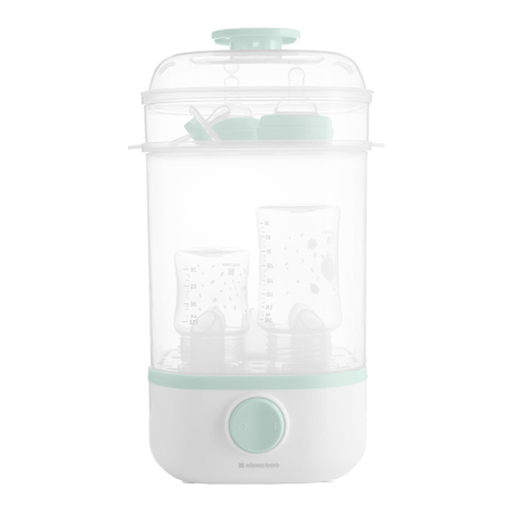
Why this product suits this profile: This compact appliance combines steam sterilisation with steaming, making it suitable for homes where space is limited and only the essentials are needed.
The stated capacity of 4–5 bottles gives you a clear idea of its size. The transparent lid makes it easy to check on the contents without opening the appliance during a programme.
Compact dimensions of 34 × 16 × 17 cm, BPA-free, food-safe materials according to the product information, and two operating modes.
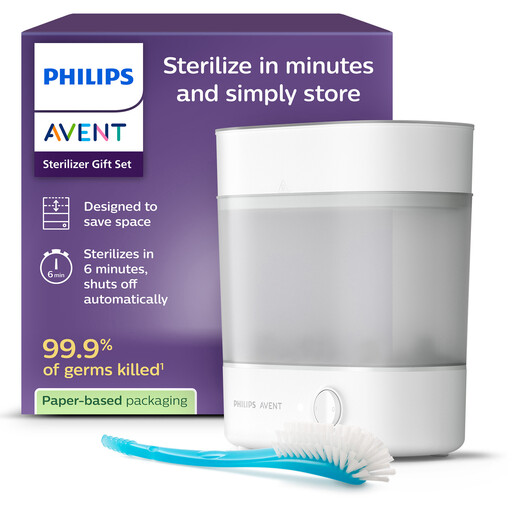
Why this product suits this profile: This model is for parents who prefer clearly defined steam sterilisation, automatic shut-off and an adjustable interior.
The capacity is clearly stated as up to six bottles. An integrated drip tray and accessible heating plate make regular cleaning easier.
A sterilisation cycle that takes 10 minutes according to the product information, automatic shut-off and an adjustable interior to accommodate smaller accessories.
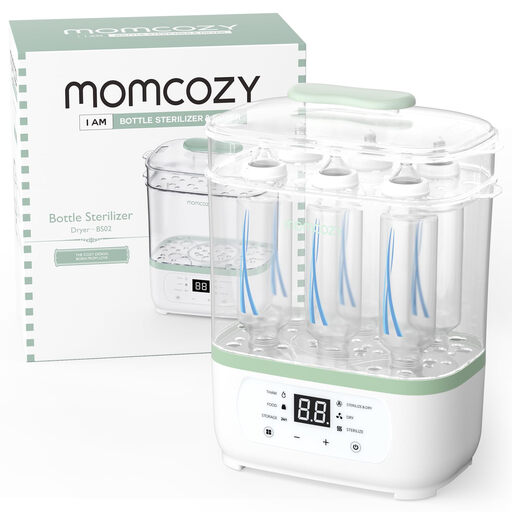
Why this product suits this profile: Designed for homes with several bottles and different accessories, this freestanding appliance combines several tasks in one.
The stated capacity of up to eight standard bottles helps you plan what will fit. Sterilisation and hot-air drying are listed as separate functions.
Capacity for up to eight standard bottles, plus drying, defrosting and warming baby food according to the product description.
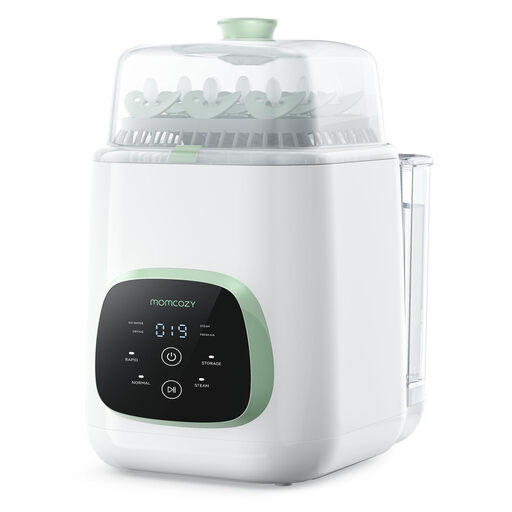
Why this product suits this profile: This baby bottle washer is for anyone who wants to combine washing, steam sterilisation and drying in one cycle.
The water tanks, filters and interior surfaces need regular care. This maintenance is explicitly outlined in the product description, so it’s worth factoring in before you buy.
26 spray nozzles, capacity for up to four standard bottles per cycle and nine combinable programmes according to the product information.
We’ve put together a complete, regularly updated list of products that meet these strict selection criteria and the safety regulations in force in the EU.
A bottle warmer with steriliser, or a baby food warmer, is useful if you regularly need to warm milk, jars of baby food and bottles. According to its product description, the Chicco Bottle Warmer with Sterilizer offers keep-warm, defrost and sterilisation functions, as well as programmable controls. This can be handy when you have several feeds to prepare in a row.
Keep in mind, though, that warming time and temperature depend on the amount of liquid, its starting temperature and the type of bottle. Always check the milk temperature before feeding. To sterilise milk bottles, you’ll also need to load the appliance correctly and use the amount of water specified in the instructions.
This depends on your baby’s age, the advice of the healthcare professionals looking after them and the bottle manufacturer’s guidance. Hygiene conditions and how the bottles are used are also important. A steriliser doesn’t replace washing bottles after every use.
There’s no single answer. It depends on how often it’s used, how regularly it’s descaled, how well it’s cared for and the quality of its heating plate, lid and electrical components. Limescale and persistent damp can affect how well it works. Before buying, check whether spare parts or customer support are available.
Running costs mainly include electricity, water and, where needed, descaling products. To compare models, look at their power consumption, programme duration and the number of cycles they can run. A larger appliance may use more energy per cycle, but it can process several bottles at once.