
Lieferung heute & morgen

Qualitätsgarantie

Willkommens-Angebote freischalten: KOSTENLOSE Lieferung | Bis zu 80 % RABATT | Kostenlose 30-Tage-JoyPlus-Testphase
App herunterladen
A baby bottle steriliser can make everyday life easier when you’re feeding your baby formula, expressed breast milk or looking after several children. But not every appliance is right for every household. What matters isn’t having the most programmes, but finding the right combination of capacity, steam performance, drying, ease of use and safety features.
A compact appliance may seem practical on the worktop. But if it only holds two bottles, frequent feeds can quickly mean running several cycles. Check how many bottles, teats, screw rings and accessories will actually fit at the same time. The manufacturer’s claim of “up to six or eight bottles” usually refers to particular standard sizes and won’t necessarily apply to every bottle shape.
A steam steriliser for baby bottles won’t remove dried-on milk residue. Bottles, teats and pump parts must be thoroughly cleaned first, before the steam cycle. So if you want to clean baby bottles hygienically, you’ll need a separate washing set-up or a baby bottle washer with its own cleaning function.
A bottle steriliser with a dryer doesn’t replace pre-cleaning either. It treats already-clean parts with steam, then dries them with warm air, depending on the model.
Limescale can affect the heating plate and steam performance. If you live in a hard-water area, check that the instruction manual gives guidance on descaling intervals and suitable products. Appliances with a filter, water tank or separate waste-water container also involve extra cleaning steps.
Before you buy, check:
For occasional use, an appliance that holds four to six bottles may be enough. Families with twins or a high bottle turnover may benefit from a larger interior. The number of bottles isn’t the only thing that matters: layout is important too. Wide bottles, pump parts and dummies often need more space than slim standard bottles.
An electric bottle steriliser typically uses hot steam. Look for a clear description of the cycle, the recommended amount of water and the maximum load. If you’re choosing a bottle steriliser with a dryer, check how long the drying cycle takes and whether the airflow reaches all the parts evenly.
A closed storage area can be useful, but it doesn’t remove the need to clean the appliance regularly. Only use models with extended storage functions as directed.
A bottle warmer with a steriliser combines warming milk or baby food with a steam programme. This type of appliance can save space if you mainly warm bottles and only sterilise them occasionally. Check whether it’s suitable for glass and plastic bottles, milk storage bags and jars, and how the temperature is controlled.
For appliances with a washing function, it’s important to distinguish between washing, steaming and drying. A fully automatic model usually needs fresh water and a waste-water container, and takes up more space than a steam-only steriliser.
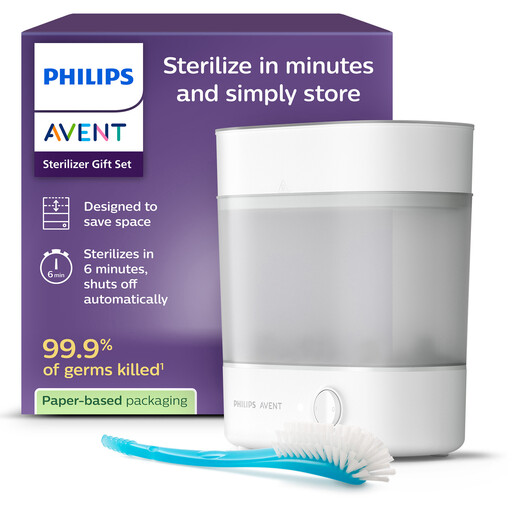
Why this product suits you: This steam steriliser for baby bottles is designed for one straightforward task and, according to the product details, holds up to six bottles and their accessories.
Its capacity and automatic shut-off are clearly specified, helping to make everyday use more straightforward.
Holds up to six bottles, a ten-minute cycle according to the product details, automatic shut-off and an integrated drip tray.
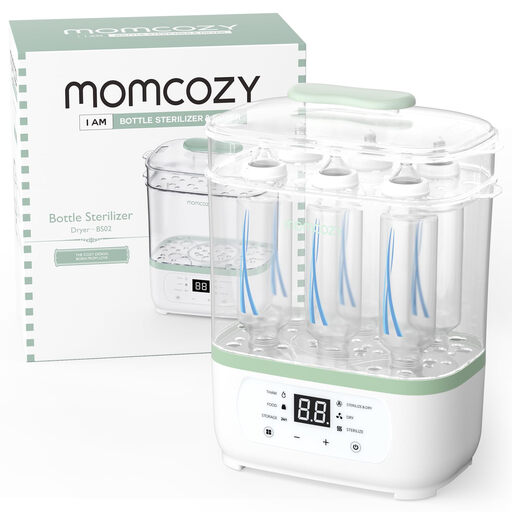
Why this product suits you: This multi-function appliance combines steam sterilising, drying, defrosting and warming. According to the product details, it holds up to eight standard bottles.
The drying function saves you the extra step of drying parts by hand. You’ll still need to pre-clean them and descale the appliance regularly.
Holds eight standard bottles, with steam and hot-air functions, plus extra programmes for defrosting and warming.
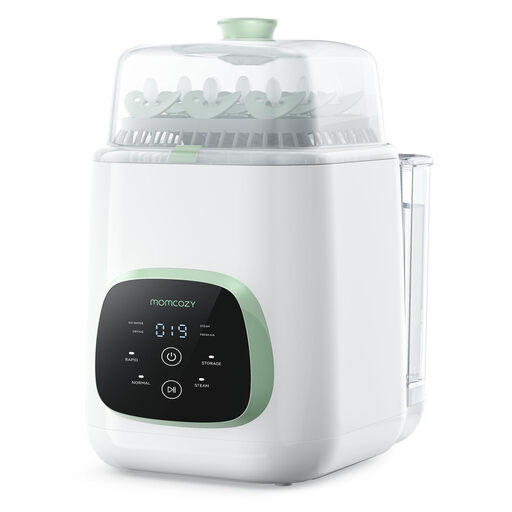
Why this product suits you: This baby bottle washer takes care of washing, steam sterilising and drying. It’s designed for households that regularly get through lots of bottles and pump parts.
Its cleaning function means you won’t mistake a steriliser-only appliance for a washer. Remember to make room for the water tank, filter and waste-water container.
26 spray jets, space for up to four standard bottles per cycle and nine combination programmes, according to the product details.
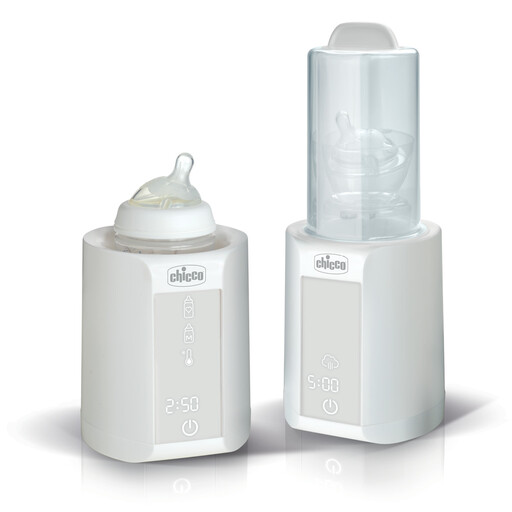
Why this product suits you: This 2-in-1 appliance is a good fit for households that regularly warm milk, baby food and bottles, and want an extra sterilising programme.
Warming and sterilising can be selected separately. Automatic shut-off and an end-of-programme signal make it easier to use.
Digital programmes, a keep-warm function according to the product details, and a separate steam programme for bottles and small items.
We’ve put together a complete, regularly updated range of products that meet these strict selection criteria and the safety regulations in force across the EU.
This depends on your baby’s age, feeding method and the advice of your midwife, paediatrician or appliance manual. Thorough cleaning before every steam cycle is also essential. A steriliser doesn’t replace careful handling or checking for milk residue.
Its lifespan depends on the quality of the materials, water hardness, maintenance and how heavily it’s used each day. Regular descaling, dry storage and sticking to the maximum fill level can make it easier to care for the appliance. Don’t use it if the cable, plug or casing is damaged.
Running costs mainly include electricity, water and any descaling or cleaning tablets you need. Appliances with a dryer or washing function usually use more energy and water than a compact steam steriliser. So, alongside the purchase price, compare cycle times, power consumption and maintenance requirements.