
Lieferung heute & morgen

Qualitätsgarantie

Willkommens-Angebote freischalten: KOSTENLOSE Lieferung | Bis zu 80 % RABATT | Kostenlose 30-Tage-JoyPlus-Testphase
App herunterladen
Choosing the right baby bottle teat can affect how easily your baby drinks from a bottle. Yet it’s easy to end up with the wrong one: the teat may not fit your bottle, the flow rate may not suit your baby’s age, or cleaning it may make everyday life more complicated than it needs to be.
These are the three most common pitfalls:
A baby bottle teat from 0 months usually has a small opening and a slow or controlled flow. This may be suitable for newborns and for families combining breastfeeding with bottle-feeding.
As your baby gets older, you may want to choose a teat with a faster flow:
The age guidance on the packaging is no substitute for observing your baby during feeds. Coughing or spluttering, frequently stopping or taking an unusually long time to feed may indicate that the flow rate isn’t quite right. A flow that’s too fast, on the other hand, can lead to hurried drinking.
A silicone bottle teat keeps its shape, is tasteless and, depending on the product, can be sterilised by boiling or cleaned in the top rack of the dishwasher. Look for clear details such as 100% silicone, BPA-free bottle teat and the recommended cleaning method.
For baby bottle teats, it’s also worth checking for the EN 14350 marking, if the manufacturer provides it. This standard sets out requirements for drinking equipment and accessories for young children. However, a standards marking is no substitute for checking the teat before every use.
Before buying, check:
An anti-colic teat usually has a valve to help air circulate while your baby drinks. The design varies by brand. An anatomical or breast-shaped teat may appeal to families who combine breastfeeding and bottle-feeding, but it doesn’t tell you whether your baby will take to it.
Check teats before every feed for cracks, sticky patches, discolouration and signs of wear. Replace a spare baby bottle teat straight away if you spot any damage. Even when there’s no visible damage, some manufacturers recommend replacing teats every one to two months. Teats may wear out more quickly once your baby has teeth.
Soft brushes are useful for cleaning. A baby bottle cleaning set with separate brushes for teats and straws can reach small internal areas more effectively than a large bottle brush alone.
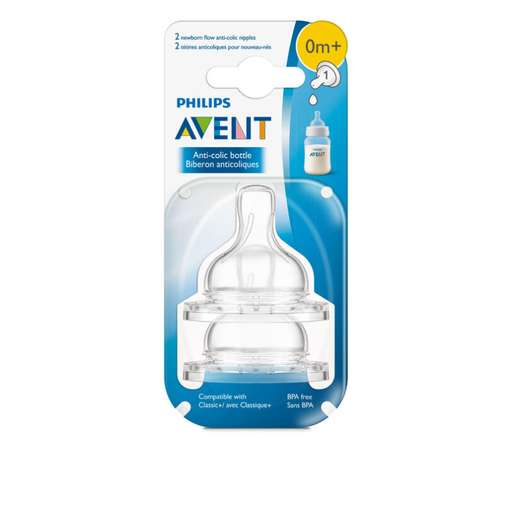
Why this product suits you: A good choice for newborns and families looking for a clearly labelled teat with a slow flow. The pack contains two teats for Philips Avent Anti-Colic and Classic+ bottles.
Size 1 and the single-hole design indicate a controlled flow. Compatibility is clearly stated, so there’s no need to guess.
BPA-free silicone, dishwasher-safe and suitable for boiling, according to the product information.
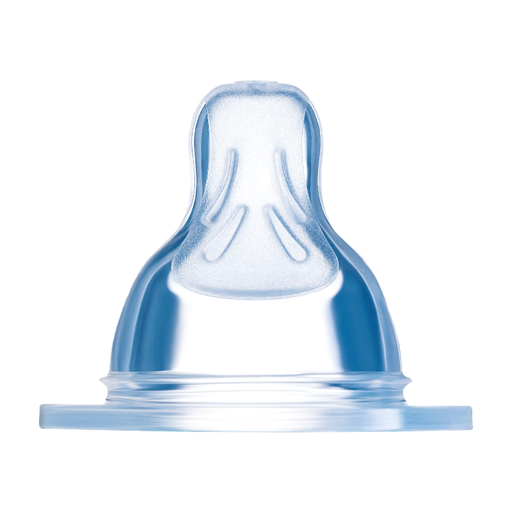
Why this product suits you: Designed for families with MAM wide-neck bottles who need a medium flow from 4 months.
Size 2 is designed for a specific age range and medium flow. The stated compatibility helps prevent buying the wrong teat for a different bottle shape.
SkinSoft silicone, BPA- and BPS-free, and stated to comply with EN 14350.
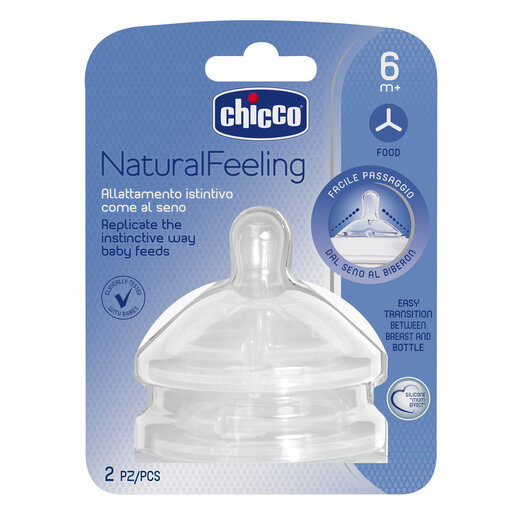
Why this product suits you: A good choice for parents looking for a teat for thicker feeds from 6 months within the Chicco NaturalFeeling range.
It’s specifically labelled for thicker feeds, so it won’t be confused with a standard- or fast-flow teat.
BPA-free silicone and a double valve. According to the product information, it can be cleaned by hand or sterilised using steam or cold water.

Why this product suits you: Handy for home and travel, when bottles, teats, straws, teething rings or breast pump parts need regular cleaning.
Separate brushes for teats and straws help you clean small internal areas thoroughly. The foldable drying rack helps everything dry completely.
Food-grade silicone, BPA-free plastic, a storage case and a built-in soap dispenser.
We’ve put together a complete, regularly updated list of products that meet these strict selection criteria and the safety requirements in force in the EU.
It depends on the manufacturer, how often you use it and the condition of the material. Replacement every one to two months is often recommended. Replace the teat straight away if it has cracks, is misshapen or sticky, has changed colour or shows bite marks. Before each use, it’s a good idea to inspect it and gently pull it in all directions.
For newborns, teats with a slow or controlled flow are usually suitable. A baby bottle teat from 0 months should fit the bottle and attach securely. If you’re unsure, follow the guidance for the specific bottle range.
Medium-flow teats are often available from around 4 months, while fast-flow teats are often recommended from 6 months. However, the age guidance is only a guide. What matters is whether your baby drinks calmly, doesn’t often cough or splutter, and finishes their feed in a reasonable amount of time.