
Lieferung heute & morgen

Qualitätsgarantie

Willkommens-Angebote freischalten: KOSTENLOSE Lieferung | Bis zu 80 % RABATT | Kostenlose 30-Tage-JoyPlus-Testphase
App herunterladen
The right baby bottle teat affects how easily your child can drink from a bottle. However, people often look only at the recommended age or brand name. This can lead to unsuitable purchases: the milk flow may be too fast, the teat may not fit the bottle you already have, or the material may show signs of wear after a short time.
This buying guide explains which details really matter when choosing a silicone baby bottle teat and which models may suit different everyday situations.
Recommendations such as 0M+, 2M+, 4M+ or 6M+ are intended as a guide. However, they do not replace observing your baby’s drinking behaviour. Some babies need a teat with a slow milk flow for longer, while others manage a medium flow sooner.
Look out for signs such as:
If there are clear difficulties, discuss your choice with a midwife, paediatrician or doctor.
An anti-colic teat usually has a valve or ventilation system. This can affect the air supply inside the bottle. However, actual suitability also depends on the drinking position, sucking speed, how the bottle is assembled and your baby’s individual behaviour. Claims such as “reduces colic” should therefore not be understood as a guaranteed effect.
A teat will not automatically fit every baby bottle. The thread, teat shape and bottle neck must match. An replacement teat for baby bottles should therefore always be approved for the specific bottle system. Examples from the selection include:
Milk flow is a key factor. The descriptions are not completely standardised across brands, so you should check the manufacturer’s information.
A faster flow is not automatically an improvement. If milk comes out too quickly, drinking can become more difficult to control.
Silicone is the standard material for many modern bottle teats. It is tasteless, transparent and easy to clean. Nevertheless, check the specific care instructions, as not every silicone baby bottle teat can be treated in the same way.
Important details include:
According to the product information, the MAM Silicone Baby Bottle Teat Size 2 is made from BPA-free SkinSoft silicone and complies with EN 14350. With the NUK Silicone Spout, the drinking teat is made from silicone, while the ring and shield are made from polypropylene.
Before first use, clean and sterilise the teat according to the instructions. Check it before every feed by gently pulling it in different directions. Tears, sticky areas, discolouration, thin spots or a changed shape are all reasons to replace it.
Some product information recommends replacing the teat after one to two months. If there are visible signs of wear, do not continue using it, regardless of how old it is. Do not use sharp objects to enlarge the opening.
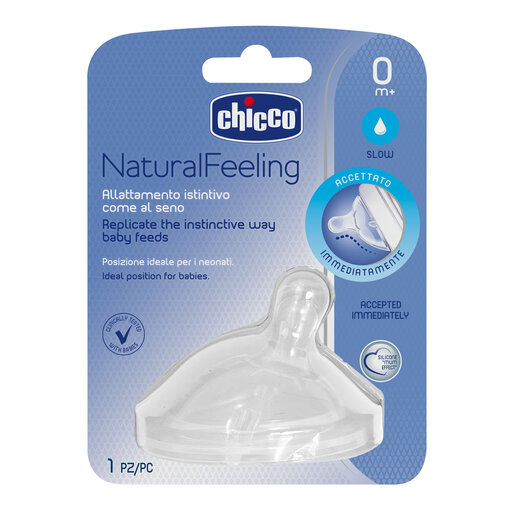
Why this product suits this profile: This single silicone teat with a normal milk flow is intended for babies from 0 months and is suitable for families looking for a compatible replacement teat for Chicco NaturalFeeling bottles.
The age and flow information is clearly stated. However, you must still check compatibility with your own bottle before buying.
Soft, flexible silicone and a dual-valve system; according to the product information, it is suitable for combination feeding.
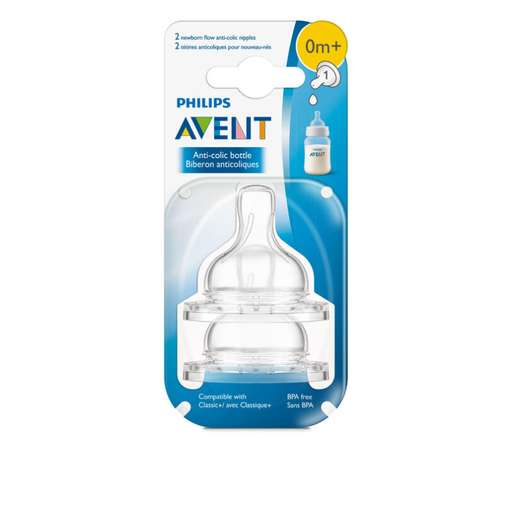
Why this product suits this profile: According to the product information, this teat with a very slow, controlled milk flow is designed for newborns and is an interesting option for families using combination feeding.
The single-hole design is made for a slow flow, helping to prevent you from choosing a faster teat too soon.
BPA-free silicone, 2-pack and suitability for Philips Avent Anti-Colic and Classic+ bottles.
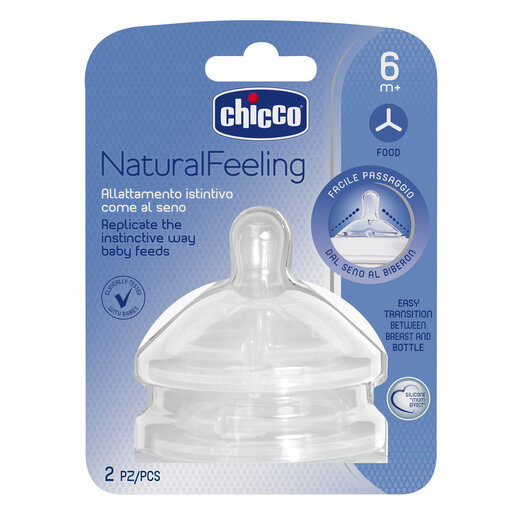
Why this product suits this profile: This 2-pack is intended for households that use bottles frequently and for thick food. Check the product instructions to confirm that the specific food is suitable.
This version is explicitly labelled for thick food, helping you avoid using an unsuitable standard teat for this purpose.
BPA-free silicone, dual-valve system and compatibility with Chicco NaturalFeeling bottles according to the product description.
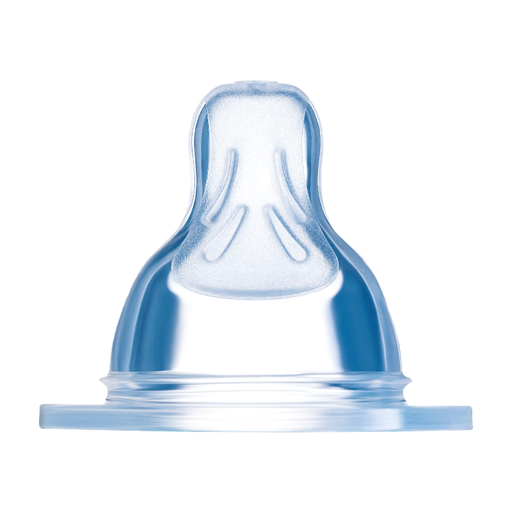
Why this product suits this profile: According to the product information, this 2-pack with a medium milk flow is intended for babies from 4 months and offers a practical replacement option for MAM wide-neck bottles.
The size and compatibility information clearly defines where it can be used. The product instructions do not permit enlarging the opening.
BPA-free SkinSoft silicone, medium flow and dishwasher suitability in the top rack up to 65 °C according to the product information.
We have put together a complete, regularly updated list of products that fully meet these strict selection criteria and the safety regulations applicable in the EU.
This depends on how often it is used, the condition of the material and the manufacturer’s instructions. Some products recommend replacing the teat after one to two months. If there are tears, stickiness, discolouration, stretched areas or a changed milk flow, replace the teat immediately.
Teats with a slow milk flow are usually suitable for newborns. The specific age recommendation, hole or valve design and your baby’s drinking behaviour are all important. The Philips Avent Anti-Colic Teat Size 1 and the Chicco NaturalFeeling Normal Flow 0M+ are examples of models with corresponding manufacturer recommendations.
No. An anti-colic system can alter the bottle’s ventilation and therefore affect the amount of air swallowed while drinking. This does not guarantee that wind or colic will be prevented. Use the teat according to the instructions, and seek medical advice if symptoms persist or are severe.