
Lieferung heute & morgen

Qualitätsgarantie

Willkommens-Angebote freischalten: KOSTENLOSE Lieferung | Bis zu 80 % RABATT | Kostenlose 30-Tage-JoyPlus-Testphase
App herunterladen
A baby bottle teat is a small accessory that makes a big difference to your daily routine. If the opening doesn’t match your baby’s drinking pace, feeding time can become unsettled or take much longer than it should. Equally frustrating is a replacement teat that looks similar but simply won’t fit the bottle neck you already have.
Before you buy, it’s worth looking out for three common pitfalls:
This buying guide from the Joybuy Product Recommendation Officer will help you choose the right replacement teats for baby bottles based on objective features.
The age stage is a helpful guide, but it doesn’t replace watching how your baby feeds. In shops you’ll find:
Signs that the milk flow is too fast can include coughing, gagging or frequently pulling away. If the flow is too slow, your baby may have to suck very hard, and feeding may take an unusually long time. Any change should be made gradually. If you’re unsure about feeding or drinking behaviour, it’s a good idea to speak to your health visitor or midwife.
Many modern teats are made from silicone, because this material is flavour-neutral, transparent and can be suitable for heat sterilisation. Look for specific manufacturer details such as BPA-free silicone, the recommended sterilisation method and the relevant food-contact guidelines.
The standard EN 14350 sets out safety and testing requirements for children’s drinking equipment. A mark showing compliance is a useful reference point, but it doesn’t replace checking the individual product. Before every use, pull the teat in all directions and check for cracks, stickiness or any changes in the material.
A Chicco NaturalFeeling teat is designed for Chicco NaturalFeeling bottles. The Philips Avent Anti-Colic teat from the product range is compatible with Philips Avent Anti-Colic and Classic+ bottles. MAM teats fit MAM wide-neck bottles and the MAM Trainer. The NUK silicone teat or drinking attachment is made for NUK First Choice bottles.
The shape also matters. Angled or wide-shaped teats can be interesting for families who combine breastfeeding and bottle feeding. What really counts is whether your baby accepts the shape and whether the teat sits correctly in the bottle ring.
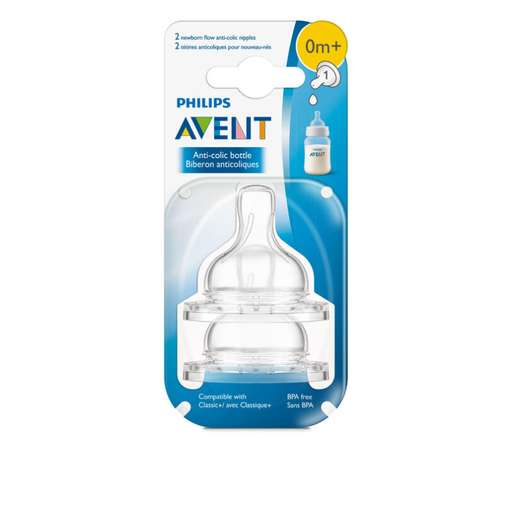
Why this product fits the profile: The pack of two gives you a spare teat for everyday use and is designed for a very slow flow for newborns.
The size label and single-hole design give a clear indication of the slow flow. Compatibility with Anti-Colic and Classic+ bottles is stated.
BPA-free, soft silicone; dishwasher-safe according to the product information; pack of two teats.
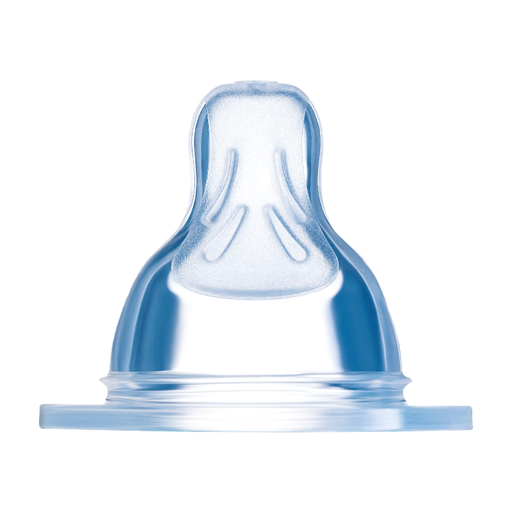
Why this product fits the profile: The MAM SkinSoft silicone teat is designed for babies from 4 months and a medium flow.
The product information clearly states the age, flow, material and compatible MAM wide-neck bottles. This lets you check your choice before buying.
BPA-free and, according to the supplier, designed to EN 14350; cleaning in the top rack of the dishwasher up to a maximum of 65 °C is stated.
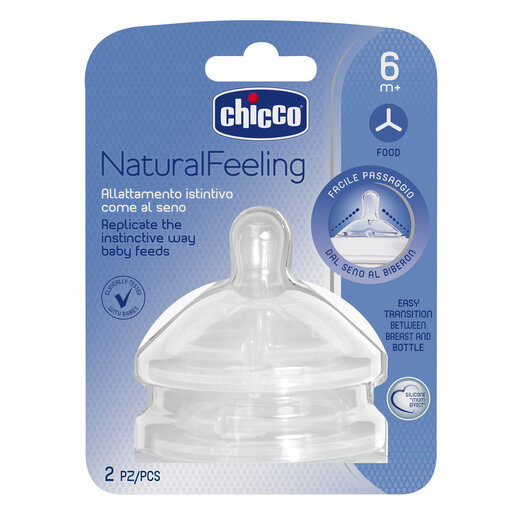
Why this product fits the profile: This model is aimed at families looking for a Chicco NaturalFeeling teat for thicker food from 6 months.
The version is clearly labelled as a variant for thick liquids. It should not be confused with a standard teat with a slow or medium flow.
100 % silicone according to the product description; designed for all Chicco NaturalFeeling bottles; double valve for air intake in the bottle system.
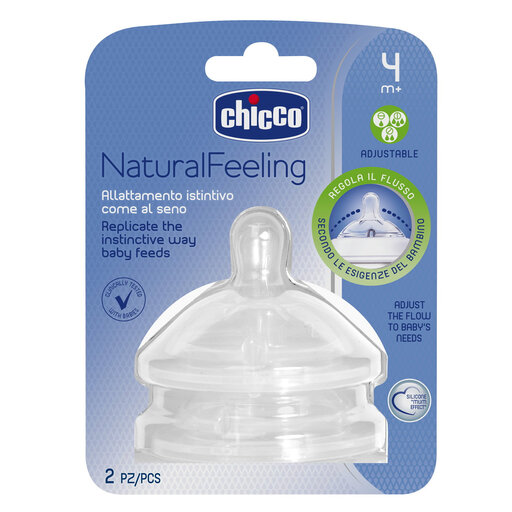
Why this product fits the profile: The teat from 4 months is stated as having a medium flow and comes in a pack of two.
The age stage, medium flow and material are listed separately in the product details. This reduces the risk of ordering a version for 0 or 2 months.
100 % BPA-free silicone according to the product information; suitable for cold water, steam and top-rack dishwasher cleaning.
We’ve put together a full, regularly updated list of products that fully meet these strict selection criteria and the safety regulations in force in the EU.
Before first use, a baby bottle teat should be sterilised according to the manufacturer’s instructions. Boiling for five minutes is often recommended. Depending on the model, steam sterilisation, cold water sterilisation or cleaning in the top rack of the dishwasher may also be possible.
A fixed replacement period is not the same for every model. In the product information provided, one to two months is sometimes mentioned. The condition of the teat is also decisive: if there are cracks, thin spots, stickiness, discolouration or a change in shape, the teat must be replaced immediately. Wear can happen more quickly when babies are teething. When thinking about ongoing costs, parents should consider not just the individual price, but also the pack size and the recommended replacement schedule.
For newborns, teats from 0 months with a slow flow are usually the right choice. Check the age label, the number of holes and the compatibility with your bottle. Your baby’s drinking behaviour remains the most important factor.
A switch to a teat with a medium flow can be considered from the age stage stated by the manufacturer, for example from 4 months with certain MAM or Chicco models. Watch to see whether your baby drinks comfortably with the current flow and doesn’t take an unusually long time.
Many manufacturers recommend a period of around one to two months. However, the teat must be replaced sooner if any damage or changes to the material are visible. A quick visual check and a pull test before each feed is a good habit.