
Lieferung heute & morgen

Qualitätsgarantie

Willkommens-Angebote freischalten: KOSTENLOSE Lieferung | Bis zu 80 % RABATT | Kostenlose 30-Tage-JoyPlus-Testphase
App herunterladen
A baby bottle warmer can make preparing breast milk, formula or baby food easier. However, models differ considerably in their heating method, controls, bottle compatibility and intended place of use. A model that works well at home is not automatically suitable as a bottle warmer for travel or for use in the car.
Claims such as ‘in just a few minutes’ usually refer to specific quantities, a defined starting temperature and a particular bottle shape. Frozen breast milk or a large jar will generally require different heating times from a small bottle containing room-temperature contents. You should therefore check which volume and starting temperature the stated time applies to.
Wide bottles, glass containers, reusable cups and specialist systems may have different diameters. Some devices require adapters or are only suitable for containers up to a certain size. Before buying, compare the bottle diameter, height and neck area with the manufacturer’s specifications.
A keep-warm function can be useful if your baby does not want to drink straight away. However, it does not prevent the temperature from changing depending on the quantity, container material and programme selected. Before every feed, gently move the contents and check the temperature. The operating instructions for the specific device are the authoritative source.
An electric bottle warmer that plugs into the mains is particularly suitable for the kitchen, bedroom or a dedicated changing area. Devices of this kind often offer several programmes, a larger heating chamber and convenient controls.
A portable bottle warmer, or battery-powered bottle warmer, is useful for walks, days out and travelling. Pay attention to the charging method, battery life, weight and the adapters supplied. A power bank or USB power supply is not automatically compatible with every device. Only use the cables and power supplies specified by the manufacturer.
For a car bottle warmer, a suitable 12-volt connection or the appropriate adapter must be available. A device designed for 220 to 240 volts cannot be operated from a cigarette lighter socket without a suitable technical solution. Also check that the product can stand securely while travelling and is not operated unattended.
If you want to warm breast milk, look for a programme that heats it gradually or gently. Different settings may be more suitable for formula, jars and solid baby food. A defrosting function is useful for frozen milk or breast milk bags, but it does not replace the relevant storage and usage instructions.
A bottle warmer with a keep-warm function can make it easier to manage your routine. Check how long the device maintains the temperature and whether it has an automatic shut-off. A bottle warmer with steriliser combines additional functions, but usually requires more space and careful cleaning.
Contact surfaces should be suitable for their intended use and easy to clean. With electrical devices, an undamaged cable, a stable base and an easily accessible power switch are important. Only add the amount of water specified in the operating instructions. Limescale deposits can affect performance, so descale the device according to the manufacturer’s instructions.
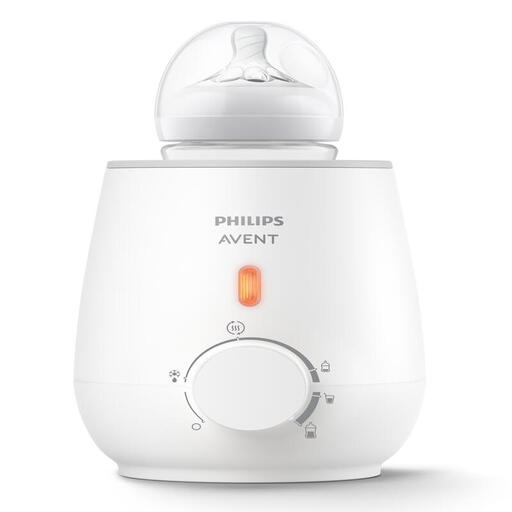
Why this product suits this profile: This device is designed for use at home and, according to the product description, is operated using a rotary dial. It is suitable for milk, baby food and standard containers up to 7 cm in diameter.
The description lists an integrated defrosting function, a keep-warm setting and continuous circulation while heating. Even so, check that your bottles fit before buying.
220–240 volts, a device weight of 550 grams, defrosting and keep-warm functions, plus compatibility with AVENT bottles and selected third-party brands.
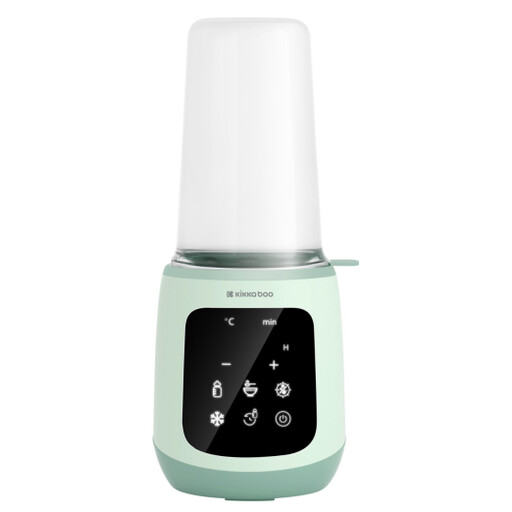
Why this product suits this profile: This model combines four stated functions: heating milk and food, defrosting and sterilising. The touchscreen and keep-warm function are appealing to households that want to combine several routines in one device.
The functions are clearly listed, allowing you to check before buying whether you really need the steriliser, defrosting function and keep-warm feature. The stated chamber size is 7.5 cm in diameter.
4-in-1 concept, timer, automatic shut-off, basket and lid, plus PP, stainless steel and ABS materials according to the product details.
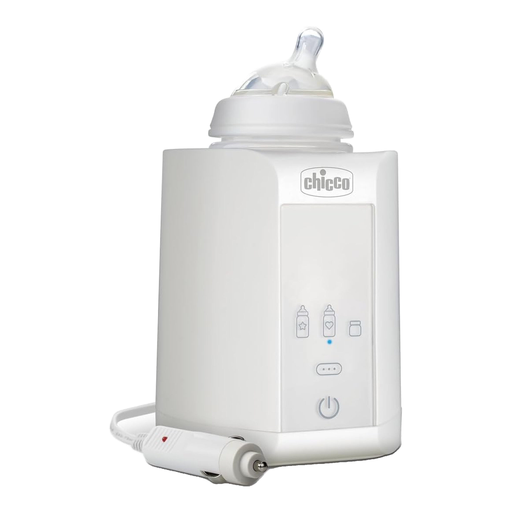
Why this product suits this profile: According to the product description, this device is designed for use at home and on the go. The supplied adapter cable allows it to be used with a 12-volt connection in the car.
The power supply for 220–240 volts and 12 volts is explicitly specified. The product also lists programmes for defrosting, keeping warm and gradual heating.
220 watts when mains-powered, 60 watts at 12 volts, automatic shut-off, audible signal and a basket for smaller containers according to the product details.
We have put together a complete, regularly updated list of products that fully meet these strict selection criteria and the safety regulations applicable in the EU.
Place the baby bottle warmer on a level, stable and heat-resistant surface. Only add the amount of water specified in the instructions. After heating, gently mix the contents and check the temperature. This is particularly important for breast milk, formula and containers of different sizes.
In terms of running costs, a mains-powered model is generally economical because the heating time is short. Actual consumption depends on the power rating, programme, amount of water and frequency of use. A battery-powered model also requires charging. Maintenance is important too: limescale, milk residue and moisture can affect usability if cleaning and descaling are neglected.
Its lifespan depends on how frequently it is used, cleaning, descaling and the condition of the cable, battery or controls. A blanket figure in years is not reliable. Replace the device if the cable is damaged, water leaks out, the temperature control becomes unreliable or the automatic shut-off no longer works.
This depends on the specific model and its operating instructions. Choose a programme intended for breast milk and avoid keeping it warm for unnecessarily long periods. The temperature must be checked before feeding. For frozen milk, you must also follow the storage and defrosting instructions.
A battery-powered bottle warmer can be worthwhile for families who regularly travel without access to a mains socket. Before buying, check the charging time, battery capacity, range of adapters and bottle compatibility. For everyday use exclusively at home, an electric model with a mains connection is often sufficient.