
Lieferung heute & morgen

Qualitätsgarantie

Willkommens-Angebote freischalten: KOSTENLOSE Lieferung | Bis zu 80 % RABATT | Kostenlose 30-Tage-JoyPlus-Testphase
App herunterladen
Breast milk, formula or baby food often needs to be ready at a particular time during the day. A baby bottle warmer can make warming more predictable than using a bowl of warm water. However, devices vary considerably in terms of temperature control, bottle compatibility, cleaning and portability.
Time claims often refer to specific conditions, such as a defined quantity of milk, a particular starting temperature and a specific bottle shape. Wide glass bottles, frozen breast milk or full containers may take longer. So check whether the manufacturer’s stated time reflects your actual everyday needs.
Bottles vary in diameter, height, base shape and closure system. Reusable cups, breast milk bags and jars may also require an insert or basket. A baby bottle warmer should therefore be compatible with the containers you already use. Portable devices may also require additional adapters and a suitable connection between the bottle and the heating unit.
A keep-warm function is useful if feeding is delayed. However, it does not mean that milk should be left in the device for any length of time. The time and temperature instructions in the user manual, along with recommendations for preparing and storing infant formula, still apply. Always check the temperature before feeding.
Look for programmes for warming breast milk, chilled liquids and formula. Information about the starting temperature, quantity of milk and bottle material is useful. An electric bottle warmer with a timer or automatic switch-off can make operation easier, but it does not replace the final temperature check.
Models that use a water bath warm the contents indirectly. This can support even warming, provided the bottle is positioned correctly and enough water is added. For devices with special breast milk programmes, follow the settings precisely as described in the instructions. Gentle warming is a useful selection criterion, but it does not guarantee any particular nutritional benefits.
Measure the widest bottle you use regularly. A device with a holder measuring around 7 to 7.5 cm may be suitable for many standard bottles, although the actual fit depends on the shape. Important points include:
Residual water can encourage limescale build-up. A removable holder, easily accessible heating surface and clear descaling instructions make maintenance easier. Other useful features include automatic switch-off, an audible signal and a timer.
A bottle warmer with steriliser can combine additional functions. Check whether it actually provides steam sterilisation, how many bottles it can hold and whether the sterilisation time is specified separately. The device must not be left unattended while operating. The water, bottle and casing may become hot.
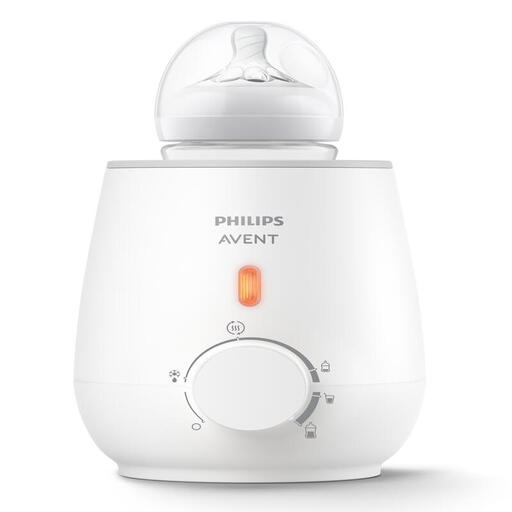
Why this product suits this profile: This device is straightforward to operate and is suitable for milk, baby food and certain jars. It fits AVENT containers as well as many containers from other brands with a stated diameter of up to 7 cm.
The stated diameter limit makes it easy to check compatibility before buying. The integrated defrost function reduces the need for improvised methods.
Defrosting, keep-warm and warming functions; suitable for AVENT bottles and selected containers from other brands.
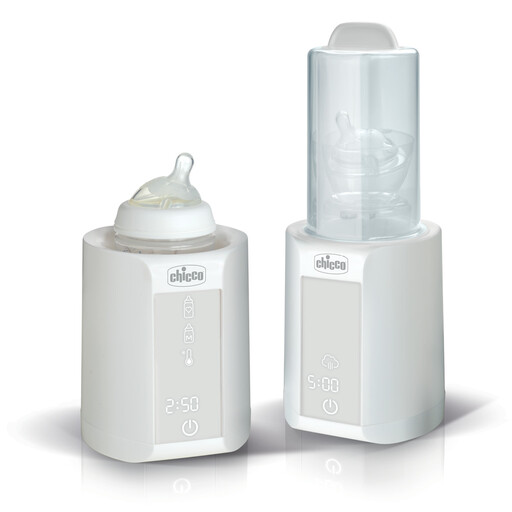
Why this product suits this profile: This model combines warming and steam sterilisation in a single device. It is aimed at households that want to combine several routines involving bottles and small accessories.
According to the product information, the programmes take the bottle type, size and starting temperature into account. A descaling indicator makes it easier to see when maintenance is needed.
Steam sterilisation and warming; digital programmes, automatic switch-off and audible signal.
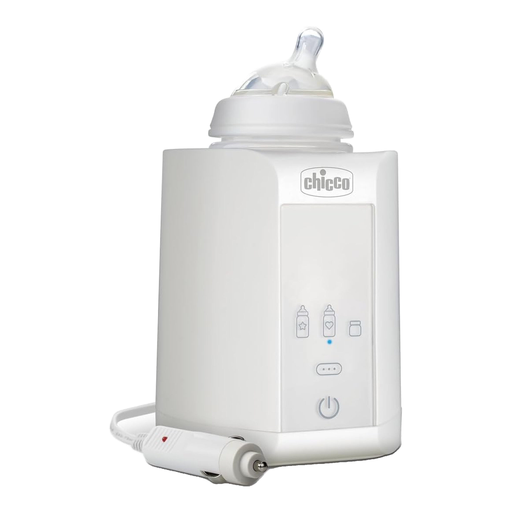
Why this product suits this profile: The supplied adapter for a 12-volt connection makes this model useful for car journeys and changing locations.
It does not rely solely on a mains socket. Before using it in a vehicle, follow the instructions regarding the power supply, adapter and a secure, stable surface.
220- to 240-volt operation at home and a 12-volt connection in the vehicle; five functions, including defrosting and keeping warm for up to one hour.
We have put together a complete, regularly updated list of products that fully meet these strict selection criteria and the safety regulations applicable in the EU.
Before using the device for the first time, read the user manual and check that the bottle is securely positioned. Only fill it with the specified amount of water. The heater must not be operated empty and should be placed on a level, heat-resistant surface.
For bottle warmers for breast milk and formula, the following applies:
A bottle warmer for travel may require a mains socket, a vehicle adapter or a charged battery, depending on the model. With a USB device, the charger, cable and connection should be suitable for the specified power output. A battery-powered warmer is not automatically suitable for every bottle; adapters and a secure seal are crucial.
This depends on the quantity of milk, starting temperature, bottle material and programme. Manufacturer claims of just a few minutes usually refer to defined conditions. Chilled or frozen contents often require more time.
Many devices are designed for this and offer a dedicated programme. The manufacturer’s information on temperature, container and warming time is decisive. Check the milk before feeding; the device’s functions do not provide a basis for medical or nutritional claims.
A keep-warm function can be useful for parents with irregular feeding times. However, it should only be used within the period stated in the manual. If you only warm bottles occasionally at home, you may need fewer additional functions than families with several daily feeds or frequent journeys.