
Lieferung heute & morgen

Qualitätsgarantie

Willkommens-Angebote freischalten: KOSTENLOSE Lieferung | Bis zu 80 % RABATT | Kostenlose 30-Tage-JoyPlus-Testphase
App herunterladen
A baby bottle warmer can make daily life with infant formula, expressed milk, or jars of baby food much easier. However, bottle warmers differ significantly in terms of operation, capacity, temperature control, and where you can use them. An appealing list of features alone doesn’t tell you whether a device will suit your particular bottles and habits.
Heating times usually apply only to a specific milk volume, bottle shape, and starting temperature. A programme that warms 60 ml at room temperature in a few minutes won’t necessarily achieve the same duration with a larger jar taken from the fridge. What matters, therefore, are the stated test conditions, not just an isolated minute count.
“4-in-1” or “10-in-1” sounds comprehensive. In practice, what counts is whether the device takes into account the type of bottle you need, the milk volume, and the starting temperature. A keep-warm function, for example, is only useful if the duration is clearly stated and you check the milk before feeding.
Wide bottles, jars, milk bags, or bottles with a detachable base all need different amounts of space. An interior that is too small makes the device impractical. Limescale deposits, hard-to-reach areas, and non-removable components can also increase the cleaning effort. Before buying, parents should therefore check the interior space, basket, materials, and cleaning instructions.
When warming milk or warming breast milk, the setting should be easy to understand. Programmes for cold and room-temperature contents, as well as a choice based on bottle material or fill volume, are practical. An automatic shut-off ends the heating process after the programme and can reduce the risk of continued heating. However, it does not replace supervision during operation or a temperature check before feeding.
The actual temperature can vary depending on the bottle, water volume, and contents. So the rule is: gently swirl the bottle and check the temperature before the feed. For infant formula, also follow the preparation and storage instructions for the specific product.
A bottle warmer for baby bottles should fit the equipment you already have. In particular, check:
For warming baby food, a larger interior is helpful. If you only use a narrow standard bottle, you don’t necessarily need a particularly large device.
Water-bath and steam devices need regular maintenance. If you have hard tap water, descaling may be needed more often. Parts made from polypropylene, ABS, or stainless steel should be cleaned according to the manufacturer’s instructions. BPA-free materials can be a selection criterion, but they don’t replace checking the specific product information.
A baby food warmer with defrost, keep-warm, or sterilisation functions can combine several appliances. Even so, each function should be clearly described. A bottle steriliser does not automatically work on the same principles as a separate sterilisation device.
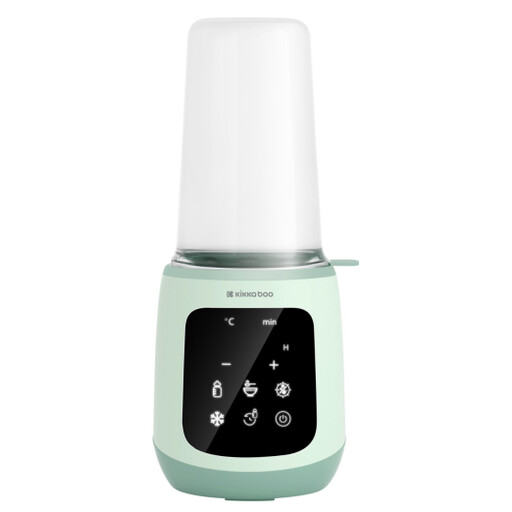
Why this product fits the profile: This compact device combines warming milk and food, defrosting, and sterilising in one unit. It’s ideal for households that need several basic functions without having to set up multiple appliances.
The functions are clearly named. In addition, automatic shut-off, a timer, and a basket for smaller containers are specified.
4-in-1 design, touchscreen, keep-warm function, and compact dimensions of 12.6 × 13.7 × 29.8 cm.
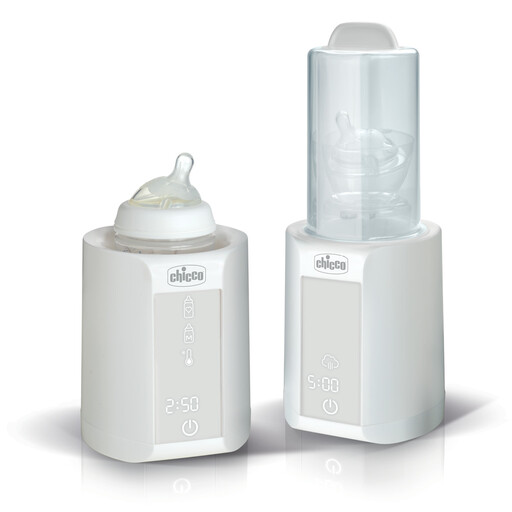
Why this product fits the profile: If you want to combine warming and steam sterilisation in one device, you get programmable cycles and space for various bottle and jar formats.
The product details mention specific programmes, an automatic shut-off, and a descaling note, rather than just general comfort promises.
2-in-1 function, digital programme selection, keep-warm for up to one hour, and a basket for smaller containers.
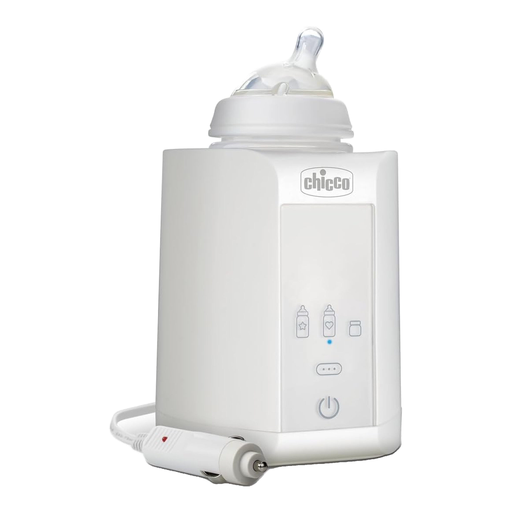
Why this product fits the profile: For families who move between home, the car, and visiting places, the included adapter for the cigarette lighter is a concrete feature for mobile use.
Its suitability for on-the-go use is clear thanks to the 12-volt connection. Automatic shut-off and an audible signal mark the end of the programme.
Use with 220–240 V at home and 12 V in the vehicle, defrost function, and keep-warm function for up to one hour.
We’ve put together a complete, regularly updated list of products that fully meet these strict selection criteria and the safety regulations in force in the EU.
Most devices heat water in a heating chamber. The bottle sits in a water bath or is heated by warm steam. Depending on the model, you select the milk volume, starting temperature, bottle material, or a preset programme. The bottle should stand securely, and the device should never be operated when empty.
The lifespan depends on build quality, frequency of use, cleaning, and descaling. Regularly emptying and drying the heating chamber can reduce deposits. Cables, the housing, and seals should be checked regularly for cracks or damage. If you notice any visible defects, stop using the device.
The running costs depend on the power consumption, heating duration, and frequency of use. A device with 220 watts theoretically uses 0.22 kilowatt-hours when operated for one hour; the actual consumption for individual warming cycles is usually lower. For a realistic estimate, check the information on the rating plate and your personal electricity tariff.