
Lieferung heute & morgen

Qualitätsgarantie

Willkommens-Angebote freischalten: KOSTENLOSE Lieferung | Bis zu 80 % RABATT | Kostenlose 30-Tage-JoyPlus-Testphase
App herunterladen
When choosing baby bottles and accessories, design isn’t the only consideration. For newborns and babies up to around 12 months, teat flow, capacity, material, cleaning and day-to-day practicality are especially important. If you’re breastfeeding and bottle-feeding, unsuitable teats or fiddly parts can make feeding more difficult.
A baby bottle suitable from birth should have a slow-flow teat in a suitable shape. However, the age guidance on the packaging doesn’t replace checking the specific teat. Some sets include several teat sizes or dummies as an extra, but the teat flow may not suit your baby’s individual feeding style.
It’s therefore important to:
A faster milk flow isn’t automatically better. A slow-flow teat may be a better match for a newborn’s feeding pace. Any later changes should be guided by the manufacturer’s advice and your baby’s needs.
An anti-colic baby bottle usually has a valve or a special ventilation system. According to the product description, this design may reduce the amount of air that enters while your baby feeds. However, this doesn’t guarantee that it will prevent tummy discomfort.
When buying, check:
A complex valve can be useful, but it may also take longer to clean.
A dishwasher-safe product can be handy day to day. Even so, the bottle, teat, ring, cap and valve usually need to be taken apart completely. Milk residue can collect around small openings and seals in particular.
Look for a wide-neck bottle, fewer individual parts and clearly marked measurements. A baby bottle cleaning set with a bottle brush, teat brush and drying rack can make daily cleaning easier. A set with a storage case is useful when you’re out and about.
A 150 ml baby bottle is often suitable for smaller feeds and as part of your first set of essentials. It’s compact and easy to pack when you’re out. A 260 ml baby bottle gives you more room as your baby’s feeds grow and can work well as an everyday size. Among the products featured here, a 330 ml baby bottle is mostly aimed at older babies from around six months and often comes with a faster-flow teat.
Choose a capacity that suits your feeding routine. A larger bottle isn’t automatically more practical: it takes up more room in your changing bag when you’re carrying smaller feeds and may feel heavier to hold.
For a BPA-free baby bottle, check that the material information for both the bottle and the teat is clear. Polypropylene (PP) is often used for the bottle, with silicone for the teat. Also check:
The manufacturer’s instructions are particularly important when warming a bottle. Always check the temperature of the milk before feeding your baby. Don’t heat a sealed bottle, as pressure can build up.
A baby bottle with a teat should have a milk flow that suits your baby’s age and feeding needs. Breast-shaped, angled or flat teats may be worth considering when switching between breast and bottle. Whether your baby accepts a particular shape is an individual matter.
A baby bottle warmer can make warming feeds easier at home or on the go. For portable models, check the battery capacity, temperature range, charging connection, leak protection and ease of cleaning. The device doesn’t replace checking the milk temperature or preparing infant formula correctly.
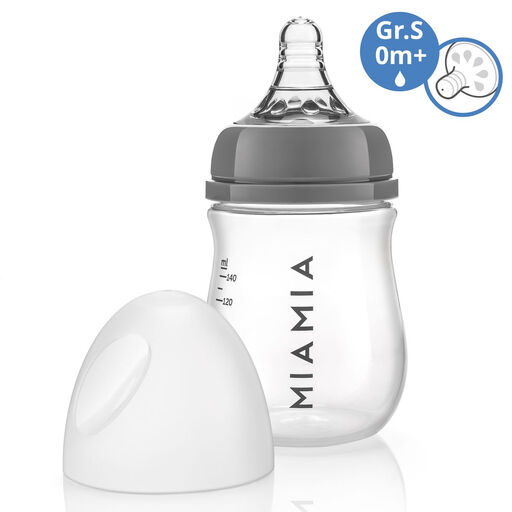
Why this product suits this profile: This compact 140 ml bottle is suitable for smaller feeds and, according to the product information, comes with a size S teat for use from birth.
The clearly stated size and slow-flow teat help you avoid choosing an oversized bottle with an unsuitable milk flow.
BPA-free PP and silicone, a wide neck, and dishwasher and steriliser compatibility according to the product information.
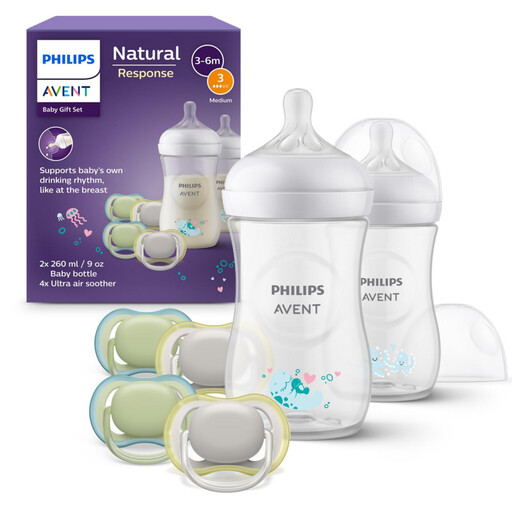
Why this product suits this profile: The set combines two 260 ml bottles with four Ultra Air dummies for babies aged 0 to 6 months. It’s a good option for families looking for several accessories in one set.
The controlled milk flow and anti-colic valve are clearly specified, so your choice isn’t based solely on a general age recommendation.
Two bottles, four dummies, BPA-free PP, and dishwasher and microwave compatibility according to the product information.

Why this product suits this profile: This set is designed for families who clean several bottles, teats, straws or breast pump parts, and want to take their cleaning accessories with them when out and about.
The different brush shapes make it easier to clean small openings and reduce the risk of cleaning only the surfaces you can see.
Includes a silicone brush, teat and straw brushes, soap dispenser, foldable drying rack and carry case.
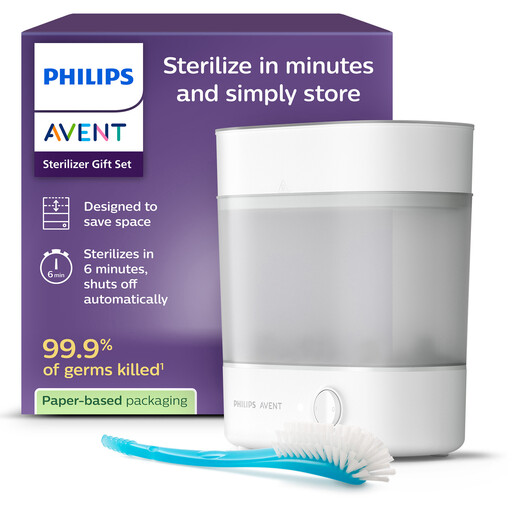
Why this product suits this profile: This electric bottle steriliser holds up to six bottles and accessories, making it well suited to regular feeding routines.
Its capacity and automatic shut-off are clearly stated. This makes it easier to plan than with devices that don’t specify how much they hold or how long a cycle takes.
Steam sterilisation, automatic shut-off, an integrated drip tray and capacity for up to six bottles per cycle, according to the product description.
We’ve put together a complete, regularly updated list of products that meet these strict selection criteria and fully comply with the safety regulations in force in the EU.
For a safe routine with baby bottles and accessories, follow these steps:
A bottle steriliser is particularly useful if you prepare several feeds each day. However, it doesn’t replace cleaning the parts first. When you’re out and about, a portable baby bottle or a portable baby bottle warmer may be useful. If you’re taking a battery-powered product with you, check the charge, user manual and temperature controls before your trip.
Choose a model approved for use from birth with a slow-flow teat. A 150 ml baby bottle can be handy for smaller feeds. Other important features include secure assembly, replacement teats that are easy to find and straightforward cleaning.
You can use the bottle itself for longer if the material remains in good condition. Teats and valves are more prone to wear and tear. Check them regularly and replace them if they become cracked, misshapen or sticky, or if the milk flow changes. Always follow the manufacturer’s care and replacement instructions.
Both are useful additions, but not every family needs them. A baby bottle warmer can make warming feeds easier, while a bottle steriliser can process several accessories at once. If you only use a few bottles, thorough hand-washing and a suitable sterilisation method may be enough, depending on the manufacturer’s instructions.