
Lieferung heute & morgen

Qualitätsgarantie

Willkommens-Angebote freischalten: KOSTENLOSE Lieferung | Bis zu 80 % RABATT | Kostenlose 30-Tage-JoyPlus-Testphase
App herunterladen
A baby carrier promises both freedom and closeness—keeping your hands free for daily tasks while your baby is held safely and securely against your body. However, the market is overwhelming and full of lofty promises. Many parents discover after their purchase that the carrier they chose is uncomfortable, doesn't fit their child properly, or leads to overheating in the summer.
As your Joybuy Product Recommendation Officer, I'm here to help you navigate the common pitfalls. We will focus on the crucial, objective criteria so you can make an informed decision for both you and your child.
Before we dive into the solutions, it's important to understand the most common issues that lead to frustration and unnecessary expenses.
To avoid these mistakes, you should base your selection on three objective core criteria. These define the safety, comfort, and longevity of any baby carrying aid.
A good ergonomic baby carrier considers the anatomy of both.
There are various systems that differ in handling and flexibility.
The material influences both comfort and where the carrier can be used.
Based on the criteria above, we have identified a few models that are particularly well-suited for specific needs and lifestyles.
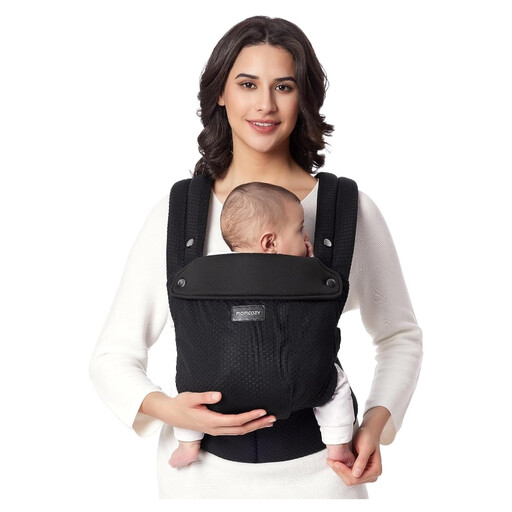
Why This Fits Their Persona: Ideal for parents who don't want to give up babywearing on warm days or during long walks. The lightweight design and breathable material make it perfect for summer holidays or an active daily routine.
Solves the "Material Dilemma" by using large mesh panels that prevent heat build-up and ensure maximum air circulation.
Breathability: The mesh fabric keeps both child and parent cool. Ergonomic Support: Promotes the M-Position and features integrated lumbar support for parental comfort.
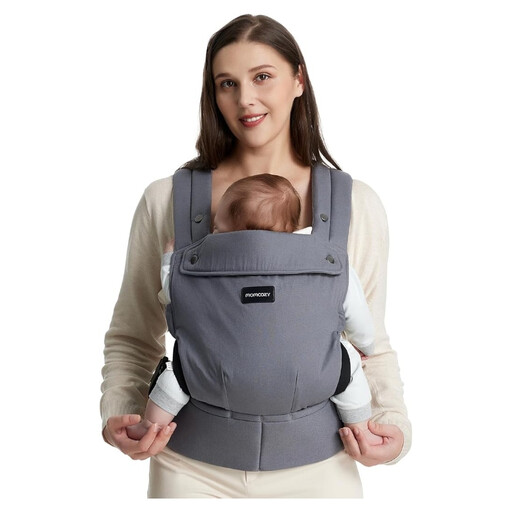
Why This Fits Their Persona: A classic full-buckle carrier made from 100% cotton, serving as a reliable companion for daily use. It's designed for a wide weight and age range and offers straightforward handling.
Avoids the "Ergonomics Trap" by being explicitly designed to support the C- and M-positions. Its adjustability for babies from approx. 3.2 to 20 kg prevents it from becoming obsolete too quickly.
Long-Term Use: Suitable for infants and toddlers up to 20 kg. High Carrying Comfort: The three-point support system with an EVA panel significantly reduces the strain on parents.
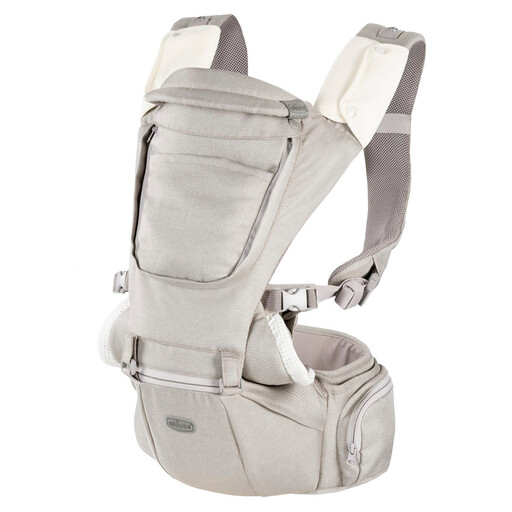
Why This Fits Their Persona: Perfect for parents looking for a single, long-lasting solution. The 3-in-1 system adapts to the changing needs from newborn to toddler and offers unparalleled versatility with 8 carrying positions.
Sidesteps the "Lack of Adjustability" trap. The combination of a rigid base and a soft carrier can be used separately or together, allowing for use from birth up to 15 kg.
3-in-1 System: Can be used as a hip seat, a soft carrier, or a combined hip seat carrier. IHDI Acknowledged: Officially recognised as a "hip-healthy" product by the International Hip Dysplasia Institute.
We have compiled a complete, up-to-date list of products that fully meet these strict selection criteria and safety regulations.
1. How do I recognise an ergonomic baby carrier? You can identify an ergonomic carrier by three main features: The seat is wide enough to support the baby's legs from one knee to the other (M-Position). The back panel is soft and conforms to the baby's natural rounded back (C-shape). For the wearer, wide, padded straps and a sturdy hip belt for weight distribution are crucial.
2. When can my baby start using a baby carrier? This depends on the specific model. Some carrying systems, like stretchy wraps or carriers with a special newborn insert, are suitable from birth (usually from a minimum weight of approx. 3.2 to 3.5 kg). Other models are recommended from around three months of age or as soon as the child has stable head control. Always follow the manufacturer's weight and age specifications.
3. Can I carry my baby facing forward in the carrier? Some carriers offer a forward-facing option. However, this should only be used for short periods and only once your baby has excellent head and neck control (usually from 5-6 months). The inward-facing front carry position is ergonomically better for hip and spine development and protects the child from overstimulation.