
Lieferung heute & morgen

Qualitätsgarantie

Willkommens-Angebote freischalten: KOSTENLOSE Lieferung | Bis zu 80 % RABATT | Kostenlose 30-Tage-JoyPlus-Testphase
App herunterladen
The arrival of a baby fundamentally changes daily life. The desire to give your child closeness and security often conflicts with the need to have your hands free for everyday tasks. A baby carrier can be a practical solution. It allows you to carry your child securely against your body while staying mobile. However, the market offers a wide variety of models, from classic wraps to structured carriers with hip seats. This guide is designed to help you understand how different carrier systems work and make an informed decision.
Choosing the right carrier depends on the individual needs of both parent and child. Three key criteria can make the decision easier.
An ergonomic baby carrier is crucial for the child's healthy physical development and the wearer's comfort. Look for the following features:
Baby carriers can be broadly divided into different categories, each suited for various developmental stages.
The material affects both comfort and usability. A breathable baby carrier made from mesh fabric is ideal for warmer months or for active parents, as it ensures good air circulation. Models made from cotton or cotton blends are skin-friendly and easy to care for. Check if the carrier is machine-washable to simplify daily cleaning.
Based on the criteria mentioned, we have compiled a selection of models that cover a range of different needs.
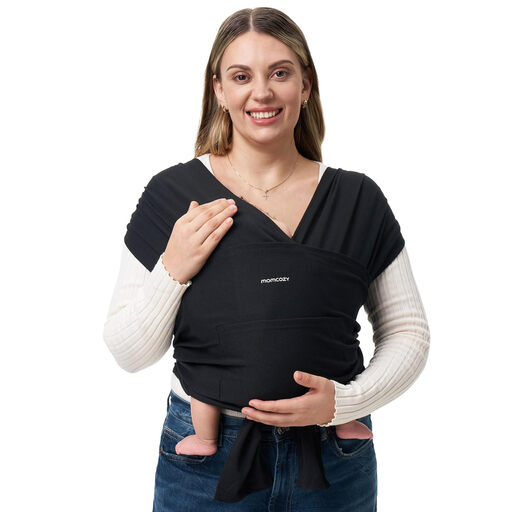
What sets it apart: This stretchy baby wrap combines the closeness of a classic wrap with user-friendly handling. Instead of complex tying techniques, the carrier is adjusted quickly and securely using a double-ring system. The cotton-spandex blend material is OEKO-TEX 100 certified, skin-friendly, and stretchable. The pre-shaped back support makes correct positioning easier.
Advantages:
Who it's for: Parents looking for a flexible and snug baby carrier from birth (suitable from 3.6 to 15 kg) who want the benefits of a wrap without the complicated tying process.
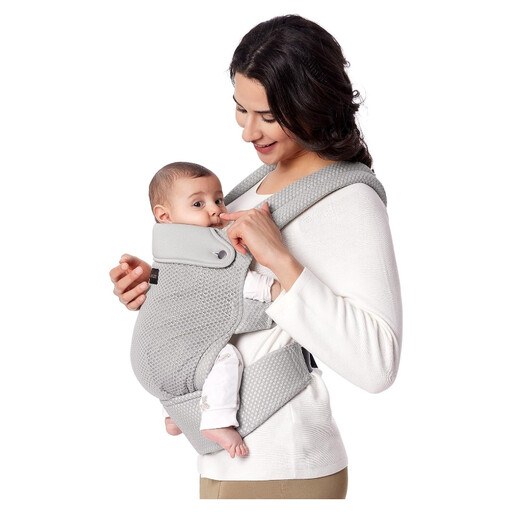
What sets it apart: This structured carrier is specially designed for comfort in warmer temperatures. The large air mesh panel provides optimal ventilation. Its ergonomic design supports the M-position and is adjustable to three size settings to grow with your child. The X-shaped back design and integrated lumbar support effectively distribute weight and relieve pressure on the wearer's back.
Advantages:
Who it's for: Active parents or families in warmer climates who need a structured, easy-to-use carrier for daily use and longer wearing times.
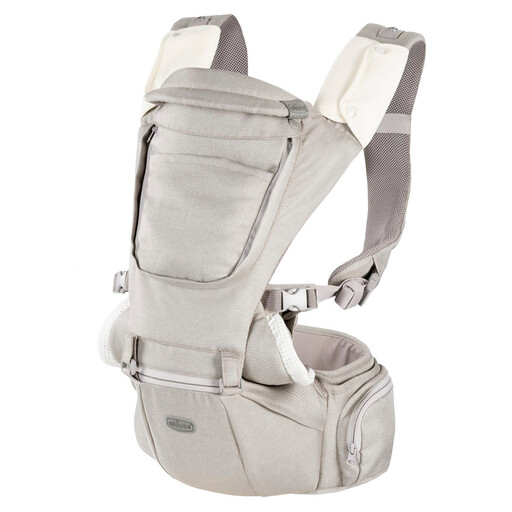
What sets it apart: This 3-in-1 system offers maximum versatility. It consists of a firm baby carrier with a hip seat and a soft carrier panel, which can be used together or separately. The system is recognised by the International Hip Dysplasia Institute (IHDI) as a hip-healthy product. With eight different carrying positions, it adapts flexibly to the child's age and the parents' preferences. The rigid base optimally distributes the child's weight across the wearer's upper body.
Advantages:
Who it's for: Parents looking for a long-term, highly adaptable, and particularly back-friendly solution that grows with their child and offers maximum flexibility for daily life.
The selection presented here already covers a wide spectrum of needs. If you haven't found the right model for you yet or would like to compare other systems, you can find additional alternatives.
Discover a wider selection of carrier systems in our Baby Slings category.
Many models are designed as a baby carrier from birth and can be used from a minimum weight specified by the manufacturer (often around 3.5 kg). It is important that the carrier provides adequate head and neck support for the newborn and ensures an ergonomic posture. Always check the manufacturer's specifications.
The M-position, also known as the spread-squat or frog-leg position, is crucial for a baby's healthy hip development. In this position, the child's knees are higher than their bottom and their legs are spread gently apart, so their legs and bottom form the letter "M". A good ergonomic baby carrier supports this natural posture.
There is no fixed time limit, as long as the baby is comfortable, secure in an ergonomic position, and can breathe freely. Pay attention to your child's cues. For longer periods of wear, taking regular breaks is a good idea. It's important to check the child's position frequently and ensure they haven't slumped down.