
Lieferung heute & morgen

Qualitätsgarantie

Willkommens-Angebote freischalten: KOSTENLOSE Lieferung | Bis zu 80 % RABATT | Kostenlose 30-Tage-JoyPlus-Testphase
App herunterladen
A baby carrier can make everyday life easier – whether you’re out for a walk, travelling, or just popping around town. Yet many purchases go wrong, not because of a lack of features, but due to unclear age recommendations, poorly fitting straps, or exaggerated claims about ergonomics. So if you’re looking to buy a carrier, don’t just focus on colour and price.
The label baby carrier up to 20 kg might sound like it offers an especially long period of use. What really matters, though, is whether your child sits safely and comfortably across the entire stated range. Some models claim to be suitable for around 3.2 to 20 kg, but are only appropriate once your baby reaches a certain developmental stage – for example, when they can hold their head up independently.
Always check:
A baby carrier for newborns must be explicitly designed for that age group. A general model for toddlers is not automatically suitable for a newborn.
A breathable baby carrier can feel more comfortable in warm weather. However, the material alone doesn’t determine carrying comfort. The width of the shoulder straps, the back panel, the seat area, and the ability to adjust all play a part too.
Mesh fabric can help with air circulation. At the same time, your baby shouldn’t be dressed too warmly, and their face must always remain visible. Check regularly that their mouth and nose are uncovered.
The term ergonomic baby carrier is only helpful if the carrier can be properly adjusted. Look for an upright position, clear airways, and a leg position where the knees are higher than the bottom. This is known as the M-position and is described in the product details of several models.
A baby carrier with back support can distribute weight more evenly. However, it doesn’t automatically prevent discomfort. If you experience pain, pressure points, or an unstable sitting position, readjust the carrier or stop using it.
Compare the technical specifications directly with your child’s current weight. A model with a range of 3.18 to 19.96 kg is described as suitable for a wide weight range, but may still have limitations for babies without sufficient head control.
Adjustable seat panels, padded leg openings, and a supportive head or neck area are practical features. Also check whether only front carrying is allowed, or whether back carrying and facing-out positions are permitted too.
Before each use, all buckles should click audibly into place. Check the seams, straps and fastenings for wear and tear. A cross-strap system or wide, padded shoulder straps can distribute the load across different parts of your body. For longer journeys, an adjustable hip or waist belt is also important.
Models with features like an EVA back panel or integrated lumbar support shouldn’t be judged at face value. What matters is whether the design fits the wearer’s body and can be adjusted without creating pressure points.
Cotton can feel soft, while mesh fabric is designed for air circulation. Care instructions are also important: machine washing, hand washing, or air drying only will all affect the ongoing effort involved.
When choosing a product, any conformity markings can offer guidance. For the Kikka Boo Baby Carrier Myra Mesh, for example, EN 13209-2 is listed. The standard reference isn’t a substitute for the user manual, but it does show that the conformity information should be checked.
For newborns, a baby sling or wrap carrier may also be of interest. Both options require correct tying or adjustment techniques. If you prefer something quick to use, choose a model with clear straps and easy-to-operate buckles.
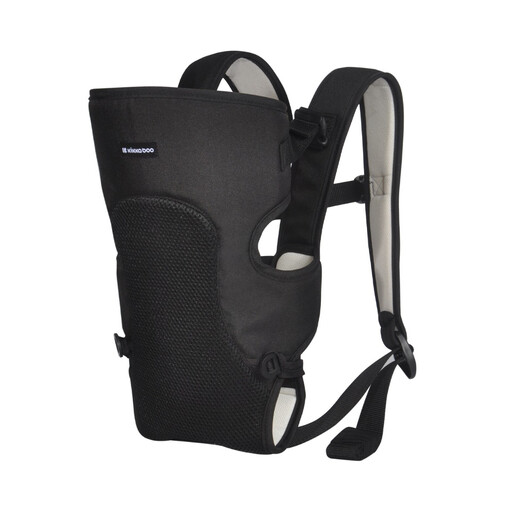
Why this product fits the profile: This carrier offers three positions and, according to the manufacturer, is suitable for around 3 to 12 months or up to 9 kg. The clearly defined usage range makes it easier to choose as a first carrier.
The clear weight range prevents a high maximum figure from being mistaken for unrestricted long-term use. The instructions highlight the need for clear airways and regular checks.
Breathable mesh, padded shoulder straps, cross strap and three described carrying positions.
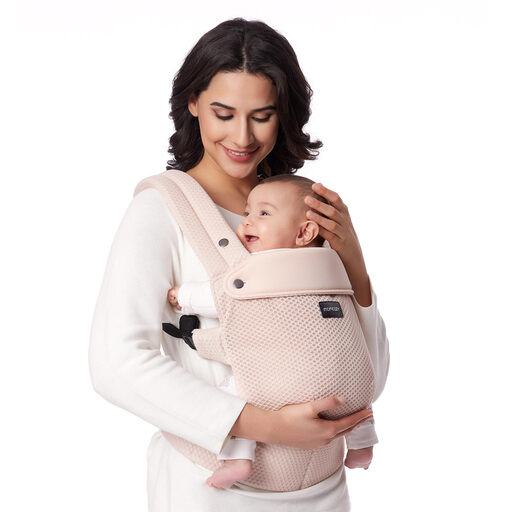
Why this product fits the profile: For parents who want to compare material, adjustability and back support. The product description mentions Air-Mesh, three adjustment positions and a weight range up to around 19.96 kg.
The specifications separate material properties, weight limit and safety warnings. This reduces the risk of equating breathability with a correct fit for every age.
Air-Mesh fabric, EVA waist support, X-shaped back panel and padded leg openings.
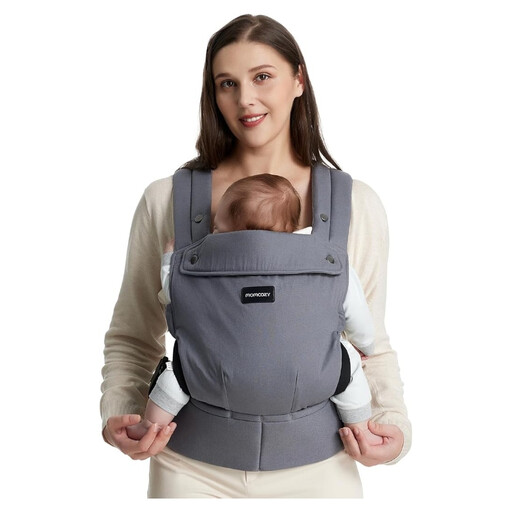
Why this product fits the profile: This model is aimed at parents looking for a front carrier with a wide stated weight range and additional back support. According to the product data, it is suitable for around 3.18 to 19.96 kg.
The warnings clearly state the limits: not for babies without secure head control, not for activities with a risk of falling, and not outside the weight range.
100% cotton, Tri-Point support system, EVA panel, neck support and padded leg openings.
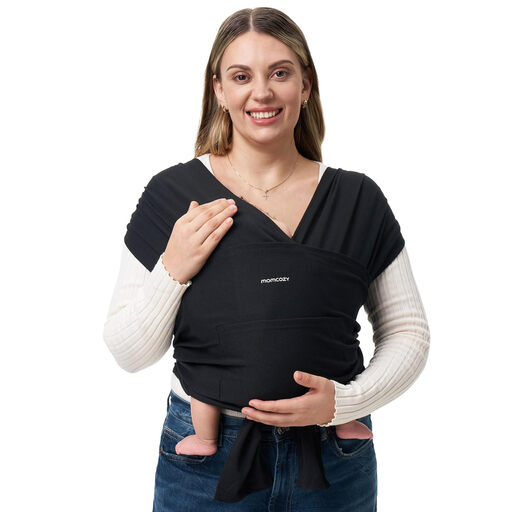
Why this product fits the profile: This baby sling is ideal for parents who want a compact solution with a ring closure and no tying technique required. The product details state a range of 3.6 to 15 kg.
The intended front-carrying method and specific weight range make it clear that the sling is not designed for every carrying position or every age.
Double ring closure, pre-formed back support, cotton-elastane material and included carry bag.
We’ve put together a full, regularly updated list of products that fully meet these strict selection criteria and the safety regulations in force in the EU.
In noisy environments, baby ear defenders or children’s ear defenders can be useful. The Dooky Baby Ear Protection White is described as suitable for babies and toddlers up to 36 months and offers a noise reduction of 25 dB. For older children, the Dooky Junior Ear Protection Black is designed for ages 3 and up. The 2-in-1 ear defenders from Dooky come with two headbands and are said to offer a noise reduction of 27 dB, with EN 352-1:2020 listed. Ear defenders must not be used in situations where ambient sounds are necessary for safety, such as near traffic.
A baby cradle with accessories can complete your initial nursery setup. The Little Stars Complete Baby Cradle Set includes a cradle, mattress, bumper, canopy and castors with a locking function. The sleeping area measures 40 × 90 cm. According to the product details, the cradle is suitable from birth up to around six months, or only until your child can pull themselves up independently. The rocking function must be locked when the cradle is used in a stationary position.
This depends on the specific model. Some carriers are suitable from a certain minimum weight or from around three months. A baby carrier for newborns must be explicitly approved for that age group. Head control, clear airways, and a correct, snug fit are also crucial.
The manufacturer’s guidelines on weight, height and developmental stage are what matter. A carrier with a maximum rating of 20 kg may not be comfortable or a good fit for every child up to that weight. Check the straps, buckles and seams regularly, and stop using the carrier if you notice any damage or persistent discomfort.
A baby carrier with buckles is usually quick to put on and can be adjusted in a structured way. A baby sling can be compact and practical for short trips, but requires careful positioning. A wrap carrier offers flexible tying options but takes practice to master. The right solution depends on your child’s age, weight, body shape and how you plan to use it.