
Lieferung heute & morgen

Qualitätsgarantie

Willkommens-Angebote freischalten: KOSTENLOSE Lieferung | Bis zu 80 % RABATT | Kostenlose 30-Tage-JoyPlus-Testphase
App herunterladen
A baby carrier can be practical in everyday life when a pushchair is cumbersome, your baby wants to be close or you need both hands free. The range includes classic baby carriers, models with a hip seat and versions that can be used for front and back carrying. However, product claims do not always mean that a particular solution will suit every child and body shape.
The term baby carrier from birth does not automatically mean that every newborn can be carried in it straight away. The manufacturer’s stated minimum weight, the child’s height and the intended carrying position are all important. Some models are suitable from 3 kg or 3.5 kg, while others are only intended for use from around three months.
Parents should therefore check the following before buying:
A baby carrier up to 3 years old can theoretically be used over a long period. However, this alone says little about actual comfort. An adjustable seat width, well-padded leg openings and adequate head support are important. The carrier must be adjustable to fit the child’s size without putting unnatural tension on the back or restricting the legs.
A baby carrier with a hip position or a baby carrier with a hip seat may be useful for short journeys and frequent lifting in and out. However, having several positions also increases the need for correct adjustment. A forward-facing position, for example, is not suitable for every age or stage of development. Parents should always follow the manufacturer’s guidance and not base their decision solely on the number of carrying positions.
With an ergonomic baby carrier, the child’s thighs should be supported as much as possible. The so-called M-position in a baby carrier describes a posture in which the knees are roughly level with or higher than the bottom. The seat width should be adjusted so that it does not dig into the backs of the knees while still providing sufficient support.
An ergonomic baby carrier should also:
Claims such as “hip-healthy” should be assessed based on specific product features and verifiable information. For example, the Chicco model is stated to be recognised by the International Hip Dysplasia Institute. This is a product feature, but it is not a substitute for individual advice.
A baby carrier for parents should fit not only the child but also the body of the person carrying them. Wide, padded shoulder straps and an adjustable waist belt can distribute the weight across several areas of the body. It is important that the waist belt sits securely and does not slip while walking.
Look for:
Products vary considerably when it comes to larger body measurements. According to the product information, the Dooky Urban Comfort has a waist belt that extends to 143 cm, while the Dooky Terra Nova is stated to be suitable for up to 159 cm.
An airy baby carrier can be more comfortable during longer periods of use or in warm weather. According to the product description, the 3D mesh fabric of the Dooky Urban Comfort is designed to improve ventilation. Other models are made from cotton or polyester and differ in terms of care requirements, weight and drying time.
Before buying, it is worth checking:
If the carrier is used frequently, easy cleaning is a practical benefit. Always follow the relevant care instructions.
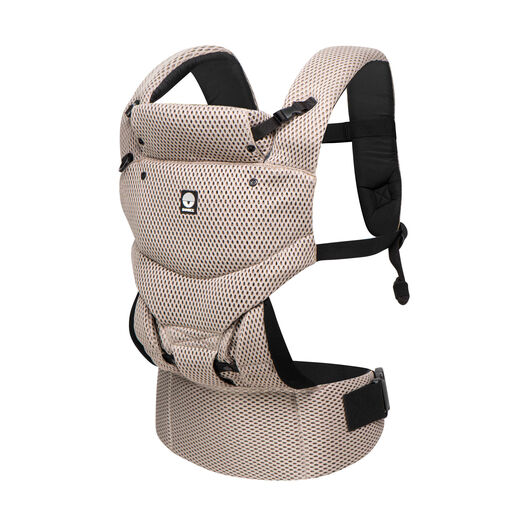
Why this product suits the profile: According to the product information, this carrier is designed for 3.5 to 15 kg and approximately 0 to 3 years. It offers several carrying positions and a waist belt of up to 143 cm.
The information on the M-shaped seating position, weight range and EN 13209-2:2015 standard makes it easier to check the product before buying. The 3D mesh fabric also addresses ventilation.
Adjustable seat, padded straps, head support and three described carrying positions: front-facing inwards, front-facing outwards and on the back.
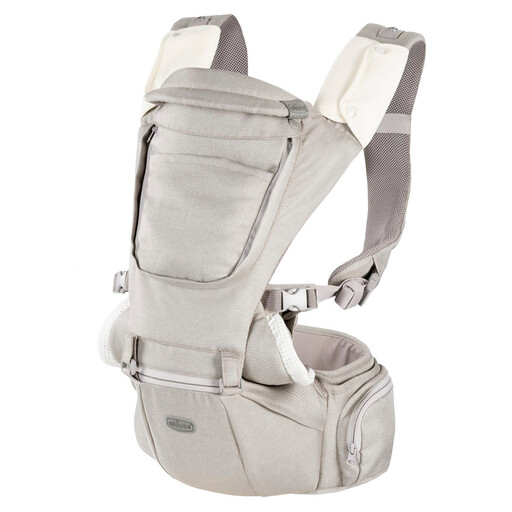
Why this product suits the profile: The 3-in-1 system combines a fabric carrier, hip seat and the option to use both components together. According to the product information, it is designed for weights from 3 kg to 15 kg.
The individual components and permitted load are clearly described. This makes it possible to check before buying whether a hip seat is genuinely suitable for your intended everyday use.
Up to eight configurations are specified, along with a machine-washable cover and a hip-friendly design recognised by the IHDI.
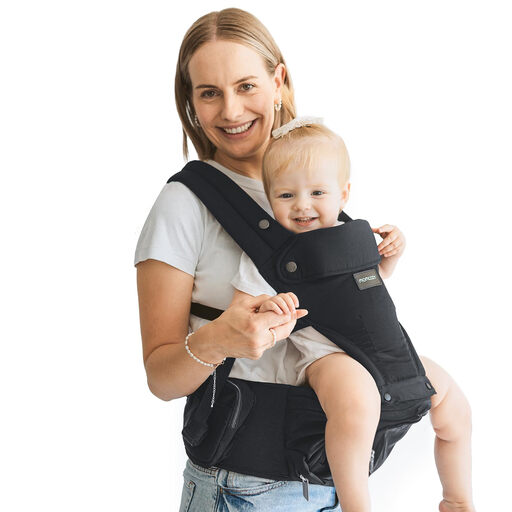
Why this product suits the profile: This 2-in-1 model is aimed at parents who want to switch between a traditional carrier and a baby carrier with a hip seat. The stated range is from 3.2 to 20 kg.
The intended positions and recommended age must be considered separately. This prevents parents from using every position regardless of their child’s stage of development.
Removable, padded hip seat, X-shaped back straps and six carrying positions according to the product information. The fit is designed for a waist circumference of up to 120 cm.
We have put together a complete, regularly updated list of products that fully meet these strict selection criteria and the safety regulations applicable in the EU.
Regardless of the model, parents should carry out a quick check of the baby carrier before every use:
If your baby was born prematurely or has particular health considerations, consult a medical professional before use. A baby carrier is not a safety system in the event of an accident or fall.
This depends on the specific model. According to the manufacturer’s information, some products are suitable from a minimum weight of around 3 to 3.5 kg, while others are only suitable from approximately three months. The weight, size and position specifications in the instruction manual are always decisive.
Models specified as a baby carrier up to 3 years may, depending on the product, be designed for weights of up to around 15 or 20 kg. The actual period of use depends on the child’s development, the fit and the comfort of the person carrying them. Age alone is not the deciding factor.
A baby carrier with a hip seat has a generally firmer seat that can support the child’s weight on the hip. With some models, it can be used separately. A traditional ergonomic carrier typically distributes the weight across the shoulder straps and waist belt. The most suitable option depends on the child’s age, the preferred carrying position and the wearer’s personal comfort.