
Lieferung heute & morgen

Qualitätsgarantie

Willkommens-Angebote freischalten: KOSTENLOSE Lieferung | Bis zu 80 % RABATT | Kostenlose 30-Tage-JoyPlus-Testphase
App herunterladen
A baby carrier can be practical in everyday life: on walks, when travelling or whenever you need both hands free for light household tasks. However, not every model is suitable for every age, body shape or intended use. Terms such as “ergonomic”, “lightweight” or “back-friendly” are not enough on their own when choosing a carrier.
The key questions are: Is the carrier suitable for your child’s weight and stage of development? Does it support a suitable sitting position? Can it be adjusted correctly and cleaned regularly? Checking these points before buying reduces the risk of making the wrong choice.
A baby carrier suitable for up to 20 kg sounds as though it could be used for a long time. However, this does not automatically mean that it is suitable for newborns. The minimum weight, age recommendation, height and instructions in the user manual are all important.
According to the product details, several Momcozy models are designed for approximately 3 to 24 months and a weight of around 3.18 to 19.96 kg. At the same time, they state that the child must be able to hold their head up independently. A baby carrier for newborns therefore has different requirements from a model for babies and toddlers.
An ergonomic baby carrier should offer more than comfortably padded straps. It is important that the child sits close to and upright against the wearer’s body, that their face remains visible and that their legs can adopt a supported M-position: the knees should be higher than the bottom.
A rigid or overly narrow seat can affect the child’s position. A carrier that pulls on the adult’s back can also be unsuitable if the shoulder, hip or back area cannot be adjusted properly.
A breathable baby carrier made with mesh material can improve air circulation. However, it does not automatically prevent heat build-up. Clothing, the outside temperature and direct body contact also play a role. In warm weather, the child should be checked regularly. Their face must remain uncovered, and their airways must not be obstructed by fabric or an unsuitable position.
Compare the manufacturer’s information with your child’s actual stage of development:
According to the product description, the Dooky Carrier Be One is designed for a height of 56 to 74 cm and a maximum carrying weight of 9 kg. This means it is intended for a different stage of use from a baby carrier suitable for up to 20 kg.
Look for a sufficiently wide, padded seat, adjustable straps and a secure fastening system. A baby carrier with lumbar support can help distribute weight around the lower back by design. However, this is not a promise that it will prevent discomfort. If you experience pain or pressure points, stop using the carrier and check the adjustment.
Cross-shaped or X-shaped straps can distribute weight differently across the shoulders and back. The important thing is that the straps do not dig in and that the carrier sits close to the body without unnecessarily restricting the child’s freedom of movement.
A washable baby carrier is practical for family life, as milk, dribble and small spills can occur quickly. Check the following before buying:
You should also keep the instructions after buying the carrier. They contain specific information about assembly, the weight limit and permitted carrying positions.
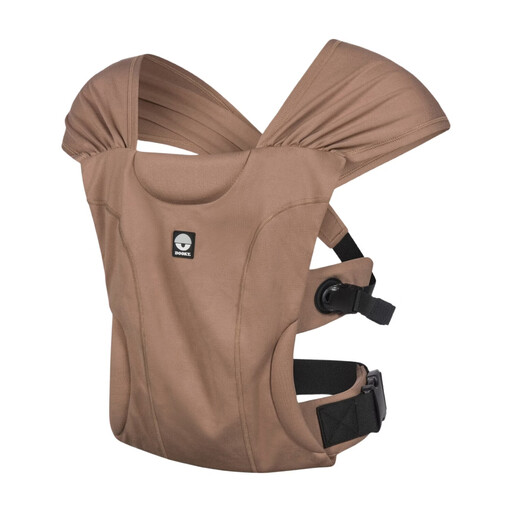
Why this product suits this profile: According to the supplier, this hybrid model is quick to put on and is designed for children measuring 56 to 74 cm and weighing up to 9 kg.
The clearly defined height and weight limits help prevent the carrier from being treated as suitable for every age group.
Cross straps, breathable material and a maximum carrying weight of 9 kg according to the product description.
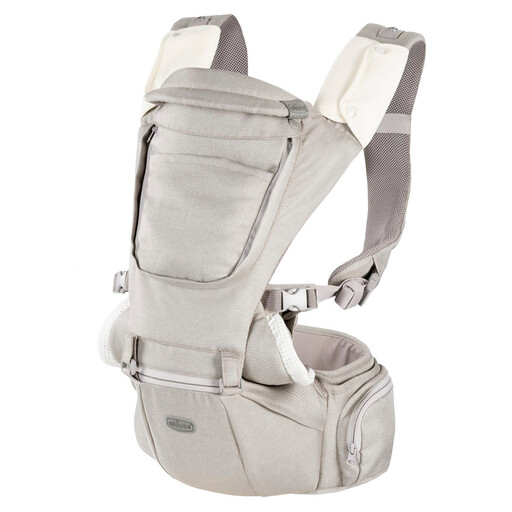
Why this product suits this profile: According to the product details, the 3-in-1 system offers several carrying options and is designed for children weighing from a minimum of 3 kg up to 15 kg.
The usage limits and the separately described hip-seat function make it clear that not every configuration is intended for every age.
Three carrying options, a machine-washable cover at 30 °C and a hip-friendly design recognised by the IHDI, according to the product information.
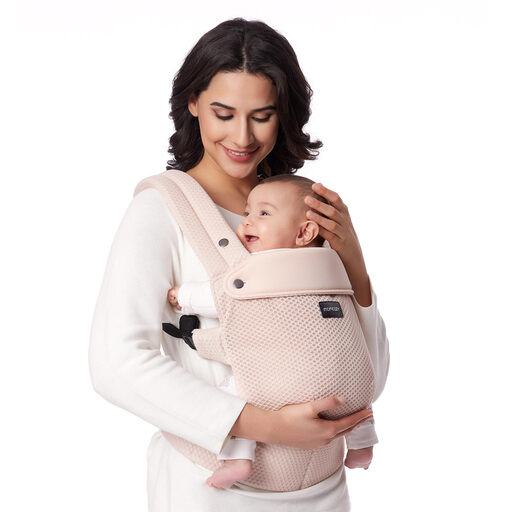
Why this product suits this profile: Air-mesh fabric, machine-washable care and a front-carrying system make it suitable for warm days, travel and frequent use.
The mesh material addresses the choice of fabric for warm conditions, while three adjustment positions provide documented adaptability.
A weight range of approximately 3.18 to 19.96 kg, integrated EVA waist support and padded leg openings according to the supplier.
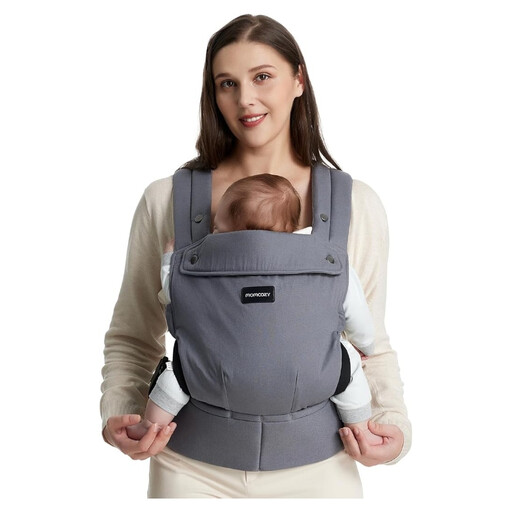
Why this product suits this profile: According to the product details, the cotton version is machine washable and designed for front carrying from approximately 3 to 20 kg.
The specified care method and defined weight range help distinguish marketing claims from verifiable product data.
100% cotton, machine washable, X-shaped straps and an EVA element to help distribute weight, according to the description.
We have put together a complete, regularly updated list of products that fully meet these strict selection criteria and the safety regulations applicable in the EU.
A baby carrier is not a protective system in the event of a fall or road accident. Before putting it on, parents should:
Running, cycling, cooking over open flames and other activities involving a risk of falling or burns should be avoided while wearing the carrier.
This depends on the individual model. According to the manufacturer, some carriers are suitable from around 3 kg, while others are only suitable from a specific age or once the child can hold their head up independently. The user manual, minimum weight and height are the key factors.
The period of use depends on the child’s weight, height, stage of development and the shape of the seat. A baby carrier suitable for up to 20 kg could theoretically be used over a longer period, provided that the model is approved for the relevant stage and the child continues to sit correctly.
A back-friendly baby carrier can distribute the load differently through wide straps, hip or lumbar support and even weight distribution. However, it does not automatically prevent back pain. Correct adjustment, regular breaks and your individual physical condition remain crucial.