
Lieferung heute & morgen

Qualitätsgarantie

Willkommens-Angebote freischalten: KOSTENLOSE Lieferung | Bis zu 80 % RABATT | Kostenlose 30-Tage-JoyPlus-Testphase
App herunterladen
Choosing a baby carrier can be a challenge for expecting and new parents. The market offers a plethora of models, all promising comfort and safety. However, not every carrier is right for every family. Certain design features, often marketed as benefits, can prove impractical in daily life and lead to buyer's remorse.
As your Joybuy Product Recommendation Officer, I'm here to help you distinguish the features that matter from those that don't. In this guide, we'll focus on the crucial criteria and show you how to navigate common pitfalls to find a carrier that is comfortable and functional for both you and your child in the long run.
Before we dive into the important parameters, let's look at three common problems that often only become apparent after the purchase:
To avoid a bad purchase, you should focus on three objective criteria. These form the foundation for safety, comfort, and long-term use.
The most important criterion is ergonomic correctness. An ergonomic baby carrier supports the natural spread-squat position, also known as the M-Position. In this position, the baby's knees are slightly higher than their bottom, and their back is gently rounded. This posture is crucial for the healthy development of the hip joints and is recommended by orthopaedists and midwives.
Look for products recognised as "hip-healthy" by the International Hip Dysplasia Institute (IHDI). An adjustable seat that adapts to your child's size and provides support from knee to knee is a key feature for this.
As your child grows and develops, their needs for carrying positions will change.
Some models also offer a hip carry position. A baby carrier with a hip seat can be a useful addition, as it supports the child's weight on a stable platform, thus relieving the parent's back.
The material affects not only comfort but also safety and ease of care.
Also, look for the EN 13209-2:2015 safety standard, which sets minimum safety requirements for baby carriers in Europe.
Based on the criteria mentioned, we have selected a few models for different needs and lifestyles.
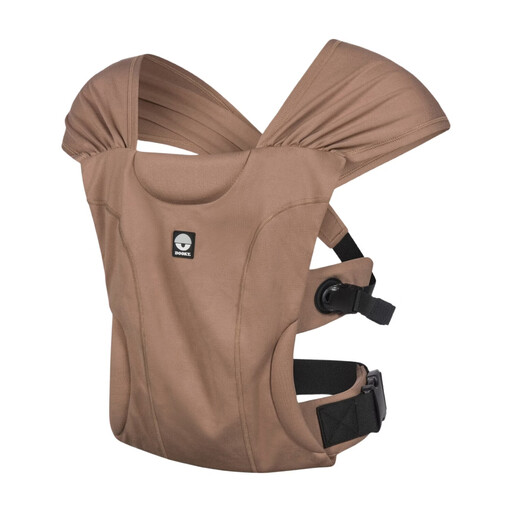
Why It's a Great Fit: This hybrid model combines the softness and snug fit of a baby wrap with the easy-to-use buckles of a structured carrier. It's perfect for parents who want the cocoon-like security of a wrap for their newborn but wish to avoid complicated wrapping techniques.
Tackling the "one-size-fits-all" myth: The carrier is specifically designed for the first phase of life (56-74 cm), making no compromises on the fit for the very youngest babies.
The crossed straps distribute weight optimally across the back and shoulders, enhancing comfort for the parent. The soft, breathable material ensures a pleasant climate.
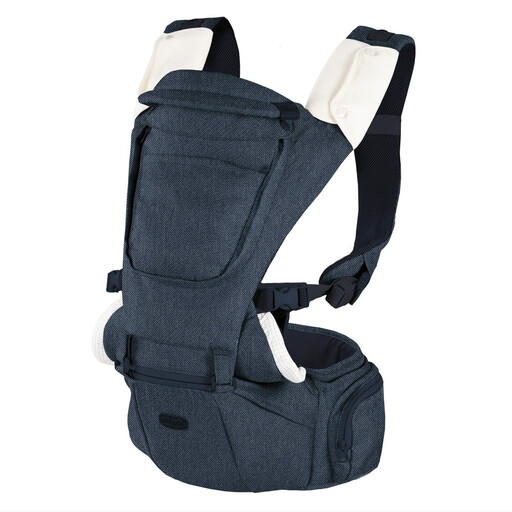
Why It's a Great Fit: This 3-in-1 system with a detachable hip seat is designed for parents who want to carry their child comfortably for longer periods, even as they get heavier. The hip seat distributes weight evenly and significantly relieves back strain.
Addresses neglected parent comfort: The firm base of the hip seat acts as an extension of the parent's hip, promoting correct posture and preventing the one-sided strain that occurs with carriers lacking this support.
Multifunctional: Can be used as a complete carrier, just as a hip seat (e.g., for short-distance carrying on the arm), or as a classic carrier without the seat. Recognised by the IHDI as a hip-healthy product.
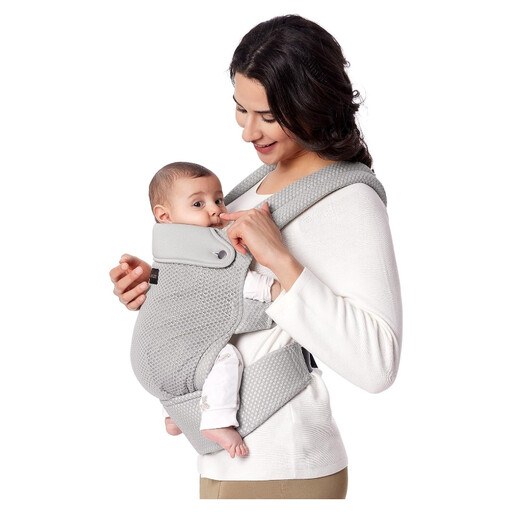
Why It's a Great Fit: For parents looking for a year-round carrier, especially for warmer months or indoor use. The mesh fabric provides excellent air circulation and prevents heat build-up.
Solves the problem of unsuitable materials: Instead of a thick, insulating fabric, this carrier uses a special air-mesh panel that actively provides cooling, making it comfortable even in high temperatures.
Despite its lightweight material, the carrier offers full ergonomic support, including lumbar support for the wearer and adjustable size positions for a growing child (3.2 kg to 20 kg).
We've compiled a complete, up-to-date list of products that fully meet these strict selection criteria and all relevant safety standards.
Most structured baby carriers are approved for newborns starting from a minimum weight of about 3.5 kg. However, it's crucial that the carrier has a special newborn insert or that the seat can be adjusted to be narrow enough to allow for a correct M-Position without over-spreading the legs. Always read the manufacturer's instructions regarding minimum weight and correct use for newborns.
You can recognise an ergonomic carrier by three main features: First, the seat panel must be wide enough to support the baby's thighs from one knee to the other. Second, the baby's back should be gently rounded (a C-shape), not straightened. Third, the baby's knees should be positioned higher than their bottom (the M-Position). Certifications like the one from the IHDI are an additional, reliable indicator.
Most fabric baby carriers are machine washable. It is recommended to use a gentle cycle at a low temperature (e.g., 30°C) and a mild detergent. Fasten all buckles before washing to prevent damage to the carrier and the washing machine drum. Allow the carrier to air-dry and avoid the tumble dryer, as high heat can damage the fabrics and buckles. Always follow the manufacturer's specific care instructions.