
Lieferung heute & morgen

Qualitätsgarantie

Willkommens-Angebote freischalten: KOSTENLOSE Lieferung | Bis zu 80 % RABATT | Kostenlose 30-Tage-JoyPlus-Testphase
App herunterladen
A baby carrier can make trips to the doctor, the supermarket and walks in the park much easier. However, carriers differ significantly in terms of fit, age range, material and intended use. A flashy product description is no substitute for checking the technical specifications.
Three common buying mistakes often lead to poor decisions:
Before you buy, check the manufacturer’s specifications and compare them with your child’s measurements. A baby carrier for newborns should only be used if the model is explicitly designed for that purpose. For small babies, the head, neck and back must be adequately supported.
A baby carrier for babies and toddlers with a wide weight range can be used for longer. However, that doesn’t mean every setting will fit perfectly at every stage. Pay attention to:
With a baby carrier with M-position, the child’s knees are higher than their bottom. The fabric or seat area should support the thighs adequately without constricting the legs. An ergonomic baby carrier should also allow an upright, close-to-the-body posture.
These checks will help with adjustment:
A C-shaped back support or an adjustable seat width can make fitting easier. However, this doesn’t replace checking the instruction manual.
For everyday use, a lightweight baby carrier with padded straps can be practical. For frequent use, a washable baby carrier is especially easy to care for. Check the washing instructions, drying method and whether buckles need to be fastened before washing.
For warm days, cotton, stretch fabric or mesh are possible material options. For a baby carrier on the go, a compact pack size, straightforward adjustment and safe one-person application also matter.
A baby carrier for the shower and pool is a specific product category. Such models are not intended as swimming aids. The child must always remain within direct reach. Deep water, open water and unsupervised situations must be avoided. Water temperature and the body height specified by the manufacturer must also be observed.
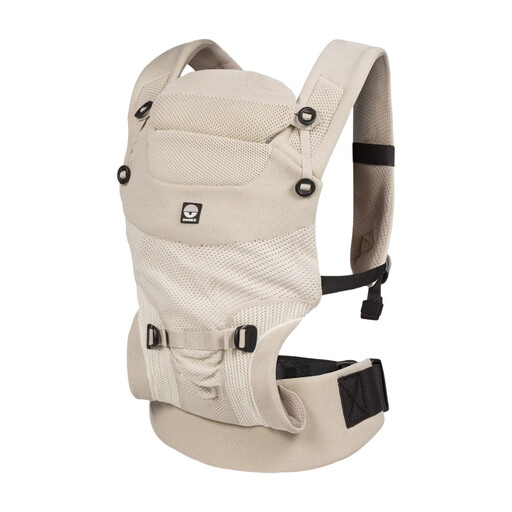
Why this product fits the profile: The stated range of 3.5 to 15 kg and three carrying positions offer clear guidance for families looking for a versatile carrier for several developmental stages.
The described M-position, adjustable seat and leg support, and clearly stated weight range help you assess vague claims about ergonomics.
Stretch knit, padded shoulder straps, hip belt and use as a front or back carrier according to the product information.
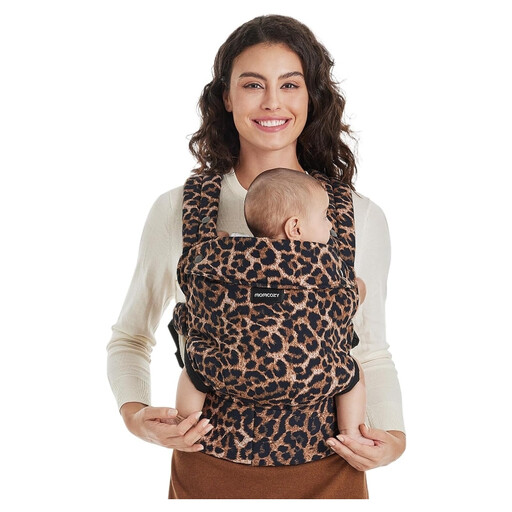
Why this product fits the profile: For parents who look for clearly described support and adjustable components, this model specifies concrete values of approximately 3.18 to 19.96 kg.
The details on M-position, C-shaped back support, neck cushion and padded leg openings make key fit features verifiable.
100% cotton according to the product description, cross-back straps, adjustable buckles and machine-washable design.
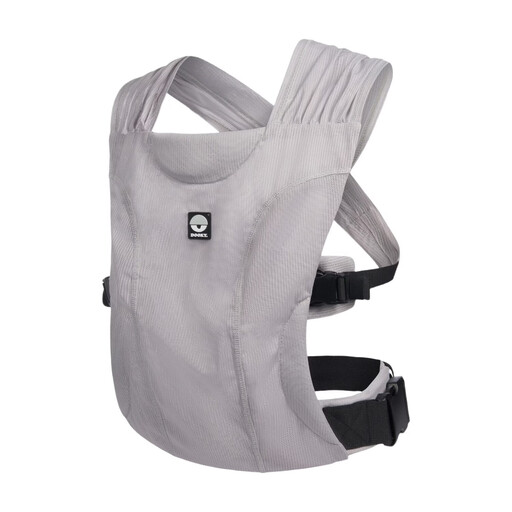
Why this product fits the profile: This model is aimed at parents looking for a special water carrier for the shower or pool who also want quick-drying material.
The product information limits use to the shower and pool and specifies 56 to 74 cm and approximately 3 to 12 months. It is not a swimming aid.
Quick-drying stretch material, click fasteners and, according to the product information, SGS-tested and approved.
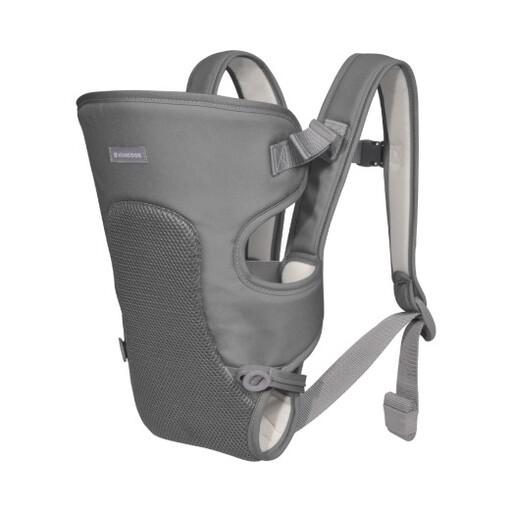
Why this product fits the profile: This model is specified for babies from around three months up to 9 kg and features a mesh material for good airflow.
The age limit from three months prevents the model from being mistakenly classified as a baby carrier for newborns.
Three stated carrying positions, padded shoulder straps, buckle system and polyester mesh.
We’ve put together a full, regularly updated list of products that fully meet these strict selection criteria and the safety regulations in force in the EU.
A baby sling is often adjusted using rings and can be stored compactly. The Momcozy Polyester-Spandex Baby Sling BJ001 features, among other things, a double-ring closure, a stated weight range of 3.6 to 15 kg and machine washing at 30 °C. The rings must be correctly secured before each use and the fabric evenly distributed across the back and shoulders.
A baby wrap offers many possibilities for individual tying, but requires careful instruction. If you prefer quick handling, you might consider a baby carrier with adjustable straps and click fasteners. What always matters is whether the chosen system suits the child’s age, weight and developmental stage.
That depends on the specific model. Some carriers are suitable from birth or from a minimum weight, others only from around three months. The manufacturer’s specifications on weight, body height, head control and position are decisive. If in doubt, consult a midwife or paediatrician before use.
The duration of use depends on the stated weight and size range as well as the fit. A model with a range of 3.5 to 15 kg can be usable for longer than a carrier up to 9 kg. Check seams, fabric, straps and buckles regularly. Damaged parts should not be used further.
Beyond the purchase price, there are usually only minor ongoing costs. Washability, care instructions and any accessories are relevant. A machine-washable carrier can be practical for frequent use. With water carriers, you should also consider drying and checking the material after each use.